thermal drones: when the payload spec is really a field workflow question
Field workflow memo for UAV payload buyers
thermal drones: when the payload spec is really a field workflow question
The first argument about thermal drones often happens beside a service truck, not in a conference room. The pilot wants a clean image. The inspection lead wants to know whether a thermal anomaly, animal, or perimeter event can be located before the crew moves. Procurement wants a quote before the engineering team has written down the video path, payload weight, documents, or host-system limits. A suspected hot splice or roof leak also needs a suitable inspection method and follow-up evidence; an imaging core alone cannot establish the diagnosis.
That is where a thermal payload RFQ starts to drift. A buyer asks for a thermal drone, but the real question is whether the module, aircraft, operator display, recording path, and field report can support the same workflow. CAMCUDA writes this article for UAV integrators, inspection teams, and sourcing managers who need a compact LWIR module conversation before sample payment.
Quick answer
For thermal drones, define the field workflow before comparing payload parts. Confirm the mission distance, target size, required flight time, full aircraft payload budget, operator viewing path, recording path, field-report evidence, interface, documents, and support expectations. AeroMini 640 is CAMCUDA’s current Featured starting point for a configurable 640 x 512 LWIR module. Non-radiometric imaging is 60 Hz by default, with a 30 Hz factory option. The 25 Hz radiometric version requires an availability enquiry, including its interface and measurement requirements. Choose the lens and interface-board package before estimating the complete payload’s mass, power or fit. Published module frame rate does not establish the latency or delivered frame rate of the operator’s full video chain.
thermal drones should be specified from the field workflow backward
Drone programs are operational programs before they are hardware lists. The FAA’s Public Safety UAS resources address safe operations and authority for public-safety agencies. They are useful operational context; commercial teams must establish the requirements for their own mission rather than assume that an agency’s authority applies to them.
Teledyne FLIR’s 2022 SIRAS announcement illustrates how a finished thermal drone system was framed around public safety and industrial inspection. SIRAS is now discontinued, so this is a historical workflow example. A CAMCUDA buyer still has to translate the mission into a component-level RFQ. What will the operator see? How fast must the video arrive? Is the thermal image for live observation, anomaly search, documentation, or later analysis? Does the payload need a compact module or a finished camera head?
The best RFQ for thermal drones usually begins with one field sentence: “A crew needs to inspect this asset, at this distance, from this aircraft, under these display and documentation constraints.” Then define what the field report must retain: the image or clip, asset identity, capture time, operator notes, and any required location or temperature data.
Five practical questions before a thermal drones payload RFQ
1. What decision must the pilot or inspector make live?
A live search flight, a utility inspection pass, and a mapping workflow do not need the same thermal behavior. One operator may need an analog feed to keep the target centered. Another may need USB video into a processor for capture, overlay, or post-flight review. A third team may only need enough thermal detail to decide where a technician should walk next. Set a latency requirement and measure the selected board, host or transmitter, display, and recorder together.
If the report needs quantitative temperatures, specify that separately from visual anomaly search. AeroMini non-radiometric imaging does not establish temperature measurement. Review the AeroMini 25 Hz radiometric enquiry path or the SuperMini 640T thermographic model, then confirm calibration, accuracy, optics, environmental conditions, data format and reporting method for the proposed configuration.
NVIDIA’s 2026 physical AI and simulation coverage provides broad systems context: modern vision projects involve sensors, compute, simulation and real-world constraints. For thermal drones, the thermal module supplies one input; any AI processing, flight-control connection or autonomous behavior needs separate host-system design and validation.
2. Is payload mass being treated as a real limit?
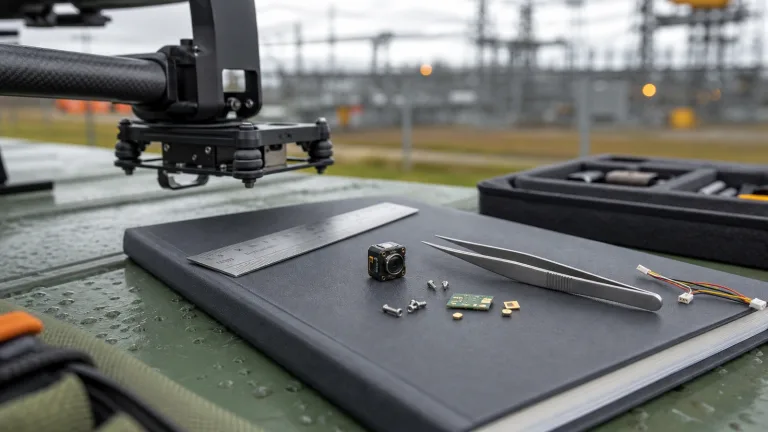
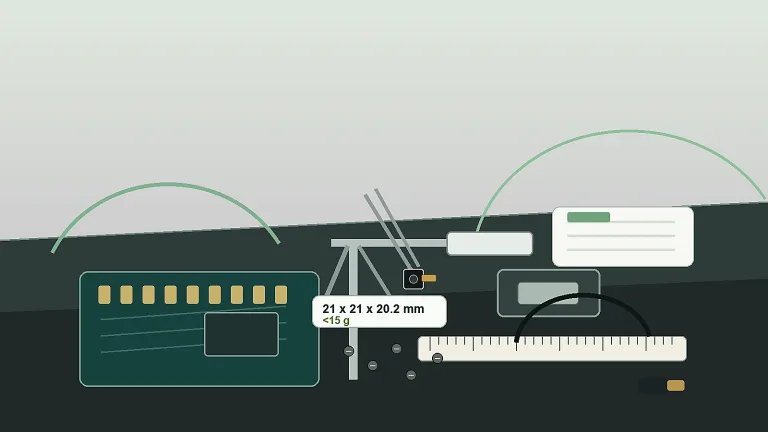
Payload mass affects bracket design, vibration, aircraft balance, and flight endurance. The AeroMini product specification lists <20 g and 21 x 21 x 28 mm excluding the lens and flange. Those figures are a module reference. Budget and weigh the complete payload: thermal module, optics, interface board, host processor, housing, window, cables, mounting, fasteners and damping. Check the aircraft’s capacity and test endurance with that assembly; the bare-module weight cannot establish flight time.
3. Which video path will the operator actually use?
USB video may fit a processor-led payload. CVBS can matter when the transmitter, recorder or ground display expects analog video. AeroMini’s non-radiometric choices include USB + CVBS + MIPI and Type-C + CVBS tailboards, which have different connections. Confirm the selected board, output format, usable rate, control interface and host support during RFQ. Serial options are board-dependent; a family-level RS-422 listing is not a promise that the chosen tailboard supplies it.
4. What documents does procurement need before the sample leaves?
North America and government-adjacent inspection buyers often need more than a price. Request the NDAA statement and CE/RoHS-related materials applicable to the proposed configuration, along with specifications, interface references and the ordered assembly’s mechanical drawing. Confirm availability and scope with CAMCUDA before purchasing; a blog paragraph does not establish procurement eligibility.
5. Who owns the payload after the first field demo?
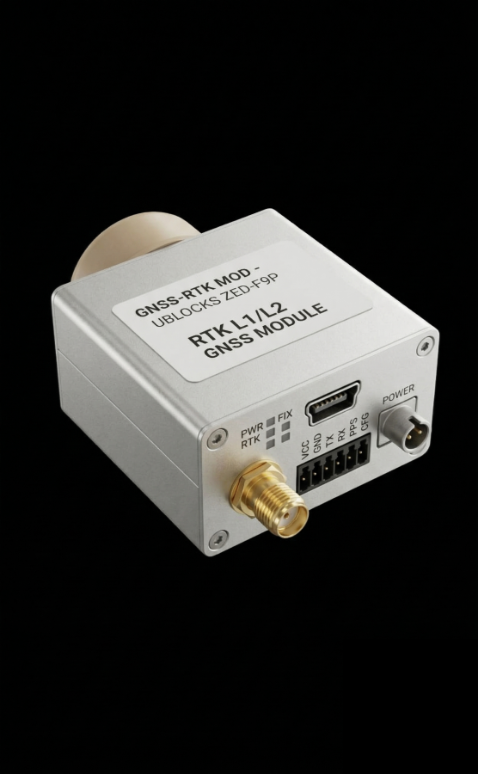
A believable failure mode is simple: the first demo looks good, then the engineering team discovers the recording path, connector orientation, or enclosure window cannot be repeated. The best payload RFQ names the post-demo owner. Is it a UAV integrator, a utility inspection manager, a robotics engineer, or a distributor building repeatable kits? Assign responsibility for capture timestamps, file naming, asset/location alignment and the final report. GNSS or RTK integration and thermal-record synchronization belong to the aircraft or host design; neither module should be assumed to include them.
thermal drones selection chart: turn workflow into module requirements
| Workflow question | What to define before RFQ | Why it matters |
|---|---|---|
| Live view or later analysis? | Operator display, recorder, processor, measured end-to-end latency, report evidence | Connects the mission to the display, saved records and field report |
| Payload size limit? | Module, optics, boards, host, housing, window, cables, bracket and damping | Keeps full payload mass, aircraft balance and enclosure fit realistic |
| Target and distance? | Asset type, working distance, FOV, thermal contrast, visual or quantitative reporting | Connects optics and measurement requirements to the mission |
| Host integration? | Exact tailboard, video/control formats, power, connector guide and software support | Lets engineering validate the selected electrical and recording paths early |
| Procurement region? | NDAA statement request, configuration-specific compliance documents, destination market | Avoids document surprises after supplier selection |
| Support handoff? | Datasheet, assembly drawing, interface notes, sample quantity, firmware and report owner | Makes the sample order and field evidence repeatable |
Where AeroMini 640 fits thermal drones payload work
CAMCUDA uses AeroMini 640 as the primary Featured product here because its configurable module path suits a UAV payload RFQ. The aircraft mount, enclosure, lens window, processor, cable route, recording path and qualification work remain part of the integrator’s design. The current product specification gives the following starting points; confirm the ordered configuration before the sample purchase.
| Product model | AeroMini 640 |
|---|---|
| Detector type | VOx uncooled LWIR detector |
| Resolution and pixel pitch | 640 x 512; 12 µm |
| Spectral response | 8–14 µm |
| Non-radiometric frame rate | 60 Hz default; 30 Hz factory option |
| Radiometric option | 25 Hz, availability enquiry; confirm interface, accuracy and data format |
| NETD | ≤30 mK at 25 °C, F/1.0; thermal sensitivity is not temperature-measurement accuracy |
| Non-radiometric interface packages | USB + CVBS + MIPI or Type-C + CVBS; confirm board, firmware, video format and host support |
| Serial communication | UART, RS232 or RS422 availability depends on the interface board |
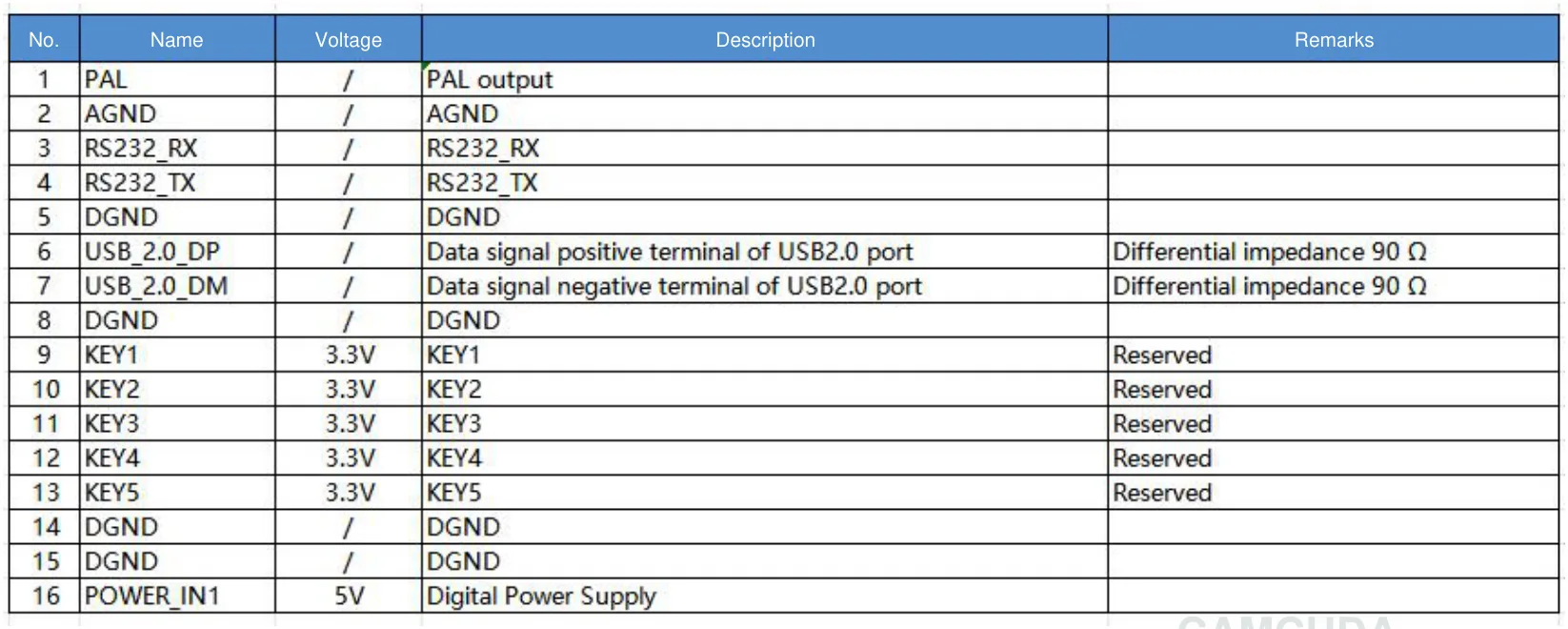
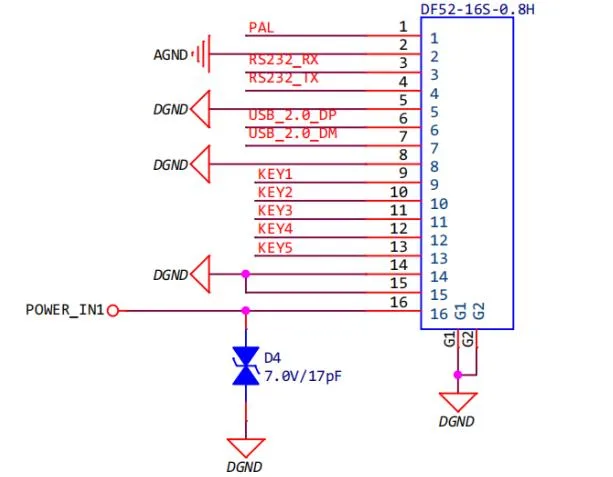
| Power connection | Board-dependent; the illustrated 16/26-pin board’s POWER_IN1 and POWER_IN2 are 5 V inputs. Do not apply 12 V to these pins. |
| Typical module power | <0.5 W at 25 °C; complete-assembly consumption may differ |
| Module weight | <20 g, excluding lens and flange; not the complete flight payload |
| Module dimensions | 21 x 21 x 28 mm, excluding lens and flange; request the ordered assembly drawing |
| Operating temperature | −40 °C to +80 °C; this does not establish weather protection for a completed payload |
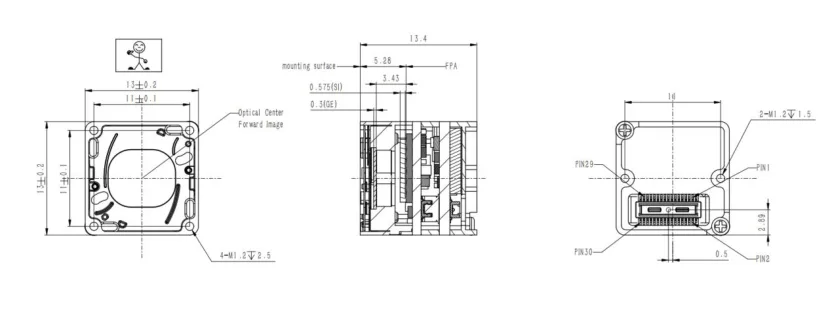
For a tighter bare-core packaging study, compare SuperMini 640 / 640T. Both use 640 x 512 detectors with 8 µm pixels; 640 is 50 Hz imaging and 640T is 30 Hz thermography. The 13 x 13 x 13.4 mm and <3.5 g references exclude optics and boards. The SuperMini V1.0.0 manual defines a 30-pin bare-core interface, three power rails and 1.8 V UART; CVBS needs an external video buffer. Include that integration hardware in the comparison.
Buyers comparing thermal imaging cores and thermal modules should keep the product table close to the actual mission note. Use CAMCUDA’s drone thermal camera application page for UAV planning. For site patrol, fixed monitoring, service-truck workflows or outdoor inspection, the outdoor field thermal imaging page is also relevant.
Application case: a utility yard inspection before sunrise
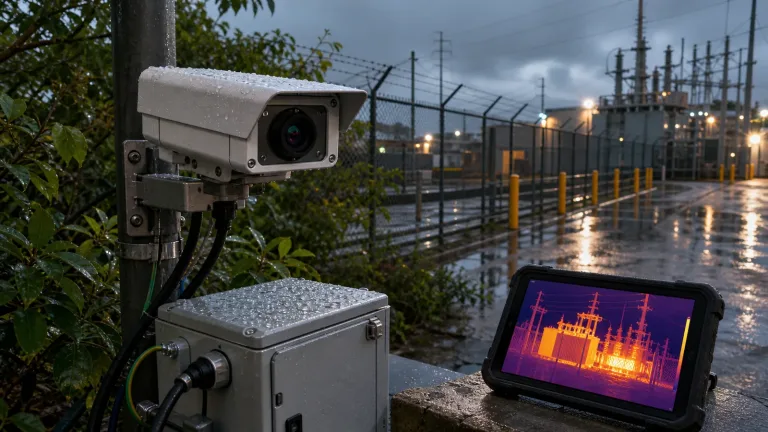
Consider an illustrative planning scenario: a utility contractor is preparing a short pre-sunrise inspection around a fenced substation and nearby overhead line. The aircraft is already chosen. The pilot wants a stable live view, the inspection lead wants enough thermal detail to identify areas for follow-up, and procurement wants a supplier quote by Friday. This is a sample RFQ scenario, not a reported customer deployment.
A weak RFQ says, “Please quote thermal drones.” A stronger RFQ says: “We are reviewing AeroMini 640 for a small UAV payload. Please confirm a non-radiometric configuration for live observation, the selected board’s CVBS path to our transmitter, USB capture to our host, compatible control signals, complete assembly mass and dimensions, interface documents, and NDAA statement availability. We will test display latency and recording together, then associate saved clips with asset IDs, timestamps and inspection notes. If our report requires temperature values, please quote the radiometric enquiry path separately with the measurement and data requirements confirmed.”
That second RFQ lets CAMCUDA check whether AeroMini is a rational starting point and which details remain open before a sample order. The team can then test the complete chain from mission to operator display, recording and field report. A visible anomaly still needs an appropriate inspection procedure before it becomes a fault diagnosis.
Common mistakes when buyers specify thermal drones
- Buying the aircraft first and asking about payload fit later. Leave mass and space for optics, boards, host, housing, mounting and cables; weigh the complete assembly.
- Treating CVBS as a generic checkbox. Confirm the board and the transmitter, recorder or display, then measure the end-to-end path. A module’s frame rate does not guarantee pilot-display latency.
- Comparing only resolution. Field performance also depends on optics, thermal contrast, image processing, operator workflow and integration quality. Quantitative reports need a suitable thermographic configuration and validated measurement method.
- Forgetting documents until purchasing. Ask for datasheets, ordered-assembly drawings, interface references, compliance-related materials and NDAA statement availability early.
- Expecting a module to behave like a finished payload. AeroMini remains a component in an integration project. Weather protection, positioning, flight-controller compatibility and the reporting workflow need separate verification.
RFQ checklist for thermal drones payload buyers
- Mission type: utility inspection, roof/solar inspection, outdoor patrol, search workflow, industrial monitoring, agriculture, or another commercial use case.
- Aircraft model, complete payload mass budget, volume, bracket concept, cable route, vibration expectations and required flight endurance to validate.
- Target type, working distance, required FOV, desired thermal detail, and whether the report requires radiometric data or visual observation.
- Video path: exact board, USB/CVBS or other required output, processor, transmitter, ground display, recorder and end-to-end latency test.
- Control and power: selected board’s supported serial interface, signal levels, supply requirements and matching connector guide.
- Destination market and required documents, including configuration-specific NDAA statement availability where relevant.
- Prototype quantity, annual volume estimate, evaluation-board needs, host software/SDK expectations, support owner and timeline.
- Payload-bay, gimbal, enclosure or host-board drawing; capture naming, timestamps, asset/location alignment and report format.
Send the workflow, not only the keyword
If your team is evaluating thermal drones, send CAMCUDA the mission note, aircraft constraints, display and recording paths, report needs and document requirements before asking for final pricing. Start with AeroMini 640, review the downloads area and FAQ, then contact CAMCUDA for an engineering RFQ. For AeroMini host evaluation, its Linux drivers, examples and SDK FAQ points to the public AeroMini resource folder. Match resources to the board, firmware, host and output format. SuperMini evaluation uses its own product manual and configuration-specific software guidance. If analog video is part of the payload, also review the CVBS thermal camera module integration article.
FAQ about thermal drones and compact LWIR payload modules
Are thermal drones the same as drones with a compact thermal module?
No. Thermal drones can mean complete aircraft, finished payloads, or OEM integration projects. AeroMini 640 is a configurable thermal module for payload integration. The aircraft, mounting, host, operator display, recording and field-report workflow still need to be designed and tested.
Why is AeroMini 640 the Featured product focus here?
It is a current Featured option for a 640 x 512 UAV module RFQ with a choice of lens and interface-board package. Non-radiometric imaging defaults to 60 Hz with a 30 Hz factory option; radiometric 25 Hz availability requires enquiry. Select by the complete payload and measured video path. SuperMini 640 / 640T is a compact bare-core comparison when the team can support its different interface and power requirements.
Should a thermal drones RFQ ask for CVBS?
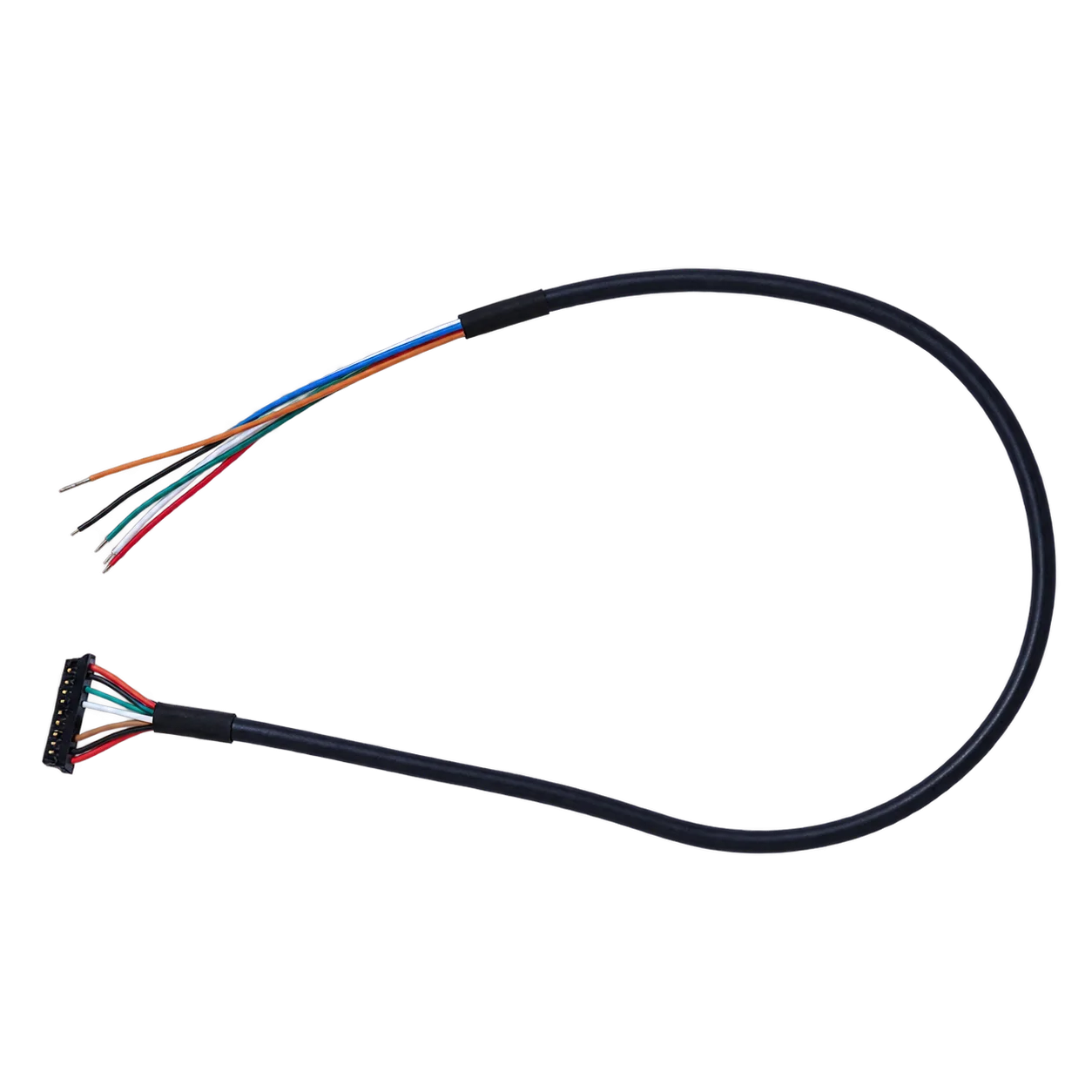
Ask for CVBS when the payload uses an analog transmitter, legacy display or recorder. Confirm the selected board, output standard and full video chain during RFQ. The AeroMini 16/26-pin guide applies to the illustrated USB + CVBS + MIPI board, not the Type-C tailboard; SuperMini’s bare-core CVBS path needs an external buffer.
Is USB video enough for a UAV thermal payload?
It can be enough when the payload uses a processor-led digital path. It may not be enough when the aircraft or ground station expects analog video. Define and test the operator display and recording path, including host support, latency, delivered frame rate and capture format. USB image capture alone does not establish calibrated temperature reporting.
What documents should North America buyers request?
Ask for product specifications, the ordered assembly’s mechanical drawing, matching interface references, applicable compliance-related materials and NDAA statement availability. Final suitability depends on the product configuration, destination market and intended use; request the exact documents before sample payment.
Can one thermal module support both digital output and analog output?
Selected AeroMini configurations offer digital paths and CVBS, but the exact board, firmware, output mode and host determine availability. Confirm whether the required outputs can operate together at the needed rates rather than assume simultaneous capture from a family specification. Type-C and the illustrated 16/26-pin board use different connection guides.
What is the most common payload specification mistake?
The common mistake is asking for price before defining the field workflow. Without mission distance, full payload mass, display path, recording path, field-report evidence and documentation needs, two quotes can look similar while solving different problems.
How does edge AI context affect thermal drones?
Edge AI matters when thermal image data must be processed near the aircraft or field asset instead of only reviewed later. Micron’s edge AI overview explains the role of local data processing and memory/storage. The integrator must design and validate that host pipeline; this does not establish onboard AI or autonomous-flight capability in either thermal module.
Can AeroMini be used for outdoor field thermal imaging beyond drones?
It can be evaluated for embedded outdoor and OEM imaging projects. Confirm the lens, housing, window, host interface, power, environmental protection, recording and documentation for the actual installation. Review the outdoor field thermal imaging application and distinguish visual observation from any temperature-measurement requirement.