drone with thermal camera price: 6 costs the first quote hides before a payload RFQ
Procurement note for UAV payload buyers
drone with thermal camera price: 6 costs the first quote hides before a payload RFQ
drone with thermal camera price looks like a simple buying question until the supplier asks what aircraft, bracket, video path, documentation package, and operating workflow the quote must support. A low number can be real for a basic airframe bundle, but it is rarely the whole cost of a thermal payload that an engineering team can ship, service, and reorder.
Quick answer
drone with thermal camera price depends on the complete payload decision: aircraft or host, thermal resolution, optics, video and control interface, mechanical integration, and procurement documentation. For a compact 640 × 512 module path, start with CAMCUDA AeroMini 640 and its selected interface kit. Compare SuperMini 640 / 640T when a smaller bare core justifies additional carrier-board engineering. Neither module quote represents a finished drone price; match the lens, board, cables, support scope and quantity before comparing totals.
Why the drone with thermal camera price question changes after the first call
A procurement manager may open a spreadsheet with three rows: finished thermal drone, third-party payload, and board-level thermal module. The first row looks easiest because it has a public price. The third row can look cheaper because the module is smaller than the aircraft. The mistake is treating those rows as equivalent, especially when the drone with thermal camera price search started as a quick budget check.
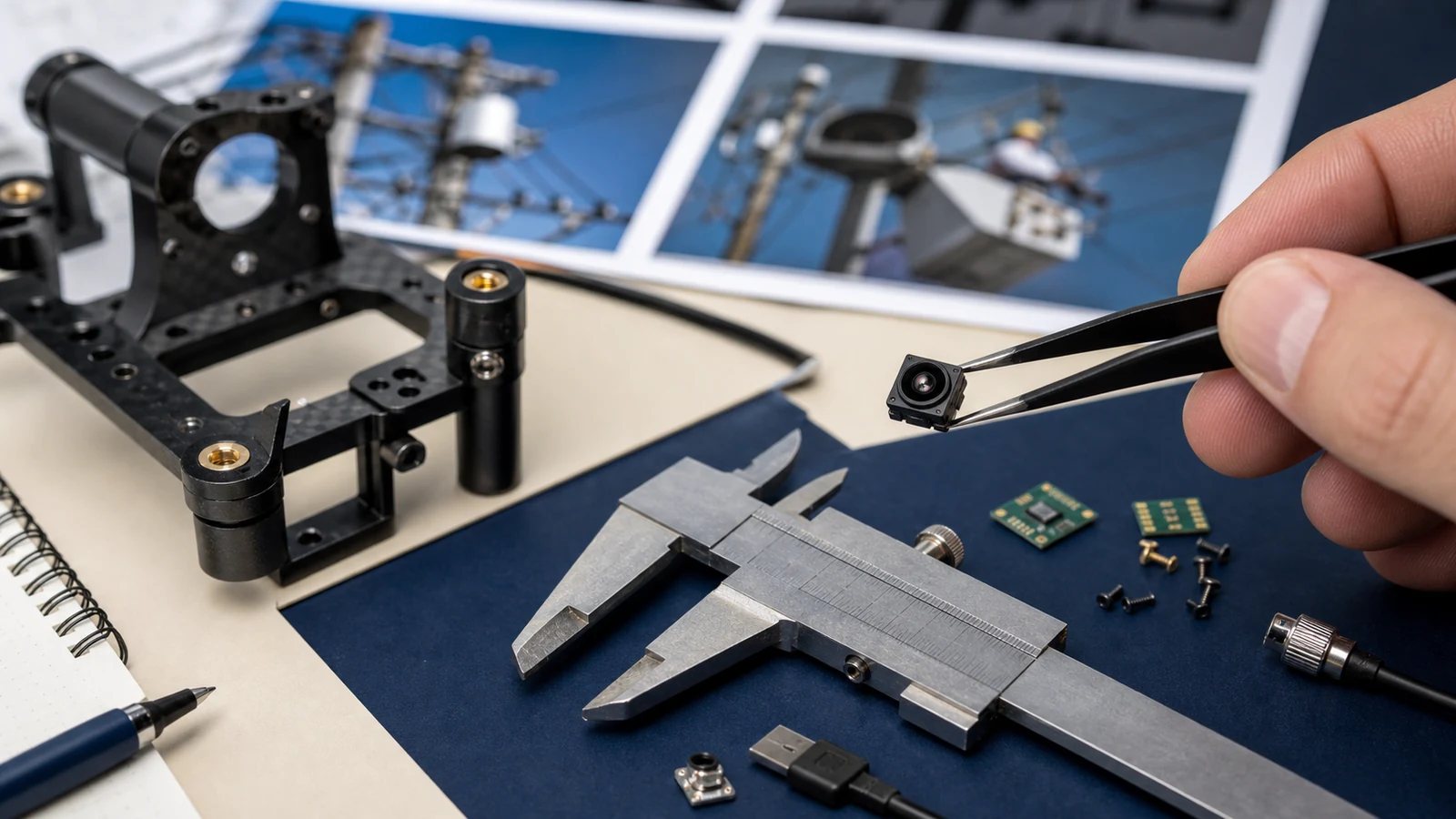
A finished drone price can include batteries, controller, payload, software, training expectations, and a vendor’s support model. A board-level module price usually excludes the bracket, gimbal or fixed mount, enclosure, host processor, wiring, display path, software integration, and the time needed to prove the mission workflow. That does not make the module route worse. It means the RFQ has to describe the product you are actually building.
This is why Teledyne FLIR’s professional drone examples usually discuss payload systems and inspection/public-safety workflows, not only the sensor. For commercial operators in the United States, FAA Part 107 also reminds buyers that the aircraft purchase is only one part of operating a usable inspection program. CAMCUDA’s role is narrower and practical: help buyers match compact uncooled LWIR modules to payload, outdoor, OEM, and documentation constraints before sample ordering.
drone with thermal camera price is a cost stack, not a single line item
The useful question is not, “what is the cheapest thermal drone?” It is, “which parts of this thermal payload will still be present when the prototype becomes a repeatable product?” The answer usually falls into six buckets.
| Cost bucket | What it changes | RFQ question to ask |
|---|---|---|
| Aircraft or host platform | Payload weight, power, vibration, mounting space, battery plan | Is the aircraft fixed, or should the module be selected first? |
| Thermal resolution | Scene detail, target recognition, data size, price range | Is 160 x 120 enough, or does the mission need 640 x 512? |
| Optics and FOV | Working distance, inspection width, enclosure depth | What target size and distance define a useful image? |
| Video and control interface | Host board, transmitter, recorder, display, latency | Which exact board provides the required USB, MIPI/DVP, CVBS or serial-control path? |
| Mechanical integration | Bracket, board support, cable routing, serviceability | Can the module fit before the bracket and enclosure are locked? |
| Documentation and compliance review | Procurement approval, sample acceptance, repeat orders | Which model-specific datasheets, drawings and procurement documents must the buyer review? |
The practical trade-off is simple. Buying a ready drone may reduce first-flight work, but it can lock the payload, video path, and spare-parts model. Building around a compact module can reduce size and improve product control, but it shifts responsibility to engineering. The right drone with thermal camera price discussion should make that trade-off visible before the purchase order is issued.
Ask suppliers to mark each bucket as included, optional, customer-supplied or excluded. Separate one-time bracket, carrier and software work from recurring unit costs. A sample quote and a repeat-order quote may cover different quantities and support. Compare shipping, taxes, lead time and quote validity on the same basis rather than filling gaps with an unrelated online price.
Where CAMCUDA featured modules fit in a price conversation
CAMCUDA’s current Featured products offer two 640-class starting points. AeroMini 640 is the primary review path here for a compact UAV or OEM inspection module with selectable interface kits. SuperMini 640 / 640T is the compact bare-core comparison for teams prepared to integrate a carrier and its power, video and control requirements. Both are 640 × 512 products; this comparison does not imply a lower-resolution or lower-price tier.
| Product | Best-fit price conversation | Key facts from product data |
|---|---|---|
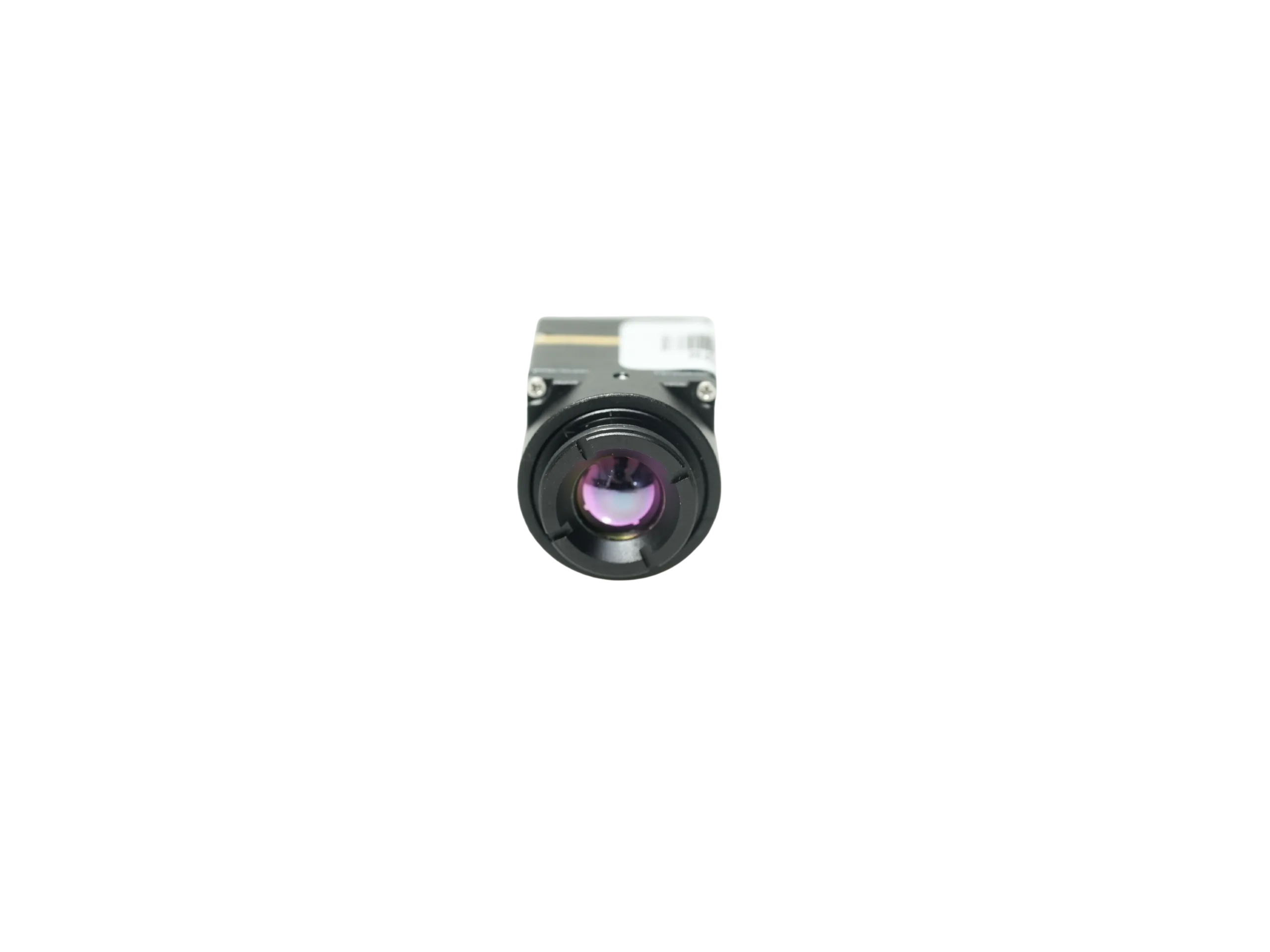
| AeroMini 640 | Compact UAV payload or OEM inspection module with a selected interface kit | 640 × 512, 12 µm; non-radiometric 60 Hz default / 30 Hz factory option; radiometric 25 Hz by enquiry. NETD ≤30 mK at 25 °C, F/1.0. 21 × 21 × 28 mm and <20 g, excluding lens and flange. |
| SuperMini 640 / 640T | Smaller bare-core integration where carrier design and assembly costs are budgeted | 640 × 512, 8 µm; 640 imaging at 50 Hz / 640T thermography at 30 Hz. NETD ≤40 mK at 25 °C, F/1.0. Bare core: 13 × 13 × 13.4 mm and <3.5 g, excluding optics and boards. |
AeroMini’s USB + CVBS + MIPI and Type-C + CVBS packages are separate board choices. List the intended package in the RFQ. SuperMini’s small core requires multi-rail power and 1.8 V UART integration; CVBS needs an external video-buffer IC. Its core interface does not establish a ready-to-connect USB or CVBS kit. These differences affect carrier development, cable work and acceptance testing, even when the sensor resolution matches.
A generic 160 × 120 sensing path can still be worth evaluating when the mission needs presence detection or a simple thermal signal rather than image-rich inspection. Keep that resolution trade-off separate from these two featured 640-class products. Compare the target detail and working distance first, then request a quote for the actual configuration. CAMCUDA’s thermal imaging cores and thermal modules categories provide broader context, without making unlike assemblies price-equivalent.
Interface choices can move the drone with thermal camera price more than buyers expect
A common late-stage mistake is asking for price before choosing the video path. USB may be convenient for development and host-side evaluation. CVBS can matter when the buyer already has an analog transmitter, legacy monitor or recorder. Serial control is a separate requirement. Confirm the exact model, tailboard, firmware, cable and host rather than assuming every interface listed for a product family is present on the ordered assembly.
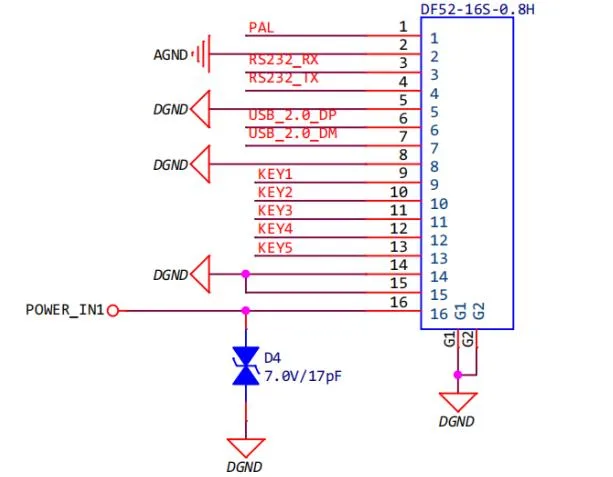
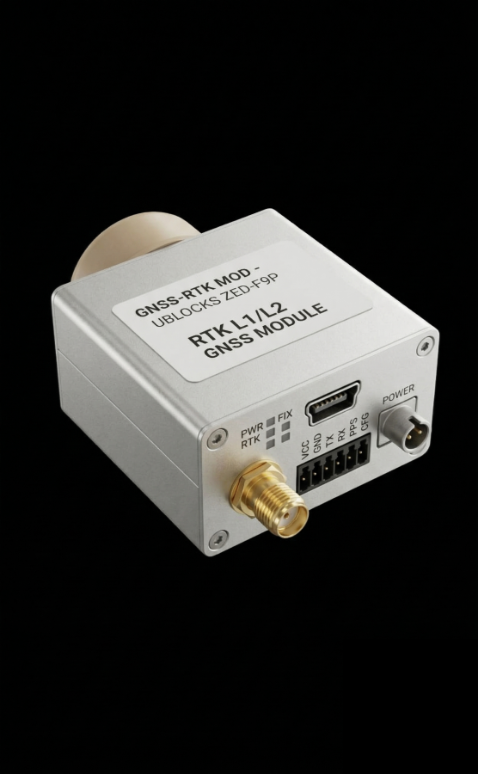
The illustrated 16-pin connector and the separate 26-pin reference belong to AeroMini’s USB + CVBS + MIPI board; they are not a Type-C-board pinout. The documented POWER_IN1 / POWER_IN2 pins are 5 V inputs: do not apply 12 V to them. Read the AeroMini datasheet for connector orientation and signal definitions. This check can prevent a low component quote from turning into board replacement and rework.
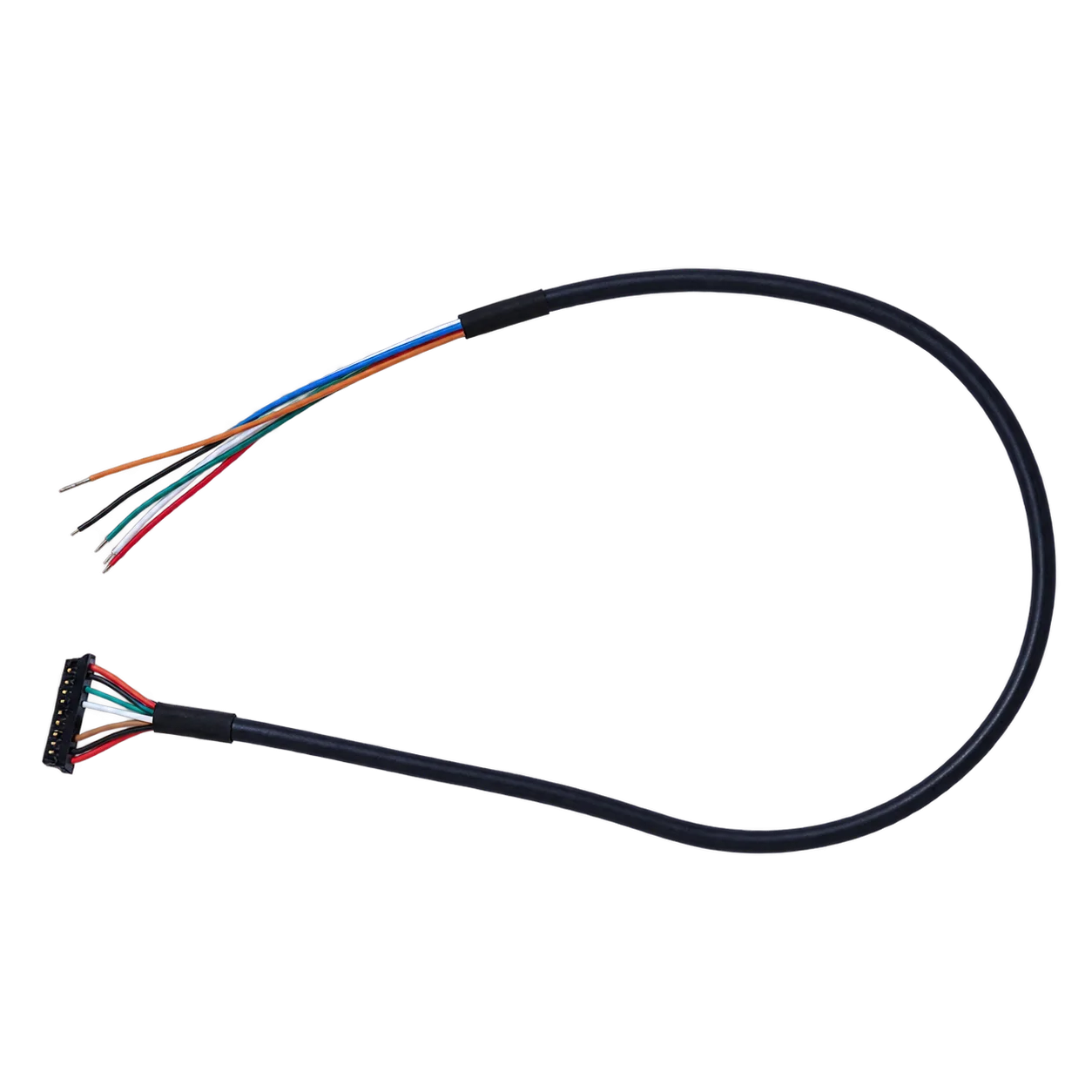
Include cable termination, strain relief and host evaluation in the budget. The AeroMini product FAQ provides its technical-resource and SDK entry point. Confirm resources for the ordered board and firmware; do not treat that entry point as proof of SuperMini compatibility or of tested support for every host.
Procurement documentation also belongs in this stage. Request model-specific sourcing and compliance documents, including any NDAA-related information or CE/RoHS evidence your buyer requires, and have procurement review their scope. Document availability and eligibility must be confirmed for the quoted configuration; this article does not establish either. Request the datasheet, mechanical drawing and electrical reference alongside those documents.
Industry articles on edge AI and manufacturing, including NVIDIA’s industrial AI coverage and Micron’s edge AI overview, are useful reminders that imaging hardware eventually feeds a workflow: inspection decisions, video analytics, storage, maintenance, or operator review. They are not evidence for CAMCUDA specs. They simply reinforce why a thermal quote should include data path and field workflow, not only sensor price.
A realistic application case: utility patrol payload quote
Consider a hypothetical utility contractor replacing a borrowed thermal drone with a repeatable inspection payload. The pilot wants stable thermal video in the field. Engineering wants a compact module that can fit a small bracket without exceeding the aircraft’s payload limits. Procurement wants a quote that survives sample review and can be repeated for future units.
The wrong first step is sending a message that says, “please quote a drone with thermal camera.” That invites a finished-drone price, a mismatched payload suggestion, or an incomplete module quote. A better first step is a short engineering note: target aircraft or bracket envelope, outdoor utility inspection workflow, approximate viewing distance, whether the pilot needs analog viewing or USB capture, destination market, documentation requirements, and expected prototype quantity.
For this case, review CAMCUDA’s drone thermal camera application page and outdoor and field thermal imaging page, then ask for an AeroMini 640 configuration quote. Its 21 × 21 × 28 mm and <20 g figures exclude lens and flange. Request the drawing and mass for the actual lens, board and assembled payload before approving a bracket.
If the available space instead leads engineering toward SuperMini, use its own bare-core drawing below. The 13 × 13 × 13.4 mm core envelope excludes optics and boards. Allow for those parts, the carrier and cable clearance before comparing it with the AeroMini assembly.
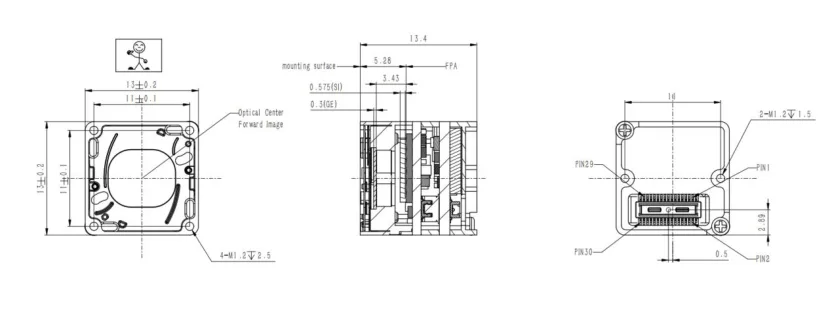
Agree on sample acceptance before comparing repeat-order costs: image detail at the working distance, sustained capture on the selected host, completed payload mass and power, and recovery after restart. If the inspection needs temperature readings, request the radiometric configuration and its measurement conditions explicitly. A useful viewing image alone does not establish temperature-measurement capability.
Common mistakes that make the first quote look cheaper than the real build
- Comparing a complete drone bundle against a bare module without adding bracket, host board, display, cable, and integration work.
- Asking for 640 x 512 because it sounds safer, then discovering the application only needed lower-resolution thermal sensing.
- Choosing the aircraft before confirming the module envelope, lens path, vibration, and cable service loop.
- Leaving CVBS analog output, USB capture, control levels or tailboard choice until after samples arrive.
- Requesting compliance documents after procurement approval has already started.
- Using forum price anecdotes as a substitute for a supplier RFQ with model, lens, interface, quantity, and documentation details.
RFQ checklist for a reliable drone with thermal camera price
Use this checklist before contacting CAMCUDA. It keeps the RFQ short, but it removes the guesswork that usually causes re-quotes after the first drone with thermal camera price estimate.
- Target use: utility patrol, roof inspection, outdoor monitoring, agriculture, public safety support, robotics, or another commercial workflow.
- Buying path: finished drone benchmark, custom payload, module-level integration, or mixed evaluation.
- Resolution expectation: 160 x 120 sensing, 640 x 512 imaging, or a decision still open to engineering advice.
- Platform limits: payload mass, bracket envelope, power budget, vibration/shock expectations, enclosure depth, and cable route.
- Video/control path: selected tailboard, USB or CVBS requirement, control interface and host; identify any carrier or cable work excluded from the quote.
- Lens/FOV: working distance, target size, viewing width, and whether the application needs a narrow or wider scene.
- Imaging or measurement: required frame rate, whether temperature data is needed, and acceptance conditions for the selected version.
- Documents: model-specific datasheet, assembly drawing, electrical reference, and the sourcing or compliance evidence procurement needs to review.
- Commercial details: prototype quantity, expected annual quantity, destination market, sample timing expectations, and contact engineer.
- Quote basis: included accessories, one-time engineering, recurring unit cost, shipping and taxes, lead time, validity and sample-support scope.
The CAMCUDA thermal imaging calculator can help compare preliminary viewing geometry. Use its result to frame the lens discussion, then confirm the actual lens and test the intended task. Geometry alone does not guarantee detection, recognition, useful inspection detail or measurement accuracy.
Turn the price question into a useful payload RFQ
Start with AeroMini 640 for the compact 640 × 512 interface-kit path. Compare SuperMini 640 / 640T if a smaller bare core fits your engineering plan. Review the support/download paths, then send the payload envelope, selected interface, lens, quantity and documentation list through CAMCUDA Contact / RFQ. Ask for a configuration-specific quote with exclusions recorded, so procurement can compare the complete build.
FAQ: drone with thermal camera price
Why do public drone with thermal camera price listings vary so much?
They often compare different products: a ready aircraft bundle, a branded payload, a module, or a development board. Resolution, lens, aircraft class, batteries, controller, software, documentation, and support model can all be included or excluded.
Is a module always cheaper than a finished thermal drone?
Not automatically. The module line item can be lower, but a real build also needs mechanical integration, host electronics, video output, testing, and documents. A module route makes sense when the buyer needs product control, compact fit, or repeatable OEM sourcing.
When should a buyer consider AeroMini 640 or SuperMini 640 / 640T?
Start with AeroMini 640 for a compact 640 × 512 UAV or OEM module with a selected interface kit. Consider SuperMini 640 / 640T when bare-core size is the priority and carrier engineering is budgeted. Confirm lens, board, frame rate, imaging or measurement version, documents and quantity during RFQ.
Can CVBS analog output affect the quote?
Yes. CVBS can matter for analog transmitters, legacy displays or recorders. For AeroMini, quote the applicable tailboard and cable. SuperMini requires an external video-buffer IC for CVBS, so budget the carrier work. Confirm the complete path rather than assuming a bare core connects directly to the existing transmitter.
Does North America procurement need special documentation?
Some buyers require model-specific compliance and sourcing evidence before approval. Ask which documents are available for the quoted configuration, including any NDAA-related information your procurement team requests. Have that team review applicability alongside the specifications, drawings and interface references; document requests do not establish eligibility.
Should a low-resolution module be considered for drone work?
Sometimes, when the mission needs simple thermal sensing rather than image-rich inspection. Compare a generic 160 × 120 option against the target detail and distance before deciding. For utility patrol, roof inspection or operator review, a 640 × 512 path may be easier to justify. AeroMini and SuperMini are both 640-class choices; SuperMini’s smaller bare core does not make it a low-resolution or automatically cheaper option.
What information should be included before asking for a sample price?
Send the target use, aircraft or bracket limits, resolution target, lens/FOV needs, interface path, power budget, destination market, prototype quantity, annual quantity estimate, and documents required for procurement.
Can a ready thermal drone benchmark still be useful?
Yes. It helps define expectations for workflow, pilot viewing, battery handling, and field support. The benchmark becomes risky only when the buyer assumes a module quote includes the same system-level items.
Why not just buy the cheapest thermal drone listing?
For one-off hobby use, a low listing may be acceptable. For OEM, inspection, or procurement-controlled work, the cheapest listing can hide support, documentation, interface, spare-parts, and repeat-order risk.