AirTiny2 vs SuperMini 640: 7 Essential Checks
This AirTiny2 vs SuperMini 640 comparison covers seven selection checks: resolution, camera version, assembly size, power, host data, optics and quotation. AirTiny2 provides 256 × 192 imaging with a Falcon 300 ASIC-ISP. SuperMini provides 640 × 512 imaging, with separate 50 Hz imaging-only and 30 Hz thermographic models.
COMPACT LWIR MODULE SELECTION
AirTiny2: a lower-profile core reference.
A 256 × 192, 12 μm detector and four listed lens options. The current technical table specifies 13 × 13 × 9.05 mm, excluding lens and flange; its overview lists 9.15 mm height.
Explore AirTiny2 configurations →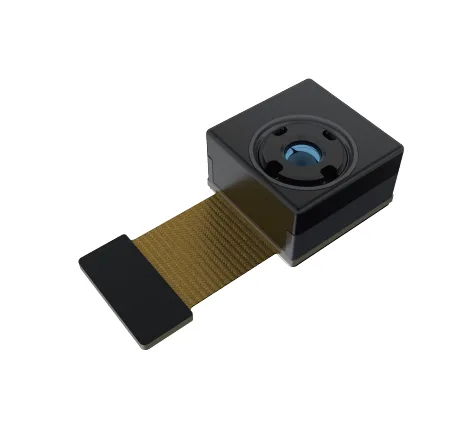
A PRACTICAL SELECTION PATH
7 essential checks for AirTiny2 vs SuperMini
Use these checks to turn a product-family comparison into a configuration your team can evaluate.
Resolution & pixel pitch
Start with the detector format and required scene detail.
02Imaging or thermography
Choose whether the host needs pictures or temperatures.
03Complete assembly size
Include optics, flange, boards and connection clearance.
04Power operating states
Keep normal operation and shutter actuation separate.
05Host interface & data
Confirm the rails, receiver, output layout and resources.
06Exact optical assembly
Resolve the requested 9 mm configuration before using FOV.
07Sample & quotation
Agree the configuration, quantity and supply terms.
AirTiny2 vs SuperMini 640: core specification comparison
The table separates detector and bare-core specifications from the final lens-and-interface assembly. AirTiny2’s figures come from its supplied English specification PDF; SuperMini’s come from the current V1.0.0 product manual and product page.
| Parameter | AirTiny2 13 mm core | SuperMini 640 / 640T Ultra-light core |
|---|---|---|
| Detector | Uncooled VOx · 8–14 μm | Uncooled VOx · 8–14 μm |
| Resolution | 256 × 192 | 640 × 512 |
| Pixel pitch | 12 μm | 8 μm |
| Core dimensions | 13 × 13 × 9.05 mm in the technical table; overview: 9.15 mm height. Lens and flange excluded. | 13 × 13 × 13.4 mm; excludes lens, flange and expansion board |
| Core weight | ≤2.6 g (3.2 mm reference in the current brochure) | <3.5 g; excludes optics and expansion board |
| Detector / model rate | ≤25 Hz in the technical table | 640: 50 Hz imaging · 640T: 30 Hz thermography |
| Published NETD | ≤40 mK at 25°C, F#1.0, 25 Hz | ≤40 mK at 25°C, F1.0 |
| Listed lens options | 2.0 / 3.2 / 4.3 / 7.0 mm | 3.7 / 6.1 / 8.7 / 11 mm in the current manual |
| Lens / field reference | Athermalized fixed-focus optics; lens-specific FOV not supplied | Use the documented optical assembly; the requested 9 mm specification needs confirmation |
SuperMini contains 327,680 detector pixels, compared with AirTiny2’s 49,152—about 6.67 times the pixel count. How much scene detail reaches an application also depends on the lens, field of view, focus and image processing. This is a detector-format comparison, not a measured detection-range comparison.
For a AirTiny2 vs SuperMini mechanical comparison, the shared 13 × 13 mm footprint is only a starting point. Include the lens, flange, connector, rigid-flex routing, expansion board and thermal path in the mechanical review. The listed NETD conditions are also not a matched camera test, and NETD is separate from absolute temperature accuracy.
AirTiny2 vs SuperMini: select imaging or thermography
A product-family name does not establish whether a camera supplies temperature data. Start by choosing the data your host needs.
| Version | Rate reference | Output / measurement boundary |
|---|---|---|
| AirTiny2 Imaging | Detector ≤25 Hz | Imaging configuration; confirm the selected stream format. |
| AirTiny2 Thermography | Detector ≤25 Hz | Point, line and area analysis; temperature and other information via data lines. |
| SuperMini 640 Ultra-light core | 50 Hz | Imaging only; no temperature measurement |
| SuperMini 640T Ultra-light core | 30 Hz | Imaging and temperature data; CDS3 and MIPI thermographic paths |
AirTiny2’s current brochure specifies a detector frame rate of ≤25 Hz. It does not establish 50 Hz or 60 Hz operation. Confirm the stream format and host implementation for the selected assembly.
Temperature ranges belong to the thermography versions
AirTiny2 lists −20°C to 150°C for its high-image-quality range and 50°C to 550°C for its wide range. Typical accuracy is ±2°C or ±2%, whichever is greater. Point, line and area analysis, and temperature information via data lines, are specified.
SuperMini 640T lists −20°C to +150°C and 100°C to +650°C. Its typical accuracy is ±2°C or ±2% of reading at an ambient temperature of −20°C to +60°C. Those measurement specifications do not apply to imaging-only SuperMini 640.
The different conditions and range definitions should remain attached to each specification. Choose a measurement range and calibration requirement for the application rather than treating these figures as a head-to-head accuracy test.
AirTiny2 vs SuperMini power: keep the source conditions
AirTiny2’s current brochure highlights power as low as 0.25 W and specifies typical power of 0.28 W at 25°C. Keep those reference conditions separate from the complete host assembly.
| Source / operating state | Published figure | Integration context |
|---|---|---|
| AirTiny2 highlight | Power as low as 0.25 W | Product-highlight reference |
| AirTiny2 typical power | 0.28 W at 25°C | Technical-table normal-operation reference |
| SuperMini core | ≤0.5 W typical at 25°C | Excludes the expansion board |
The source conditions differ. A AirTiny2 vs SuperMini power comparison therefore cannot establish an energy-saving percentage or a complete-system power ranking. Confirm steady operation, startup and shutter-current requirements together with the interface board and regulator design.
Video interfaces are only part of the integration
AirTiny2 lists DVP, VOSPI, MIPI and USB image interfaces, with I2C, USB and UART control. Its listed supplies are 5 V analog, 3.3 V and 1.8 V. The USB interface listing does not by itself establish a single-rail 5 V bare-module design, simultaneous use of all interfaces or an available Linux SDK example.
The updated AirTiny2 brochure lists temperature and other data via data lines, but does not specify detector RAW bit depth, pixel packing or an exact Linux format list. Obtain the matching interface documentation before implementing capture or temperature conversion.
The supplied AirTiny2 USB adapter schematic documents Type-C connectivity and module interface/power routing. It does not by itself establish Linux enumeration, a specific SDK package, or the supplied board in every configuration.
SuperMini’s bare core uses MAIN_POWER at 3.8–5.2 V, typically 5 V, plus regulated 3.3 V and 1.8 V rails. The manual lists 8-bit LVCMOS / BT656 and two-lane MIPI; BT656 and MIPI cannot operate simultaneously. USB uses an optional expansion board, while CVBS requires an external video-buffer IC.
For SuperMini 640T, use its thermographic interface definitions and conversion rules. A CSI-2 transport label or a 16-bit host value should not be substituted for the actual image-and-temperature data layout.
A shutterless algorithm does not establish flagless hardware
AirTiny2 has a built-in shutter and lists automatic shutter correction together with a shutterless algorithm. Shutterless processing does not mean that the physical shutter has been removed.
Planning the requested SuperMini 640 “9 mm” project
SuperMini / OPTICAL CONFIGURATION
Confirm the exact optical assembly.
The available SuperMini manual lists 3.7, 6.1, 8.7 and 11 mm lenses. It does not provide a separate 9 mm lens specification.
Explore SuperMini 640 / 640T →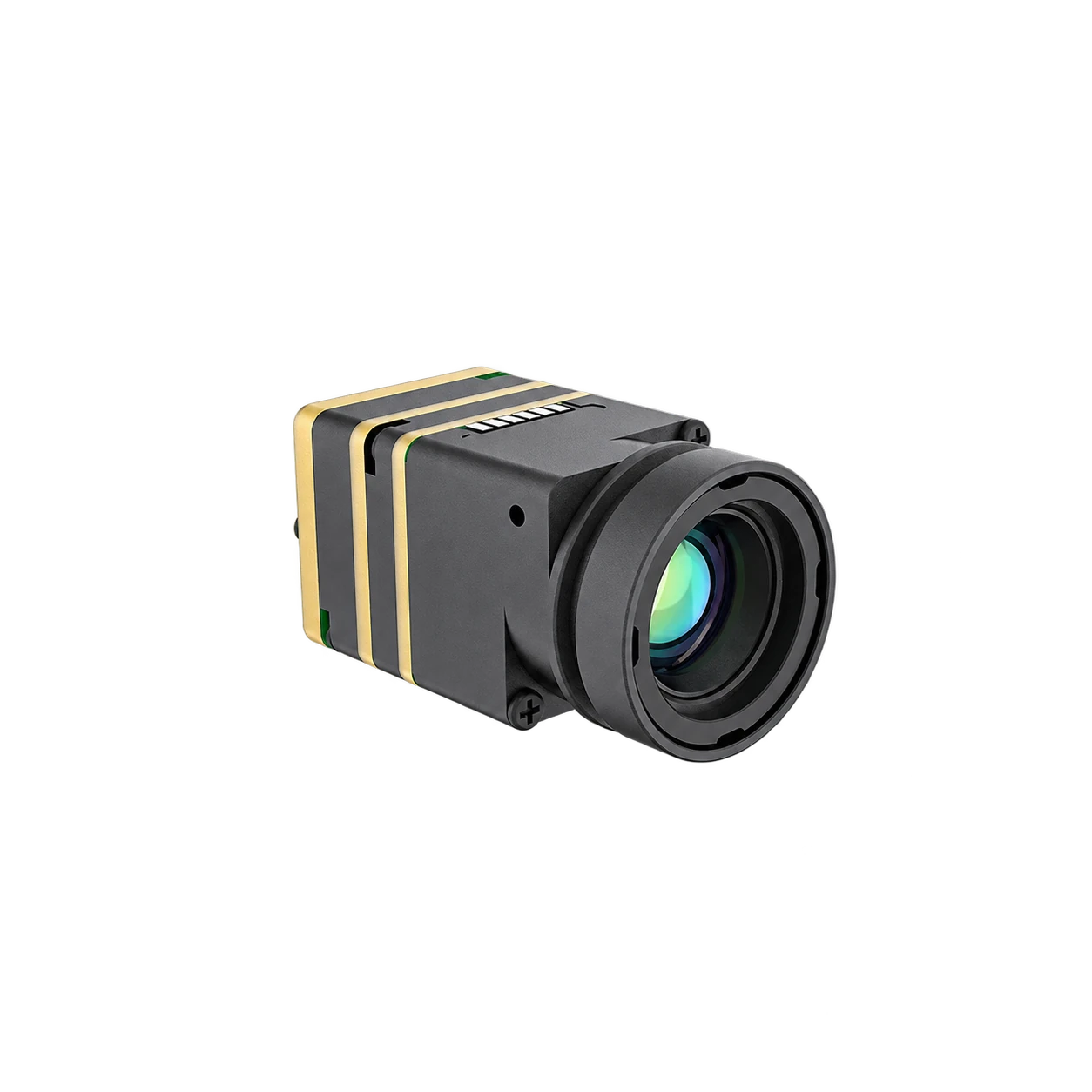
A AirTiny2 vs SuperMini optical comparison can use the series-level detector and core specifications for initial selection. For a project described as “9 mm,” obtain the lens part number, actual focal-length specification, horizontal and vertical FOV, and complete assembly drawing.
The documented 8.7 mm option should not be relabeled as 9 mm. Its FOV and IFOV cannot be assigned to the requested 9 mm project without supporting optical documentation. AirTiny2’s listed lenses also have no supplied FOV values, so a reliable scene-coverage comparison needs the two actual lens specifications.
AirTiny2 vs SuperMini: match the output to the task
Begin with AirTiny2 when the 256 × 192 format and core height fit the project
AirTiny2 suits compact handheld, inspection, fire-and-rescue, healthcare and driver-assistance integrations that can use its 256 × 192 format. Review the 9.05 mm technical-table height and 9.15 mm overview reference against the actual assembly drawing.
Begin with SuperMini 640 when the project calls for 640 × 512 imaging at 50 Hz
The imaging-only 640 model provides the listed 50 Hz camera configuration. Use its actual optical assembly and host interface to evaluate motion, scene coverage and the useful detail in your application.
Choose a thermographic version when the host needs temperatures
Compare AirTiny2 Thermography with SuperMini 640T, keeping their range, ambient conditions, frame rates and data formats separate. A temperature-enabled model is a different choice from an imaging-only stream with a color palette.
The AirTiny2 3.2 mm module is quoted at US$252 and is in stock. Confirm camera version, interface hardware and supplied items with CAMCUDA. Other AirTiny2 focal lengths and SuperMini configurations use the quotation process.
Frequently asked questions
In an AirTiny2 vs SuperMini comparison, which has more pixels?
SuperMini 640 and 640T use 640 × 512 detectors; AirTiny2 uses 256 × 192. The pixel counts are 327,680 and 49,152 respectively. Resolution alone does not establish recognition range or image quality.
Does SuperMini 640 measure temperature?
No. SuperMini 640 is the 50 Hz imaging-only model. Temperature measurement belongs to the 30 Hz SuperMini 640T. Confirm the temperature-enabled AirTiny2 configuration for measurement projects.
Does AirTiny2 support 50 Hz imaging?
The current brochure specifies a detector frame rate of ≤25 Hz. It does not establish 50 Hz or 60 Hz operation.
Which AirTiny2 power figure should I use?
The current brochure highlights power as low as 0.25 W and gives typical power of 0.28 W at 25°C. Confirm complete-assembly, startup and shutter requirements for the power supply.
Does AirTiny2 establish unprocessed detector RAW or Linux formats?
The new brochure lists video interfaces and temperature information via data lines. It does not establish original 14/16-bit detector RAW, Linux enumeration, byte packing or an SDK download.
Is the SuperMini 9 mm project identical to the documented 8.7 mm option?
No equivalence is established. The current manual lists 3.7, 6.1, 8.7 and 11 mm lenses. Obtain the exact 9 mm optical specification and assembly drawing before assigning field of view or enclosure dimensions.
How should I compare AirTiny2 and SuperMini weight?
AirTiny2 lists ≤2.6 g for its 3.2 mm reference. SuperMini lists <3.5 g for the bare core, excluding optics and the expansion board. These are different assembly references, so confirm complete hardware before ranking weight.
What is the AirTiny2 3.2 mm quote?
The AirTiny2 3.2 mm module is quoted at US$252 and is in stock. Confirm camera version, interface hardware and supplied items with CAMCUDA. Other focal lengths are quoted on request.
Technical sources and next steps
- CAMCUDA AirTiny2 product page — current imaging and thermography configurations.
- CAMCUDA AirTiny2 English product brochure — current detector, imaging, temperature, electrical and environmental specifications.
- CAMCUDA SuperMini 640 / 640T product page — model, optics and integration references.
- SuperMini English product manual, V1.0.0 — January 2026 edition; interfaces, power, dimensions and thermographic model definitions.
- AirTiny2 USB adapter schematic — connector and circuit reference.
Specifications updated 28 October 2026 from the current AirTiny2 product brochure and USB adapter schematic. The brochure’s 9.05 mm technical-table and 9.15 mm overview heights are distinct source references. Pixel counts are calculated from the stated detector resolutions; no matched hardware comparison is represented.
For related engineering background, read why thermal-camera FOV calculations differ and how infrared ISP data paths affect integration.
Define the camera, optics and host together.
For your AirTiny2 vs SuperMini evaluation, send the required resolution, imaging or thermography version, lens requirement, host interface, assembly envelope and quantity. For a SuperMini 9 mm project, include the optical reference so the exact configuration can be confirmed.
Request a configuration review →