NDAA Thermal Camera Module: 5 Practical Documents for Safer North America RFQs
NDAA thermal camera module questions usually do not start with engineering. They often arrive from a distributor, city contractor, infrastructure inspection buyer, or security integrator after the technical team has already chosen a resolution and lens path. That is the awkward moment: the image looks good, but procurement still needs a clean document trail before the buyer can move forward.
Procurement memo
Do not treat NDAA as a last-minute PDF request.
For North America RFQs that call for NDAA-related documentation, ask about statement availability alongside the product specification, interface note, mechanical data, and intended-use context. Ask CAMCUDA whether a supplier statement is available for the exact model and configuration, and have the buyer’s procurement or legal team review it against the destination market, end use, and project requirements before sample approval or resale planning.
NDAA thermal camera module buying memo
This article is written as a buyer memo rather than another product checklist. The typical reader is not only an embedded engineer. It may be a sourcing manager who has to send a defensible supplier file to a customer, a drone integrator preparing a public infrastructure pilot, or a security monitoring company trying to avoid rework after a sample is approved.
The term NDAA thermal camera module should be handled carefully. It does not mean every thermal camera product is automatically approved for every government or regulated use. It means the buyer needs documentation related to the supply chain and procurement requirement, often connected to the U.S. National Defense Authorization Act and purchasing policies that reference covered telecommunications or video surveillance equipment. In public procurement language, teams may look at FAR clause 52.204-25 when they screen suppliers and products.
For a CAMCUDA RFQ, ask whether an NDAA-related supplier statement is available for the quoted model and configuration. Include the destination country and intended use, then route any supplied document to the buyer’s procurement or legal team. Keep the supplier’s response with the quotation so that document availability and any remaining questions are recorded for the same configuration.
A realistic North America field case
Picture a UAV service company bidding for a utility inspection pilot in the United States. The operating team wants a compact LWIR module for roof heat-loss surveys, substation perimeter checks, and dawn patrol around remote equipment cabinets. Engineering starts with resolution, lens, payload weight, video output, and power. Procurement starts somewhere else: supplier documents, NDAA statement, compliance notes, product page evidence, and whether the RFQ response is clear enough to pass through the buyer’s internal review.
In this kind of project, the wrong workflow is to select the module, buy a sample, build the payload, and only then ask whether the supplier can provide an NDAA statement. If the answer is delayed, vague, or disconnected from the exact configuration, the whole project slows down. The better workflow is to send the engineering and procurement questions in one RFQ.
A useful first message might say: “We are evaluating a thermal module for a North America utility inspection payload. We need 640×512 class LWIR imaging, low power, lightweight module options, interface guidance for our host system, and an NDAA statement for buyer review. Please confirm available product documentation, mechanical drawing, interface support, and sample path.” That sounds less like a shopping-cart question and more like a real project.
5 practical documents to request before sample approval
The following document stack is more helpful than asking only “is this an NDAA thermal camera module?” It gives the supplier enough context and gives the buyer a more complete review file.
| Document | What it should answer | Why it matters to buyers | CAMCUDA RFQ wording |
|---|---|---|---|
| NDAA statement | Whether the supplier can provide an NDAA-related statement for buyer review | Useful for North America procurement, security monitoring, public-sector-adjacent projects, and distributor screening | “Please provide NDAA statement availability for this model/configuration.” |
| Product specification | Resolution, detector type, frame rate, NETD, power, size, weight, lens path, and operating assumptions | Prevents procurement from approving a product that engineering cannot integrate | “Please include the current datasheet or product specification.” |
| Interface note | USB, MIPI, DVP, RS-422, CVBS, control path, and host compatibility where applicable | Many projects fail because video output and command/control needs were separated too late | “Please confirm required interface and whether CVBS analog output is available on applicable configurations.” |
| Mechanical drawing | Size, mounting, lens position, connector direction, and payload envelope | Drone and embedded teams need fit confirmation before enclosure or gimbal work | “Please share mechanical data for payload/enclosure review.” |
| Compliance/support file | CE/RoHS/ISO-related context where available, quote terms, contact trail, and configuration record | Creates a repeatable supplier file for purchasing and future reorder discussions | “Please include available commercial documentation for buyer review.” |
This is also where the article differs from a generic compliance page. A procurement file is not only legal language. It is the evidence that the selected thermal module, interface, and supplier response belong to the same real project.
How product facts support an NDAA thermal camera module RFQ
Documentation should not float above the product. For a compact UAV engineering evaluation, the current CAMCUDA AeroMini 640 product page provides a starting point for checking the quoted configuration. Its product specifications and integration resources establish engineering details only; they do not establish NDAA status or procurement approval. Keep the request for any NDAA-related statement separate and model-specific.
| Product fact from current page | Value | Procurement relevance |
|---|---|---|
| Module type | Uncooled VOx LWIR thermal imaging core | Identifies the engineering technology class being reviewed |
| Resolution and pixel pitch | 640 × 512; 12 μm | Records the detector specification for the selected configuration |
| Selectable interface kits | Type-C + CVBS or USB + CVBS + MIPI; a both-tailboards package is also listed | Record the supplied board and cable; confirm host compatibility and output format/rate for that configuration |
| Camera version and frame rate | Non-radiometric: 60 Hz factory default, optional 30 Hz factory configuration. Radiometric: 25 Hz, availability enquiry only | Separate imaging from temperature measurement and confirm the factory configuration and motion-imaging needs |
| NETD | ≤30 mK at 25 °C, F/1.0 | Keep the test conditions with the sensitivity value |
| Core weight | <20 g, excluding lens and flange | Request the complete assembly weight for the payload budget |
| Typical module power | <0.5 W at 25 °C; not a complete-kit power budget | Confirm consumption for the supplied board, lens assembly, and operating conditions |
| Core dimensions | 21 × 21 × 28 mm, excluding lens and flange | Request matched mechanical data for the complete ordered assembly |
Use the current AeroMini datasheet and AeroMini SDK and Linux-resource FAQ as engineering-document starting points. Request the matching board revision, firmware, host guidance, and cable details. A requested DVP or RS-422 interface is a customer requirement to confirm, not a claim that either listed sample kit supplies it.
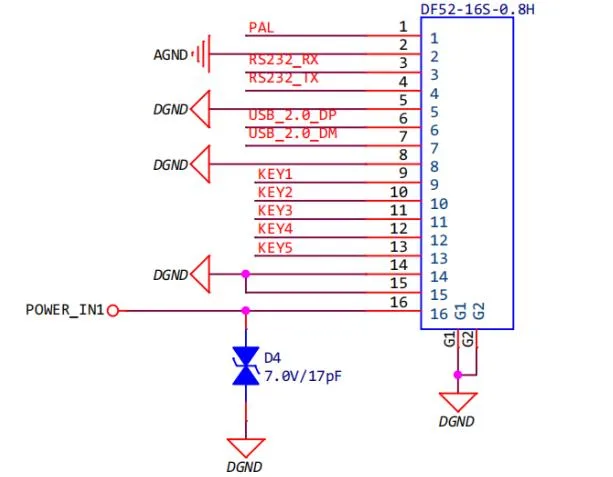
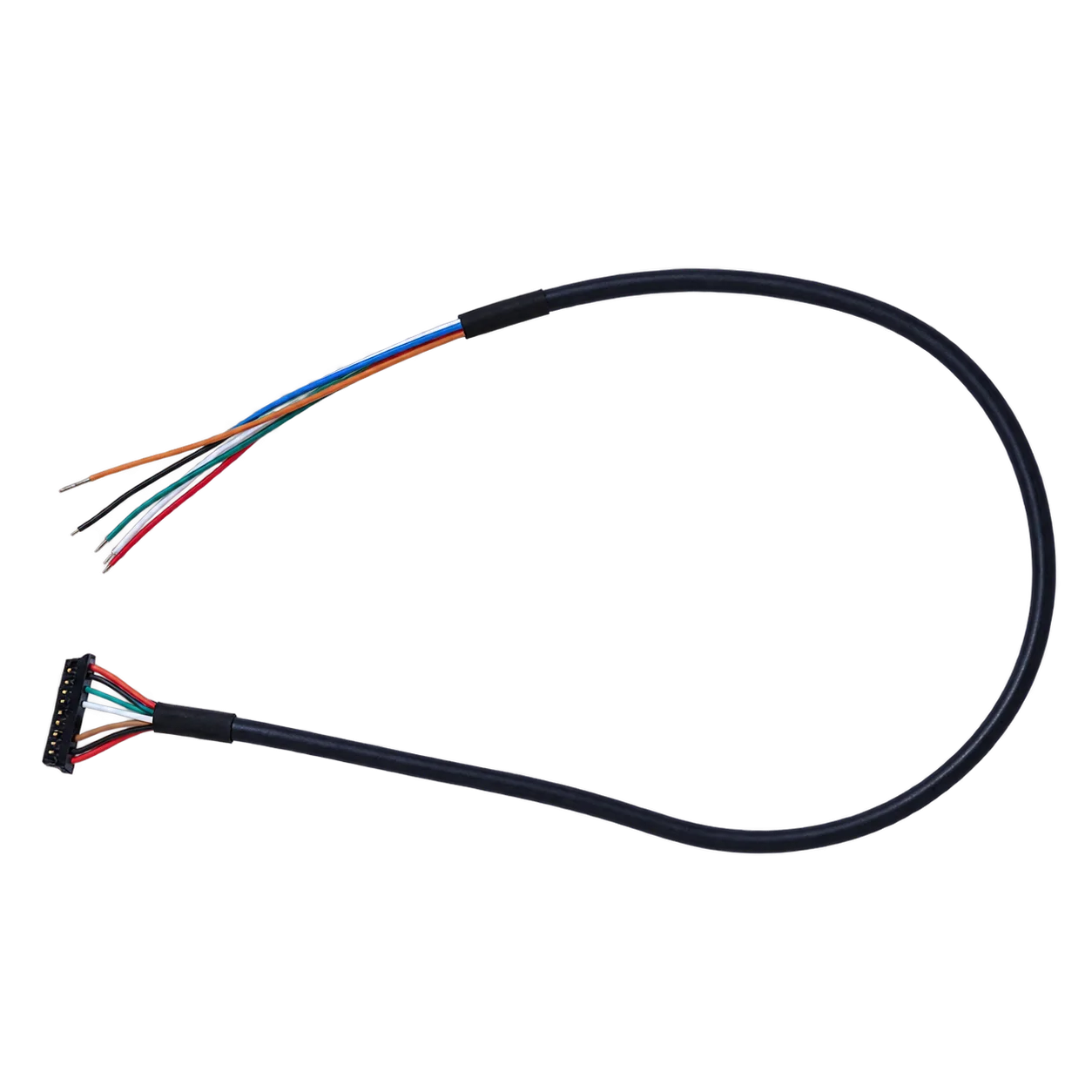
POWER_IN1 on the 16-pin guide and POWER_IN2 on the separate 26-pin guide are 5 V inputs; do not apply 12 V. The Type-C board uses a different guide. These electrical examples are not a complete AeroMini engineering drawing: request matched mechanical CAD for the ordered lens and tailboard before enclosure or gimbal design. None of these interface resources establishes procurement status.
A better workflow for North America RFQs
The cleanest workflow is not “ask for price, then ask for documents.” It is a paired engineering-and-procurement sequence.
- Start with the application: drone inspection, outdoor security monitoring, industrial maintenance, embedded OEM device, or handheld observation.
- Select a product path from CAMCUDA thermal camera modules or a relevant application page such as drone thermal camera application.
- List the required interface: USB, MIPI, DVP, RS-422, CVBS analog output on applicable configurations, or undecided.
- Attach procurement needs: NDAA statement, CE/RoHS context, mechanical drawing, datasheet, quote terms, and destination market.
- Ask for a recommended configuration instead of forcing a part number too early.
This creates a better NDAA thermal camera module supplier conversation and a repeatable RFQ record. Use the same fields for each supplier response: quoted model and configuration, required interface, document availability, missing evidence, review owner, and next action. Keep engineering acceptance and procurement review visible before approving a sample.
Sample RFQ email for an NDAA thermal camera module
Use this NDAA thermal camera module RFQ format as a plain-English starting point. Replace the details with your real project.
| Subject | RFQ: 640×512 LWIR module for North America drone inspection payload, NDAA statement requested |
|---|---|
| Application | Utility inspection drone payload for outdoor equipment review and dawn perimeter checks |
| Image requirement | 640×512 class LWIR imaging; please recommend lens/FOV based on 80-150 m target distance |
| Interface | USB evaluation preferred; please also confirm whether CVBS analog output is available on applicable configurations for an existing video chain |
| Mechanical | Compact payload envelope; please provide dimensions, mounting notes, connector orientation, and weight |
| Documents | Please provide datasheet, mechanical drawing, CE/RoHS-related documentation where available, and NDAA statement availability for buyer review |
| Commercial | Sample price, lead time, MOQ, expected annual quantity, and destination market: United States |
This NDAA thermal camera module format makes a supplier’s response much easier to evaluate. If the supplier answers only with a price, the procurement file is still incomplete. If the supplier connects product parameters, interface, and documentation clearly, the buyer has something useful to pass forward.
Red flags that slow down procurement
Watch for vague answers such as “NDAA is fine” without a document path, or “supports all interfaces” without model-specific confirmation. Be careful when a supplier cannot connect the product page to the quoted configuration. Also be cautious if documentation appears only after payment, or if the quotation changes the interface from the one engineering evaluated.
A credible NDAA thermal camera module discussion should feel boring in the best possible way: exact model, exact configuration, exact destination, exact interface, clear document availability, and no heroic claims. That is how B2B thermal imaging sourcing should sound.
Need a document-ready thermal module recommendation?
For an NDAA thermal camera module RFQ, use the AeroMini 640 product page as a compact UAV engineering reference, browse CAMCUDA thermal modules, or send your application, interface, destination market, quantity, and exact-model statement-availability request through CAMCUDA Contact / RFQ. Mention CVBS, USB, MIPI, DVP, or RS-422 as host-system requirements to confirm. Product selection does not establish procurement approval.
FAQ from North America buyer questions
Can CAMCUDA provide an NDAA statement?
Ask CAMCUDA whether an NDAA-related supplier statement is available for the exact quoted model and configuration. Include the destination market, intended use, and buyer’s document requirements, then have the buyer’s procurement or legal team review any supplied statement.
Does an NDAA statement mean every project is automatically approved?
No. Buyers should review the exact document, model, configuration, and end use. Public procurement language can be specific, so avoid treating any supplier statement as a universal approval.
Should I ask for NDAA documents before or after ordering samples?
Ask before sample approval for any NDAA thermal camera module project. If North America procurement or distributor review matters, documentation should be part of the first RFQ package.
What product details should be sent with an NDAA request?
Send application, product target, resolution, interface, lens/FOV, power budget, mechanical limits, quantity, destination country, and any buyer wording you must satisfy.
Can CVBS analog output be included in an NDAA-related RFQ?
Yes. If the system needs analog video, ask for CVBS analog output on applicable configurations and confirm it during RFQ. Do not assume every listed SKU includes every interface by default.
Which CAMCUDA product should a drone team start from?
For compact 640×512 UAV engineering evaluation, start with the AeroMini 640 product page. Specify non-radiometric 60 Hz default or 30 Hz factory configuration, or separately enquire about the 25 Hz radiometric version, then confirm the lens, interface kit, and complete payload envelope. This is an engineering starting point; request exact-model procurement documentation independently.
What if procurement asks for TAA as well?
Do not assume NDAA and TAA are the same thing. If a buyer needs TAA or another sourcing rule, state that requirement explicitly in the RFQ so CAMCUDA can review what documentation is available.
How can we make the next RFQ easier to review?
Reuse the same fields: application, quoted model and configuration, lens/FOV, interface, complete assembly size and weight, power budget, quantity, destination, required documents, and open questions. Record the supplier’s response date and the buyer’s review owner so later samples and reorders can be checked against the same file.