dji thermal drone: 4 reliable RFQ questions before replacing the payload
Procurement memo for UAV payload teams
dji thermal drone: 4 reliable RFQ questions before replacing the payload
A dji thermal drone can be the right finished tool for inspection work. The problem starts when a team treats that finished aircraft experience as a ready-made module specification. Before replacing a payload, copying a camera feature list, or asking for a compact LWIR quote, the buyer needs to answer four questions that separate a DJI-style workflow from a custom OEM thermal module project.
Quick answer
A dji thermal drone buyer should move to a custom module RFQ only when the finished aircraft or payload cannot meet the project’s mechanical, interface, data, procurement, or product-ownership requirements. For compact UAV imaging, review CAMCUDA AeroMini 640 in the non-radiometric 9 mm USB + CVBS + MIPI configuration: 640 x 512 imaging, 60 Hz factory default or 30 Hz factory option. This version shows relative heat patterns without calibrated temperature readings. Confirm the delivered board, host compatibility, complete assembly envelope and available procurement documents before ordering.
dji thermal drone research should start with the system boundary
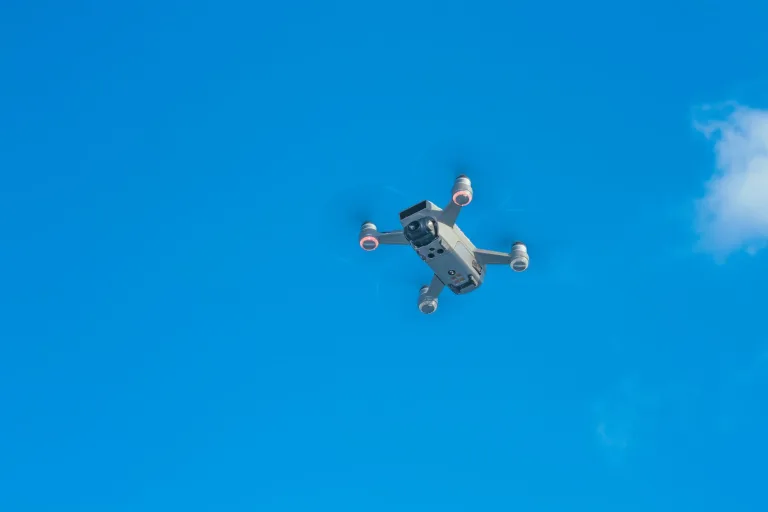
The common buyer moment is not dramatic. A service team has flown a DJI thermal platform, shown useful heat signatures to a utility or industrial customer, and proven that aerial thermal viewing matters. Then the internal question changes: should the next step be more finished drones, a different payload, or a custom thermal module inside the team’s own platform?
That question needs a boundary. DJI Enterprise lists the thermal-equipped Mavic 3T within the Mavic 3 Enterprise series. Its thermal camera is specified at 640 x 512. The Zenmuse H30T specs describe a 1280 x 1024 thermal camera in a detachable SKYPORT gimbal payload. These are aircraft and payload references, not raw module drawings or evidence that an OEM core is compatible with a DJI platform.
That distinction matters for CAMCUDA buyers. A compact module such as AeroMini 640 in the selected non-radiometric configuration is for teams building a payload, embedded device, robotics platform, inspection product, or custom UAV system. It is not a drop-in DJI replacement claim. The useful RFQ begins when the buyer can explain why the finished DJI thermal drone path is not enough.
A practical trade-off follows. Finished drones reduce integration work, but they can limit ownership of enclosure design, video routing, host processing, interface behavior, documentation package, and product roadmap. A module path gives more control, but it makes the buyer responsible for airframe fit, optics, enclosure, electrical interface, software path, compliance review, and final validation.
Four RFQ questions before a dji thermal drone buyer asks for a module quote
1. What did the finished DJI workflow prove, and what did it not prove?
A field flight can prove that thermal visibility helps the mission. It may show that hot electrical equipment stands out, a roof anomaly is visible, or night patrol workflow is easier with thermal contrast. It does not prove that a compact module fits your bracket, talks to your host board, survives your enclosure, or ships with the documentation your customer requires.
Write this as a gap statement. For example: “The finished aircraft proved the inspection workflow, but our product needs a smaller fixed payload with USB video into our processor and a supportable RFQ document set.” That sentence is more useful than asking for “a dji thermal drone camera module.”
2. Is this a finished-aircraft purchase or an OEM payload program?
If the team only needs flight operations, operator training, and repeat inspections, buying finished aircraft may remain the cleaner path. If the team needs its own enclosure, private host electronics, controlled sourcing, custom data handling, or integration into a non-DJI platform, the conversation shifts to OEM thermal modules.
This is where a buyer should review CAMCUDA’s drone thermal camera application page and compare it with the broader thermal imaging cores category. The purpose is not to force a module into every drone project. It is to choose the correct procurement path.
3. Which video and control path does the platform actually need?
Many late RFQ delays come from a missing interface note. For the selected AeroMini kit, specify USB UVC into the host, MIPI CSI-2 into an embedded receiver, or CVBS PAL/NTSC for an analog path. Confirm the actual format, frame rate, firmware, driver and control commands for the delivered board. A 60 Hz factory setting does not promise simultaneous full-rate output on every interface. The included USB cable requires customer soldering; do not assume universal host compatibility.
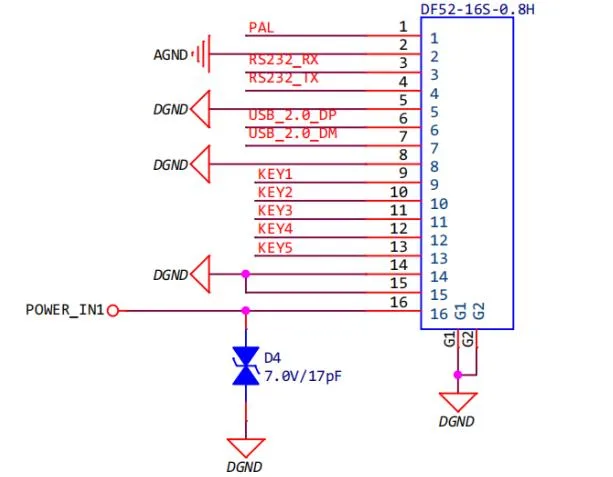
Use the AeroMini interface references and AeroMini manuals, serial commands and USB SDK resources for the matching board. The pictured 16-pin USB/CVBS connector and separate 26-pin MIPI/DVP connector are not the Type-C board guide. Confirm control wiring and logic levels before connection. If the host requires RAW or minimally processed data, the standard AeroMini configuration needs customization; review that requirement before ordering.
4. What documents will stop procurement from freezing the sample order?
North America and Europe buyers often need more than a quote and a product image. Ask which datasheets, drawings, interface files and buyer-required NDAA or CE/RoHS-related documents can be provided for the exact configuration and destination. Availability and applicability require confirmation; this article does not establish certification or procurement eligibility. For U.S. operations, the FAA Remote ID guidance explains requirements for drones that are registered or required to be registered, including applicable operating routes and exceptions. Keep aircraft obligations separate from thermal-module sourcing.
dji thermal drone selection chart: finished payload or compact module?
| Buyer situation | Likely path | RFQ evidence needed | CAMCUDA next step |
|---|---|---|---|
| Service team needs repeat inspections with minimal engineering work | Finished drone or payload bundle | Aircraft, battery, mission software, training, support, and local operating requirements | Use the article as a boundary check before requesting modules |
| OEM team needs its own enclosure and host electronics | Compact LWIR module path | Mechanical envelope, board stack, cable route, lens/FOV, video path, and control path | Review AeroMini 640 imaging |
| Existing transmitter or recorder expects analog video | Module path with interface confirmation | CVBS analog output requirement, applicable configuration, latency expectation, and destination market | Confirm the AeroMini board |
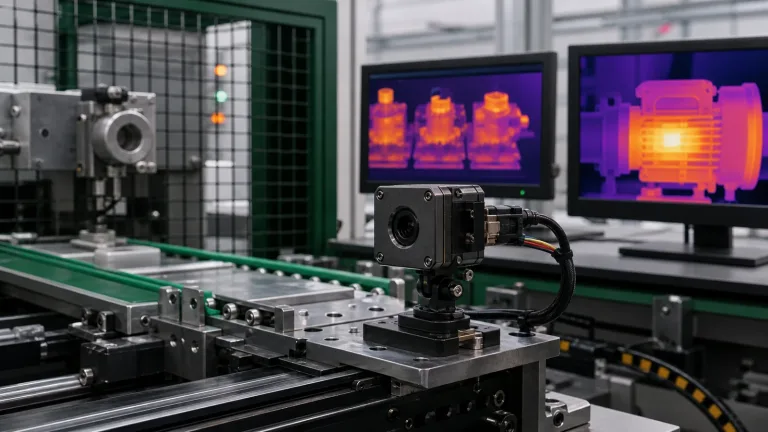
| Industrial or utility buyer needs outdoor deployment support | Application review before quote | Temperature, vibration, enclosure, target distance, monitoring workflow, and documents | Outdoor field thermal imaging |
| Procurement needs source and compliance files before sample approval | Document-led RFQ | Datasheets, drawings, interface references, and confirmation of required documents for the exact configuration | AeroMini datasheet |
AeroMini 640 evidence for a custom UAV thermal module RFQ
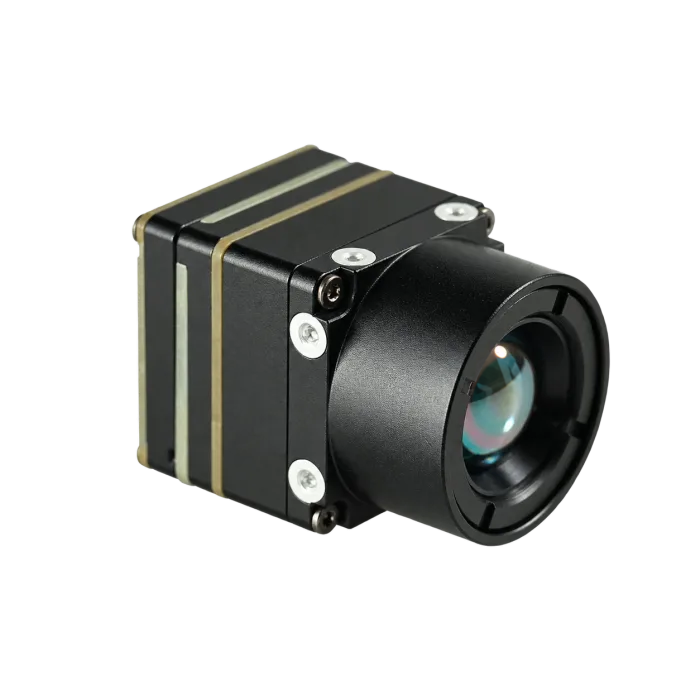
AeroMini 640 is the main reference here for a compact 640 x 512 UAV imaging RFQ. Evaluate the selected non-radiometric 9 mm USB + CVBS + MIPI kit against your payload boundary before comparing other cores. Keeping one configuration in view makes the bracket, host, cable and document discussion specific; it does not mean that every UAV application needs this module.
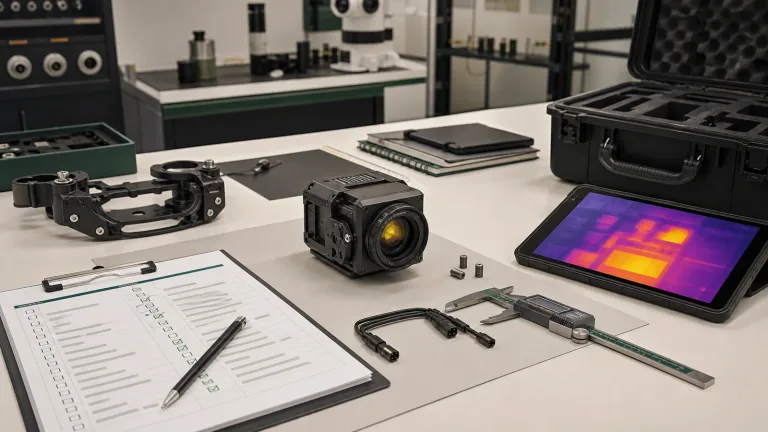
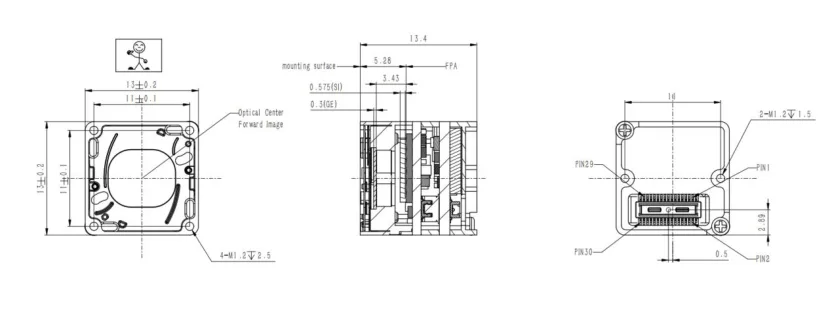
For a dji thermal drone buyer moving into custom payload work, compare the AeroMini parameters below with the actual bracket, host board, cable and procurement requirements. Its 9 mm F/1.0 lens is listed at 48.7 degrees horizontal x 38.6 degrees vertical FOV. The published dimensions and weight exclude the lens and flange. Request the complete ordered 9 mm assembly drawing; the available 7 mm STEP reference is not that drawing.
| Product model | AeroMini 640 · non-radiometric · 9 mm · USB + CVBS + MIPI |
|---|---|
| Detector type | Vanadium oxide uncooled infrared focal plane detector |
| Resolution | 640 x 512 |
| Pixel pitch | 12 um |
| Spectral range | 8-14 um |
| Non-radiometric frame rate | 60 Hz factory default; 30 Hz factory option; confirm the rate on each output |
| NETD | Less than or equal to 30 mK at 25 deg C, F/1.0 |
| Illustrated board power | 5 V only at POWER_IN1 pin 16 and the separate 26-pin POWER_IN2; confirm the selected board guide |
| Typical power consumption | Less than 0.5 W typical module consumption at 25 deg C; complete-kit consumption may differ |
| Digital video | USB UVC and MIPI CSI-2 on the selected board; validate host, format and output mode |
| Communication | Pictured 16-pin RS232_RX/TX on pins 3/4; confirm board revision, logic levels and commands |
| Analog video | CVBS PAL/NTSC on the selected board; confirm mode, wiring and receiver compatibility |
| Dimensions | 21 mm x 21 mm x 28 mm, excluding lens and flange; confirm full 9 mm assembly |
| Weight | Less than 20 g, excluding lens and flange; confirm complete assembly weight |
| Operating temperature | -40 deg C to +80 deg C |
| Storage temperature | -50 deg C to +85 deg C |
| Humidity | 5%-95%, non-condensing |
Teledyne FLIR’s SIRAS drone page, now marked discontinued, provides a historical example of an aircraft-plus-payload workflow. If the buyer is building a custom system instead, the RFQ must describe the architecture the module will enter. Use this as a workflow reference, not a current purchase recommendation.
Application case: the inspection team that outgrows a finished drone workflow
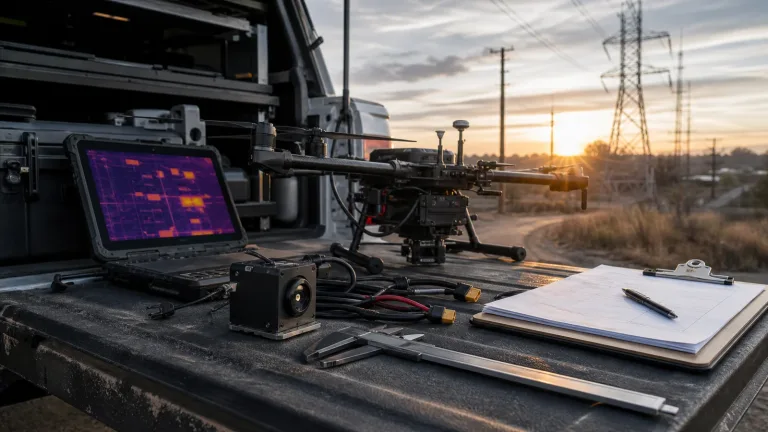
In this illustrative scenario, consider a utility inspection company that starts with a finished DJI thermal drone for pilot training and field proof. The team learns where thermal imagery helps: transformer cabinets, roof moisture clues, perimeter hot spots, and night inspection passes. After several jobs, a hardware customer asks for a smaller fixed sensor head that can mount on a different UAV platform and stream into the customer’s own processor.
The mistake would be to send the supplier a DJI screenshot and ask for “the same camera, cheaper.” The useful request is narrower: AeroMini 640 non-radiometric 9 mm imaging, a complete assembly envelope and weight, USB UVC into the host, matched control commands, and CVBS validation if the transmitter needs it. Provide mechanical and electrical requirements before sample release. This imaging configuration can show relative heat patterns; it does not provide calibrated temperature measurements or diagnose an equipment fault by itself.
That handoff is where CAMCUDA’s thermal modules, uncooled thermal modules, and application pages help the buyer compare product fit without pretending that a module alone solves aircraft integration.
Common mistakes when replacing a DJI-style thermal payload
- Assuming module equals drone payload. A compact LWIR module still needs optics, enclosure, host electronics, power, control, software, and validation.
- Copying finished-aircraft specs into a module RFQ. DJI payload specs and module-level drawings answer different questions.
- Leaving CVBS until after sample pricing. If the project uses a legacy display, recorder, transmitter, or low-latency analog path, confirm CVBS analog output on applicable configurations during RFQ.
- Ignoring procurement documents. Drawings, interface references and the availability of buyer-required NDAA or other compliance-related documents for the exact configuration can matter before sample approval.
- Forgetting the outdoor mission. Utility yards, perimeter monitoring, and field inspection conditions should be written into the RFQ, not implied by the word drone.
RFQ checklist for a dji thermal drone buyer moving to an OEM module
| RFQ item | Details to send CAMCUDA |
|---|---|
| Reason for module path | Explain why a finished DJI thermal drone or standard payload is not enough for the project. |
| Target platform | Custom UAV, robotics platform, fixed monitoring device, gimbal, bracket, or embedded inspection product. |
| Mechanical envelope | Available space, payload weight target, lens clearance, connector direction, cable route, and enclosure window. |
| Thermal requirements | Resolution need, target size, distance, lens/FOV expectation, frame-rate expectation, and inspection environment. |
| Interface path | USB UVC or MIPI CSI-2 host path, board-matched control commands, CVBS PAL/NTSC requirements, power input and receiver validation |
| Documents | Datasheet, complete assembly drawing, matched interface guide and support files; ask which NDAA or CE/RoHS-related documents can be provided for this configuration and destination |
| Commercial information | Prototype quantity, annual estimate, destination country, schedule, and engineering support expectations. |
For the next decision, review the AeroMini configuration FAQ, then send the application notes through CAMCUDA contact/RFQ. A short, specific request usually beats a long feature wish list.
Ask for the module evidence before the payload design hardens
If the finished drone path is no longer enough, send CAMCUDA the aircraft or platform boundary, payload space, video/control path, inspection workflow, destination market, and document requirements. The team can review whether the selected AeroMini 640 configuration fits the custom thermal drone module path before sample money moves.
Review AeroMini 640 | AeroMini datasheet | Drone thermal camera applications | Request RFQ
Technical author: Daniel · Hardware Support; Sales contributors: Vivian, Lena and Sophie.
FAQ: dji thermal drone module sourcing questions
Is AeroMini 640 a replacement part for a DJI drone?
No. AeroMini 640 is a thermal imaging module for OEM and payload integration, not a drop-in DJI replacement part. The selected non-radiometric 9 mm USB + CVBS + MIPI kit needs host electronics, matched power and wiring, an enclosure, software integration and final payload validation. It does not provide calibrated temperature readings.
When should a dji thermal drone buyer consider a custom module?
Consider a module when the finished drone or payload cannot meet mechanical, interface, sourcing, data-flow, enclosure, documentation, or product-roadmap needs. If the finished system already fits the mission, a module RFQ may add unnecessary engineering work.
Why does the RFQ need to explain the finished DJI workflow?
The finished workflow shows what the field team already proved and what remains unsolved. A supplier can respond more accurately when the buyer explains whether the gap is size, interface, video routing, control, documentation, cost structure, or platform ownership.
Does a custom UAV thermal module need CVBS analog output?
Only if the system needs an analog path to a transmitter, recorder or display. The selected AeroMini USB + CVBS + MIPI board supports CVBS; confirm PAL or NTSC, wiring, frame rate and receiver compatibility for the delivered configuration. Use its matched guide and allow for customer soldering of the included USB cable.
What AeroMini details matter most for compact payload fit?
Start with the published 21 mm x 21 mm x 28 mm size and under 20 g weight, both excluding the lens and flange. Then confirm the complete 9 mm assembly, tailboard, connector direction, cable route and bracket/enclosure clearance. The separate SuperMini bare-core drawing above is not an AeroMini assembly drawing.
What documents should a North America buyer request?
Ask which datasheets, complete assembly drawings, matched interface guides, destination-market notes and buyer-required NDAA or CE/RoHS-related documents can be provided for the exact configuration. Confirm availability and applicability before sample approval. A product listing or document alone does not establish certification or procurement eligibility.
Can CAMCUDA help compare finished drone and module paths?
CAMCUDA can help with module-level product selection and RFQ review. The buyer should still evaluate aircraft operation, flight approvals, local drone rules, system integration, and final payload validation separately.
What is the most common mistake in a DJI-to-module RFQ?
The most common mistake is asking for a camera that feels like the finished drone experience without defining the new architecture. A module supplier needs mechanical, electrical, optical, software, documentation, and commercial details to quote responsibly.
Which CAMCUDA pages should a buyer review before sending the RFQ?
Start with the AeroMini product page, AeroMini datasheet, AeroMini FAQ and AeroMini developer resources. Use the drone thermal camera and outdoor field imaging pages to describe the mission, then send the selected configuration and integration gaps through contact/RFQ. These references help turn a finished-drone workflow into a specific module handoff.