high-accuracy online thermal camera core: 5 Reliable RFQ Notes for Live Monitoring
Engineering memo for continuous thermal monitoring
high-accuracy online thermal camera core: 5 Reliable RFQ Notes for Live Monitoring
A high-accuracy online thermal camera core sounds like a sensor purchase until the first live-monitoring cabinet runs for a week and the temperature trend no longer matches the bench demo. The usual problem is not that the core suddenly became poor. The RFQ left out the measurement chain: target surface, optics, enclosure, interface timing, calibration expectation, and the document package the buyer needs before samples.
Quick answer
A high-accuracy online thermal camera core should be specified as a complete monitoring path, not just a resolution and price request. Define the target, emissivity assumption, working distance, field of view, enclosure window, frame-rate need, host interface, calibration documents, and acceptance test. For compact embedded sensing, start with the Featured TC160-NF 160×120 Uncooled LWIR Thermal Imaging Module. If the same project needs 640-class image detail, compare the Featured HR21-L612-USB 640×512 module before ordering samples.
What a high-accuracy online thermal camera core has to prove
The buyer moment is familiar. A maintenance team wants a small thermal core inside a cabinet or a fixed monitoring head near outdoor equipment. The demo image looks clean. The dashboard shows a sensible temperature trend. Then the enclosure changes, the target surface changes, or the host software samples frames differently, and the “accurate” core becomes a dispute between engineering and procurement.
Accuracy in live thermal monitoring is not a single line in a table. It is the result of a measurement model, a stable optical path, a known target, and a repeatable data path. NIST’s thermal camera measurement work is useful here because it treats calibration as a procedure for converting images into temperature measurements, not a decorative certificate. FLIR’s calibration education makes a similar point: thermal cameras need uniformity correction and correlation against known temperature points before measurement claims are meaningful.
For Camcuda buyers, the practical question is narrower: what must the RFQ include so a supplier can recommend the right uncooled LWIR module, lens path, interface, and support documents? A high-accuracy online thermal camera core should be evaluated against the object it will monitor, the installation geometry, and the software decision it feeds. That is especially true when the buyer wants online monitoring rather than a technician holding a thermal imager for a single inspection.
Teledyne FLIR’s OEM core pages show why serious buyers talk about SWaP, core families, interfaces, and support resources together. Micron’s edge AI material is also a helpful reminder that sensor data eventually becomes a local decision, alert, or model input. Those industry patterns do not prove any Camcuda claim. They explain why the RFQ has to cover the full signal path before price, sample timing, and acceptance criteria make sense.
high-accuracy online thermal camera core selection chart
Use this chart before asking for a quote. It turns “accuracy” from a vague buying word into engineering inputs that can be reviewed by both sides.
| Decision area | Why it affects live accuracy | What to send in the RFQ |
|---|---|---|
| Target surface | Different materials radiate differently, so trend quality depends on emissivity and surface condition. | Material, finish, expected temperature range, and whether a reference patch is possible. |
| Working distance and FOV | The monitored object must occupy enough pixels for useful trend or alarm logic. | Distance, object size, required scene width, and mounting tolerance. |
| Enclosure and window | A protective window or angled cover can alter thermal transmission and create reflection problems. | Window material, thickness, angle, sealing plan, and outdoor exposure. |
| Frame rate and data path | Fast process changes may need more frequent sampling; slow cabinet monitoring may not. | Alert interval, host processor, interface preference, and storage or edge-processing plan. |
| Calibration expectation | Factory calibration may be enough for trend monitoring, but measurement claims need clearer acceptance work. | Acceptance method, reference source, tolerance discussion, and required documents. |
| Procurement documents | Approvals can stall if drawings, interface references, or compliance statements arrive late. | Datasheet, mechanical drawing, interface reference, CE/RoHS review where applicable, and NDAA statement request if needed. |
The trade-off is not always higher resolution. A 160 x 120 core can be a disciplined choice when the object is fixed, close, and large enough in the scene. A 640 x 512 module makes more sense when the scene is wider, the target is smaller, the buyer needs richer operator review, or the same hardware may later move into a payload or inspection device.
Featured Camcuda modules for online monitoring RFQs
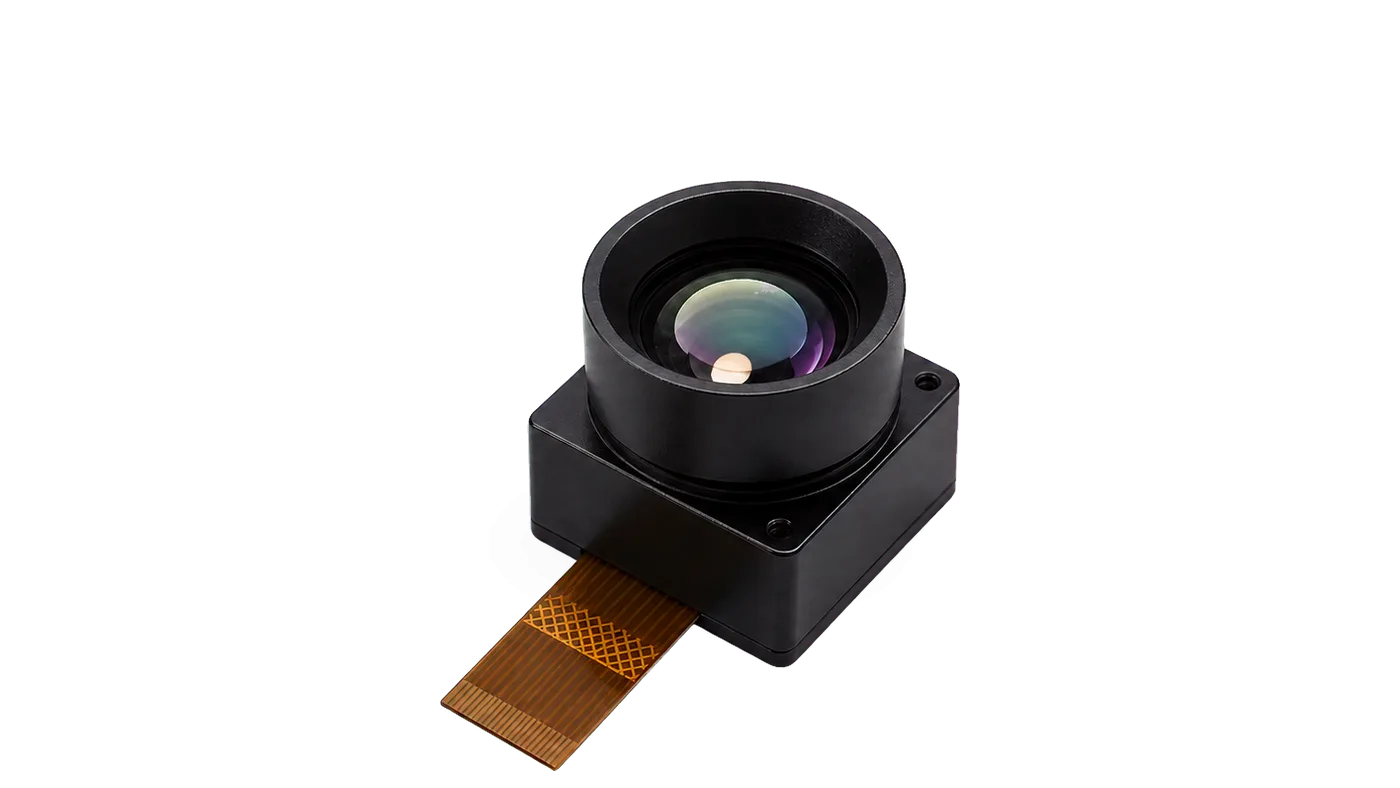
Camcuda currently has Featured WooCommerce products that support two different evaluation paths. The TC160-NF is the cleaner first discussion for compact online sensing. The HR21-L612-USB is the better comparison when the buyer wants 640 x 512 image detail, USB video, and a compact 640-class module for OEM or payload-style integration.
| Parameter | TC160-NF | HR21-L612-USB comparison path |
|---|---|---|
| Best use in this article | Compact fixed sensing, smart-device thermal input, HVAC or cabinet monitoring | 640-class OEM imaging, UAV payloads, robotics, outdoor inspection |
| Resolution | 160 x 120 | 640 x 512 |
| Spectral range | 8-14 um | 8-14 um |
| Frame rate | Up to 25 FPS | 50 Hz detector frame rate |
| Interface | SPI host interface | USB video, USB serial port, 1 x RS-422 |
| Power | 3.3 V supply; around 76-78 mW reference | 5 V +/-0.5 V; <1.2 W including expansion board |
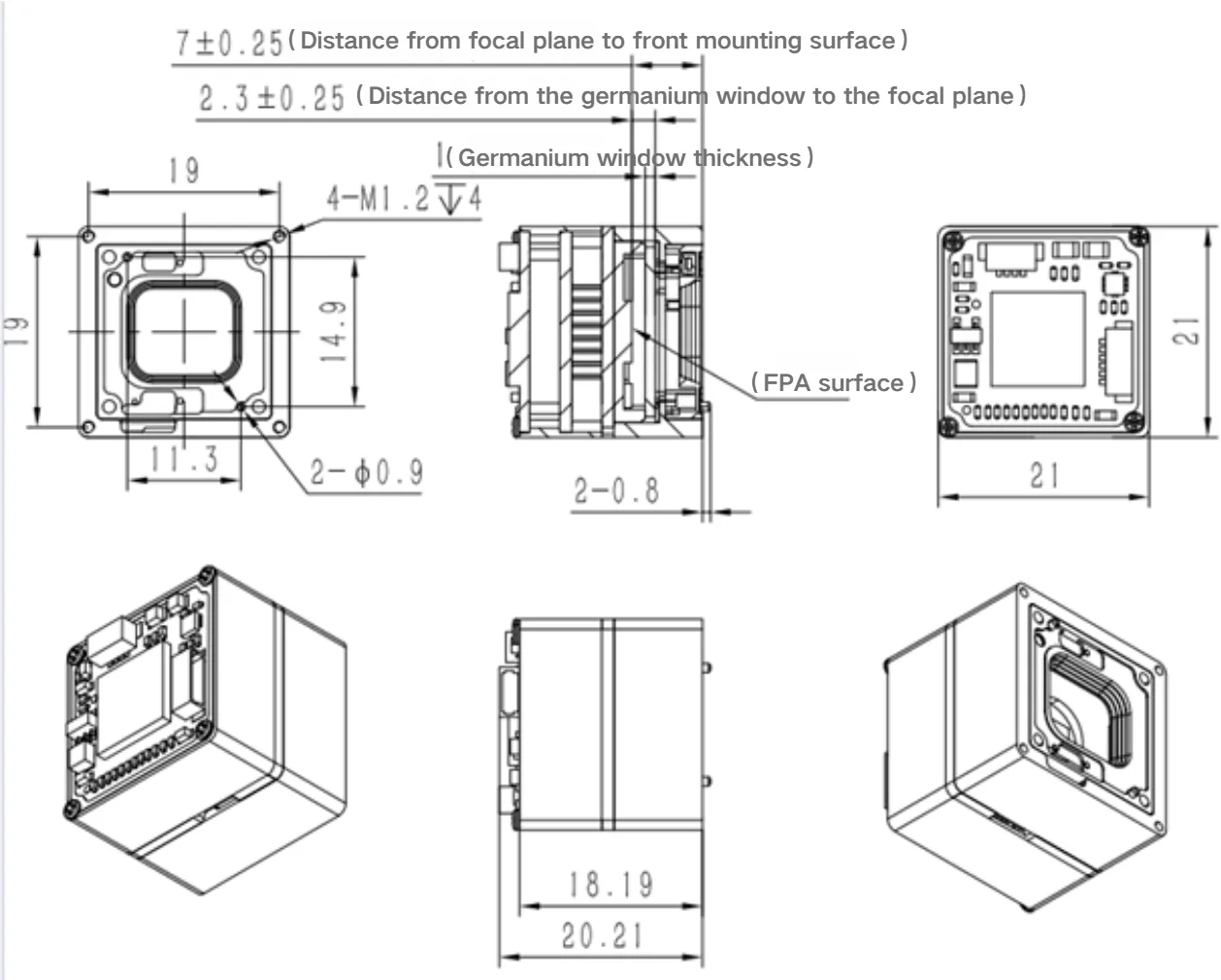
| Mechanical note | 10-pin FPC, 0.5 mm pitch reference; confirm drawing during RFQ | 21 mm x 21 mm x 20.2 mm; <15 g module weight |
| Accuracy note | Factory-calibrated thermal output; confirm acceptance method during RFQ | <=40 mK NETD @ 25 C, F#1.0; confirm measurement and interface needs during RFQ |
For a high-accuracy online thermal camera core, TC160-NF is often the more honest starting point when the monitored object is fixed and the software only needs trend or threshold behavior. HR21-L612-USB should enter the conversation when the buyer needs more scene detail, operator-visible thermal video, or a compact module that may also serve drone, robotics, or outdoor inspection work.
Interface and integration notes before sample ordering
The most expensive accuracy mistake is mechanical, not mathematical. A core can perform well on an open bench and then behave differently once it sits behind a window, close to a warm processor, or beside a cable bundle that blocks airflow. The RFQ should describe the enclosure before the buyer treats the module quote as final.
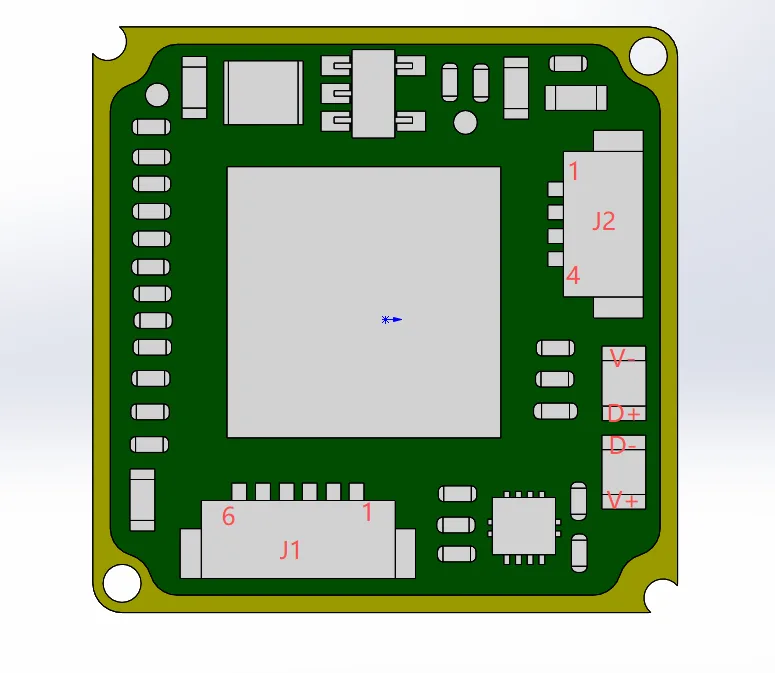
For TC160-NF, the SPI host path and 3.3 V power plan should be checked against the host board early. For HR21-L612-USB, buyers should confirm USB video, USB serial communication, RS-422, power, and any analog-video requirement. Camcuda thermal imaging modules can support CVBS analog output on applicable configurations, but CVBS must be confirmed during RFQ for the exact model, lens, firmware, destination market, and host system. Do not assume every configuration includes every interface by default.
Procurement language matters as well. If the project is for North America, outdoor security monitoring, industrial monitoring, or another documentation-sensitive deployment, ask for Camcuda’s NDAA statement available on request together with product specifications, mechanical drawings, and interface references. For broader module browsing, use the sitemap-backed thermal imaging cores and uncooled thermal modules pages before narrowing the sample request.
Application case: a fixed cabinet monitor that failed after enclosure changes
An OEM integrator is building a compact online monitor for electrical cabinets in a utility yard. The prototype uses a small LWIR core pointed at a repeatable set of terminals. On the bench, the trend looks stable. In the first enclosed build, the plastic window sits at a slight angle, the host board warms the nearby cavity, and the monitored target occupies fewer pixels than expected. The team asks whether the high-accuracy online thermal camera core was overrated.
The better diagnosis starts upstream. The RFQ did not include the window material, mounting angle, expected target size, cabinet temperature range, or acceptance test. No one confirmed whether the software needed temperature measurement, relative change, or simple alarm classification. Engineering also forgot to ask whether a reference target or blackbody-style validation step would be used during sample acceptance.
In this scenario, the right Camcuda discussion could start with TC160-NF if the view is close and the target is fixed. If the cabinet view must cover more components or support operator inspection, HR21-L612-USB may be a better 640 x 512 comparison. The buyer should also review Camcuda’s outdoor and field thermal imaging page because fixed field monitoring raises different questions from a clean indoor bench: enclosure, sunlight, ambient range, cable service, and maintenance access.
Common mistakes when buying for online thermal accuracy
- Using “high accuracy” as a requirement without defining target material, temperature range, and acceptance method.
- Choosing resolution first when the real issue is target size in pixels, lens/FOV, or mounting distance.
- Testing on an open bench, then adding a window or enclosure after the sample has been approved.
- Assuming factory-calibrated output automatically proves every final product measurement claim.
- Leaving SPI, USB, RS-422, CVBS, host timing, and data format questions until the PCB layout is almost finished.
- Requesting compliance and procurement documents after the purchasing team has already started approval.
RFQ checklist for a high-accuracy online thermal camera core
Send this information before asking for a final sample recommendation. It helps Camcuda respond with a module path instead of a vague product suggestion.
- Application: electrical cabinet, HVAC monitor, smart device, outdoor equipment, utility yard, robotics, or another fixed monitoring workflow.
- Measurement goal: relative trend, threshold alarm, operator image review, or temperature-related output requiring validation.
- Target details: material, surface finish, approximate temperature range, minimum target size, and whether a reference patch is allowed.
- Geometry: distance, field width, camera angle, enclosure window, bracket constraints, and service access.
- Interface: SPI for TC160-style embedded sensing, USB/RS-422 for HR21-style integration, and whether CVBS analog output on applicable configurations must be confirmed.
- Electrical and thermal environment: supply voltage, host board heat, airflow, operating temperature, and duty cycle.
- Documents: datasheet, mechanical drawing, electrical interface reference, product specification, CE/RoHS-related review where applicable, and NDAA statement available on request if procurement requires it.
- Commercial path: prototype quantity, expected production quantity, destination market, sample timing, and the engineer responsible for acceptance testing.
When the checklist is ready, review Camcuda’s support and downloads area, check the FAQ for common module questions, and send the final request through Contact / RFQ.
Build the RFQ around the monitoring path
If your project needs a compact high-accuracy online thermal camera core, start with TC160-NF for embedded fixed sensing and compare HR21-L612-USB when 640 x 512 image detail or richer interface options are required. Share the target, enclosure, interface, and documentation list so Camcuda can recommend a module path that matches the real monitoring station, not just a keyword.
FAQ: high-accuracy online thermal camera core
Does high accuracy mean the highest resolution module?
No. Resolution controls scene detail, but accuracy depends on target surface, optics, calibration expectation, enclosure, and data handling. A lower-resolution core can work well for a fixed close target, while a 640 x 512 module helps when scene detail matters.
Is TC160-NF suitable for online monitoring?
TC160-NF can be suitable for compact embedded thermal sensing and fixed monitoring when the target size, distance, FOV, SPI host path, and acceptance method fit the project. Confirm lens, documentation, quantity, and availability during RFQ.
When should HR21-L612-USB be considered instead?
Use HR21-L612-USB as the comparison path when the project needs 640 x 512 thermal image detail, USB video, USB serial communication, RS-422 control, compact mechanical fit, or a module that may support UAV, robotics, or outdoor inspection work.
Can a thermal core measure exact temperature online?
It can provide temperature-related output when the module configuration and measurement setup support it, but exact claims require a defined target, calibration approach, environment, and acceptance test. Do not turn a general product table into an unsupported measurement promise.
What usually causes live-monitoring drift after a good bench demo?
Common causes include enclosure windows, changing target surface, warm nearby electronics, blocked airflow, unstable mounting, different working distance, and software sampling changes. The RFQ should describe these conditions before samples are approved.
Should CVBS be requested for online monitoring?
Request CVBS only when the project needs analog video for a legacy monitor, recorder, transmitter, or low-latency viewing path. Camcuda can support CVBS analog output on applicable configurations; confirm CVBS during RFQ.
What documents should procurement ask for?
Ask for product specifications, mechanical drawings, electrical interface references, available CE/RoHS-related documentation where applicable, and an NDAA statement available on request if the destination market or buyer policy requires it.
How should acceptance testing be described?
Define the monitored target, distance, enclosure state, ambient range, warm-up behavior, data output, and reference method. If a calibrated reference source is required, say so before sample shipment.
Can one RFQ compare TC160-NF and HR21-L612-USB?
Yes. State that you want a sensing-path comparison. Camcuda can then discuss whether a 160 x 120 SPI module is enough or whether a 640 x 512 USB/RS-422 path is more appropriate for the monitoring workflow.