Thermal Drones for Hunting & Game Recovery: OEM Payload Guide and Sensor Selection
Thermal Drones for Hunting & Game Recovery: OEM Payload Guide and Sensor Selection
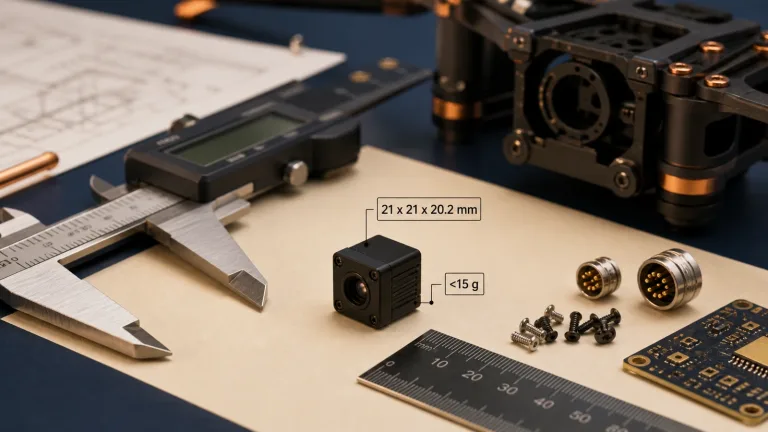
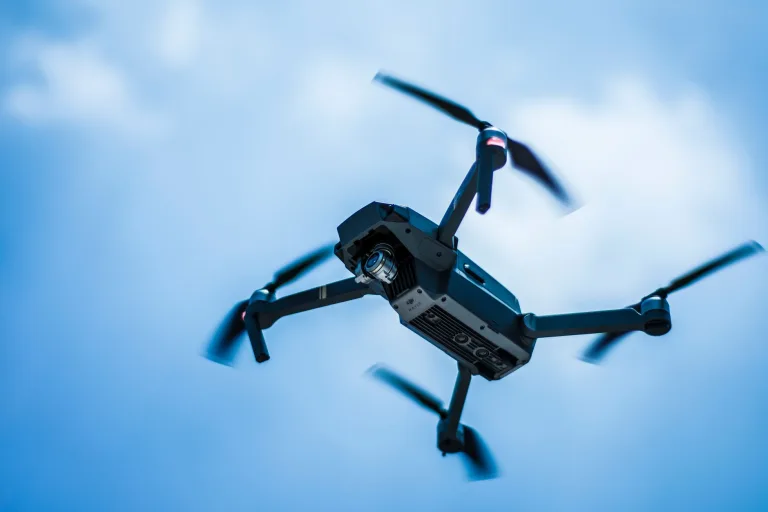
Thermal payload integration on unmanned aerial vehicles (UAVs) has completely overhauled game recovery, nocturnal predator management, and agricultural damage surveys. When optical payloads wash out under dense canopies or zero-lux conditions, long-wave infrared (LWIR) cores cut through the dark by reading pure surface emissivity differences. But putting a thermal sensor on an airframe isn’t as simple as slapping a core onto a gimbal. You have to balance strict SWaP (Size, Weight, and Power) constraints, sensor resolution, lens focal lengths, and signal transmission pipelines.
Here’s the deal: integrators and drone builders need to understand the underlying physics of uncooled Vanadium Oxide (VOx) focal plane arrays before turning a single screw. Whether you are building a sub-60-gram, low-latency analog CVBS rig for fast brush scouting or a 1280×1024 high-definition digital sensor pod for commercial deer recovery, your hardware decisions dictate your flight endurance, detection range, and image clarity. In this guide, we break down sensor physics, optical calculations, interface pipelines, and mechanical best practices learned from real-world bench testing and field operations.
Table of Contents
- 👉 1. Principles of Airborne Thermal Imaging in Wildlife Operations
- 👉 2. Sensor Selection: VOx Resolution, Pixel Pitch, and Thermal Dynamics
- 👉 3. Optics, Field of View, and Johnson Criteria Calculations
- 👉 4. Interface Pipelines: Low-Latency Analog CVBS vs. Digital Stream Formats
- 👉 5. OEM Hardware Evaluation: Specifications and Integrator Comparison
- 👉 6. Mechanical, Thermal, and SWaP Optimization on UAV Airframes
- 👉 7. Regulatory Framework, Fair Chase Ethics, and Operational Scope
- 👉 8. Frequently Asked Questions (FAQ)
1. Principles of Airborne Thermal Imaging in Wildlife Operations
Airborne LWIR thermal imaging relies entirely on capturing naturally radiated electromagnetic energy in the 8 to 14 µm spectral band. Unlike active night vision (NIR) systems that depend on infrared illuminators that bounce off wet leaves and spook wildlife, uncooled microbolometers are completely passive. They measure micro-variations in radiant surface temperature across the landscape, translating minute changes in thermal flux into electrical resistance variations across an array of tiny Vanadium Oxide (VOx) detector elements.
When operating from an aerial platform, thermal energy radiating from an animal passes through canopy voids and the atmospheric column before hitting the drone’s optics. That energy is collected by antireflective-coated Germanium optics (operating at wide optical apertures between F#1.0 and F#1.2), focused onto the focal plane array, processed through onboard non-uniformity correction (NUC) algorithms, and output as a high-contrast video feed for human spotting or edge-computing detection pipelines.
1.1 Thermal Emissivity vs. Background Clutter
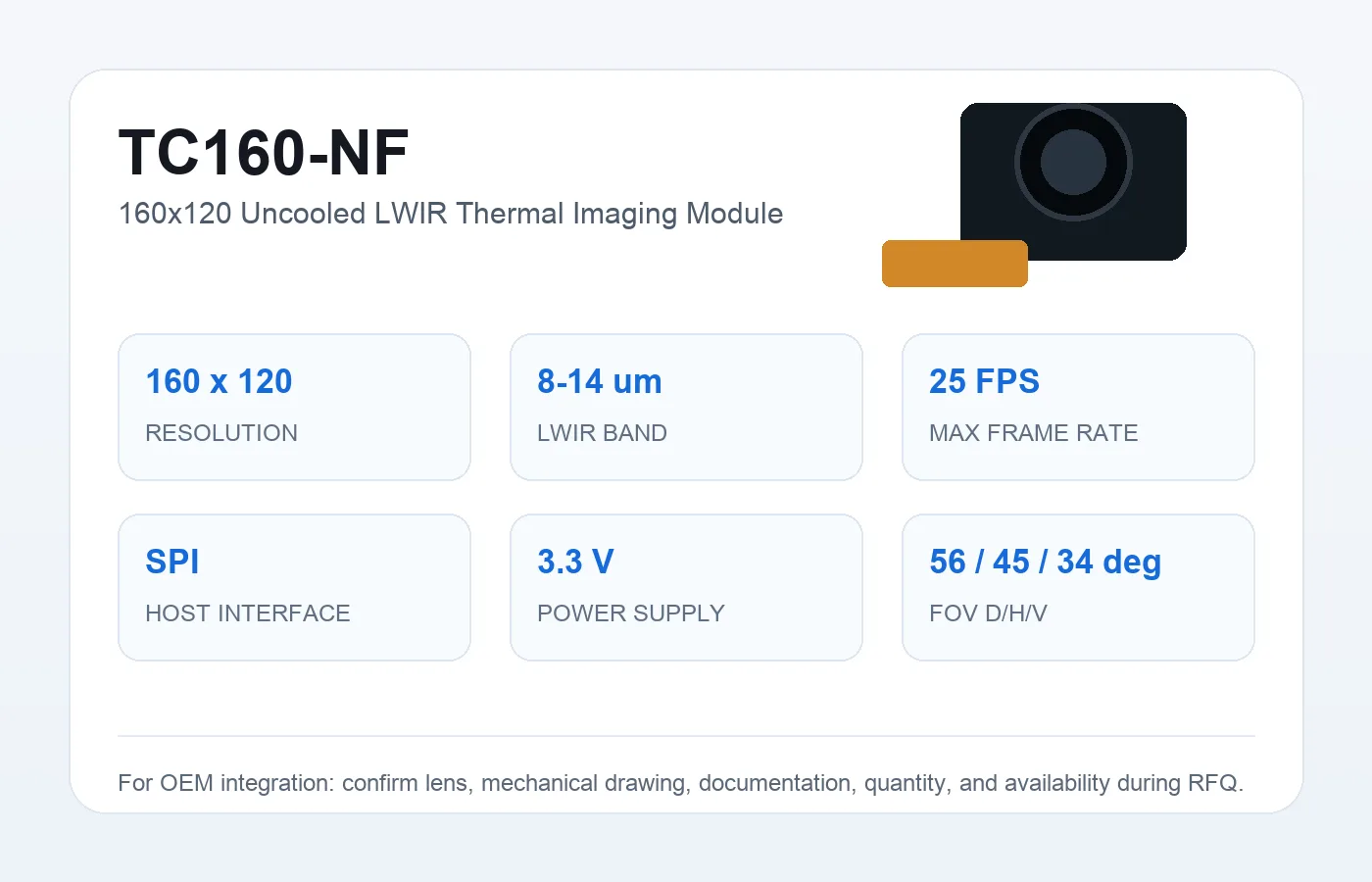
In the field, thermal detection hinges on emissivity—the efficiency with which an object emits infrared energy relative to a perfect blackbody. Biological targets like feral hogs (Sus scrofa), white-tailed deer (Odocoileus virginianus), and coyotes have high surface emissivity values between 0.95 and 0.98. Surrounding non-organic terrain—such as granite outcroppings, dry cedar brush, limestone, and bare dirt—ranges between 0.85 and 0.93.
During direct sunlight, the physical environment absorbs solar radiation until rocks and soil heat up to 40°C or more. This phenomenon, known as thermal crossover, causes ambient background clutter to match or exceed animal body temperatures, washing out your screen in gray fuzz. Aerial tracking delivers the highest signal-to-noise ratio (SNR) during the early morning hours, late at night, or under overcast skies when background terrain cools off. Biological targets—radiating a core temperature of ~38°C and an outer coat signature between 18°C and 28°C—stand out cleanly against cold ground clutter.
1.2 NETD Sensitivity, Noise Floors, and Target Acquisition
Noise Equivalent Temperature Difference (NETD) defines the smallest temperature delta the sensor array can resolve. It is measured in millikelvins (mK) at a given aperture (typically F#1.0 at 25°C). The lower the millikelvin rating, the cleaner your image when scanning thick timber or tall crops.
- 📌 NETD ≤ 50 mK: Industrial entry standard. Fine for scanning livestock standing out in open pastures under clear skies, but struggles when trying to separate an animal tucked into cedar thickets.
- ✅ NETD ≤ 40 mK to ≤ 35 mK: Professional tactical standard. Essential for detecting game tucked under pine canopies, dense honeysuckle, or standing corn, where only tiny fragments of thermal energy leak through the brush.
When integrating sensors onto dedicated drone camera platforms, low NETD arrays prevent image degradation caused by motor vibrations, prop wash convection currents, and rapid ambient temperature shifts during flight. A sub-40 mK rating ensures that even subtle thermal differences between an animal’s coat and wet ground litter remain clearly distinguishable.
2. Sensor Selection: VOx Resolution, Pixel Pitch, and Thermal Dynamics
Look, when you’re choosing a microbolometer, the core chemistry matters. Most modern cores use either uncooled Vanadium Oxide (VOx) or Amorphous Silicon (α-Si). In the shop and on the bench, VOx is the clear winner for aerial payloads. It features a higher Temperature Coefficient of Resistance (TCR), lower 1/f operational noise, and faster thermal time constants, giving you crisp image frames free of sluggish motion blur.
2.1 The Resolution Hierarchy: 256×192 vs. 640×512 vs. 1280×1024
Your native pixel array directly dictates how high you can fly while maintaining a workable search swath:
- ⚠️ 256×192 Entry Array: Provides 49,152 active pixels. At a standard cruising altitude of 200 feet Above Ground Level (AGL), a 256 core yields single-pixel blobs. You can tell *something* is warm on the ground, but you can’t tell a bedded doe from a hot cow patty, an exposed rock, or a stump without dropping low and spooking the animal.
- ✅ 640×512 Tactical Baseline: Delivering 327,680 spatial data points, this is the benchmark for professional recovery and scouting. Operating at a 12 µm pixel pitch, a 640 core gives you clear anatomical features (spine profile, ear geometry, gait) from standard operational altitudes (150 to 350 ft AGL).
- 🔍 1280×1024 High-Definition Array: The top tier for broad-area mapping and high-altitude operations. Packing over 1.3 million pixels, it lets you double your operational altitude while maintaining the same target resolution on the ground. That means you cover quadruple the acreage on a single battery pack without sacrificing target identification.
2.2 Pixel Pitch Dynamics: 12 µm vs. 17 µm Systems
Modern thermal sensors have shifted away from legacy 17 µm architecture to 12 µm pixel pitch. Shrinking the pixel pitch reduces the physical dimensions of the focal plane array, which yields huge benefits for UAV builds:
- ✅ Reduced Optical Glass Weight: Smaller focal planes let you use shorter focal length lenses to achieve the same Field of View (FOV), cutting front-element Germanium weight by 30% to 50%.
- ✅ Lower Aerodynamic Drag: Smaller optical barrels mean smaller gimbal housings, reducing motor strain and wind drag on the airframe.
- ✅ Lower Thermal Mass & Power Draw: Smaller silicon dies draw less power, keeping the core cooler and extending UAV flight time.
3. Optics, Field of View, and Johnson Criteria Calculations
Pairing your thermal core with the right lens is a balancing act between search width (how fast you clear an area) and spatial resolution (how far away you can identify a target). Choose a lens that is too wide, and you’ll have to fly dangerously close to the trees to verify an animal. Choose one that is too narrow, and you’ll be looking through a drinking straw, taking hours to search a small field.
3.1 Lens Selection: Wide-Angle Sweeps vs. Narrow Telephoto Recovery
- ⚙️ Wide Optics (6.8 mm to 9 mm): Produces broad horizontal fields of view (> 40°). Perfect for fast search grids across crop fields, pastures, or clear-cuts at altitudes under 200 ft AGL.
- ⚙️ Intermediate Optics (13 mm to 19 mm): The sweet spot for 640×512 payloads. Delivers horizontal FOVs between 22° and 33°, giving you a great balance for mixed timber, brush country, and medium-altitude flying (200 to 400 ft AGL).
- ⚙️ Telephoto Optics (25 mm to 50 mm+): Built for high-altitude scouting or narrow canopy penetration. Gives you pinpoint identification of stationary downed game without generating downwash or acoustic disturbance.
3.2 DRI Range Calculations for Common Game Targets
To calculate airborne thermal performance, we rely on Johnson’s Criteria, which dictates the number of line pairs across a target’s critical dimension ($L_c$):
- 📌 Detection (1.5 line pairs / 2 pixels): Spotting that a hot anomaly exists against the cooler background.
- 📌 Recognition (6.0 line pairs / 8 pixels): Telling what kind of object it is (e.g., four-legged animal vs. a human or vehicle).
- 📌 Identification (12.0 line pairs / 16 pixels): Confirming exact species (e.g., feral hog vs. white-tailed buck vs. livestock).
The Instantaneous Field of View (IFOV) represents the angle covered by a single pixel, calculated as:
IFOV (mrad) = Pixel Pitch (µm) / Focal Length (mm)
For a modern 12 µm core paired with a 9 mm focal length lens (IFOV = 1.33 mrad), an upright 1.8 m target yields the following theoretical operational ranges:
- 🎯 Detection Range: ~900 m (~2,950 ft)
- 🎯 Recognition Range: ~225 m (~738 ft)
- 🎯 Identification Range: ~113 m (~370 ft)
4. Interface Pipelines: Low-Latency Analog CVBS vs. Digital Stream Formats
Your video pipeline determines transmission latency, compute requirements, and the total weight of your payload. Getting this wrong adds unnecessary bulk and lag to your drone build.
4.1 Direct Analog CVBS Video Integration
For rapid-deployment payloads, micro-gimbals, and lightweight FPV scout airframes, an analog Composite Video Baseband Signal (CVBS, PAL 720×576) delivers massive practical advantages:
- ✅ Near-Zero Latency: Direct output into a standard 5.8 GHz analog video transmitter (VTX) gives you glass-to-goggle latency under 5 milliseconds. That instant response is crucial when flying tight tree-line gaps or operating close to the ground.
- ✅ Minimal Wiring Harness: A simple 3-pin connection (Power, Ground, CVBS Video) eliminates companion computers, frame grabbers, and deserializers. You can review field wiring schematics in our guide to analog CVBS thermal integration.
- ✅ Ultra-Low Power Draw: Dedicated analog modules draw ≤ 0.8 W, saving your flight pack capacity for maximum loiter duration.
4.2 Digital Pipelines: SDI, BT.1120, and Machine Vision Integration
When you need pure radiometric data for temperature mapping, automated species tracking, or multi-sensor pods, digital interfaces deliver raw metadata down to the pixel:
- ⚙️ BT.656 / BT.1120 & SDI: Feeds uncompressed digital video straight into digital telemetry links, onboard recorders, or AI coprocessors.
- ⚙️ Standard Industrial Protocols: Heavy-lift and mapping platforms often rely on structured standards, such as those governed by the A3 GigE Vision Standard, to synchronize multi-sensor payloads cleanly.
- ⚙️ Edge-AI Processing: Uncompressed 14-bit or 16-bit feeds provide the wide dynamic range needed for running real-time object detection models via Deep Learning Convolutional Neural Networks (CNNs) on companion boards like the NVIDIA Jetson Orin Nano.
5. OEM Hardware Evaluation: Specifications and Integrator Comparison
When selecting OEM thermal cores for custom game recovery or surveillance rigs, you have to weigh optical flexibility, power requirements, and mechanical footprints. Here is a breakdown of two industry-proven VOx modules engineered for airborne integration.
W640-TIF-K1 640×512 Uncooled VOx CVBS Thermal Imaging Module
The W640-TIF-K1 is an ultra-compact, featherweight VOx thermal core built specifically for direct analog CVBS pipelines. Featuring a factory-fitted 9 mm lens, a 3-pin SMD connector, and a wide 5–18 V input tolerance, it delivers zero-latency thermal imaging for FPV scout airframes, small gimbals, and lightweight commercial builds.
| Detector Parameters | |
|---|---|
| Product Model | W640-TIF-K1-9 |
| Detector Type | Uncooled VOx focal-plane array |
| Resolution | 640 x 512 (active array) |
| Pixel Pitch | 12 µm |
| Spectral Range | 8 – 14 µm (LWIR) |
| NETD Sensitivity | ≤ 40 mK @ 25°C, F#1.0, 25 Hz reference |
| Detector Frame Rate | 60 Hz |
| Optical System | |
| Lens | 9 mm, factory-fitted, fixed |
| Field of View (FOV) | 46.2° x 37.7° |
| IFOV | 1.33 mrad reference |
| Interface & Physical | |
| Video Output | CVBS (PAL), analog only |
| Connector | 3-pin SMD, 1.25 mm pitch (Pin 1: CVBS, Pin 2: GND, Pin 3: Power) |
| Color Palette & Shutter | White hot; Automatic shutter, factory-calibrated |
| Power Supply & Draw | 5 – 18 V DC wide-voltage; ≤ 0.8 W reference |
| Weight & Dimensions | 56.5 g; 43.3 x 26.0 x 35.0 mm reference |
| Operating Temp & Shock | -20°C to +60°C; 80 g @ 4 ms reference |
Lens Planning Reference (Johnson Criteria, 1.8 m Target)
| Focal Length | FOV | Detection | Recognition | Identification |
|---|---|---|---|---|
| 9 mm | 46.2° x 37.7° | 900 m | 225 m | 113 m |
CAMCUDA HR-1280 High-Resolution LWIR Thermal Camera Module
The HR-1280 is a high-definition 1280×1024 uncooled VOx thermal module built for high-altitude UAV surveys, enterprise mapping, and long-range wildlife scouting. With an ultra-sensitive NETD ≤ 35 mK and support for interchangeable Germanium optics up to 100 mm, it is engineered for deep-canopy penetration and high-altitude broad-acre coverage.
| Key Technical Specifications | |
|---|---|
| Detector Type | Uncooled VOx Focal Plane Array |
| Resolution | 1280 x 1024 |
| Pixel Pitch | 12 µm |
| Response Band | 8 – 14 µm (LWIR) |
| Frame Rate | 50 Hz |
| Thermal Sensitivity (NETD) | ≤ 35 mK @ 25°C, F#1.0 |
| Lens Matching Options | 9 / 13 / 19 / 25 / 35 / 50 / 75 / 100 mm |
| Digital Video Output | BT656 / BT1120 / SDI / CameraLink |
| Control Communication | RS232 / RS485 / RS422 |
| Voltage Supply | 5 – 24 V DC wide-voltage |
| Weight | 68 g (bare module without lens) |
| Dimensions | 35.0 x 35.0 x 35.0 mm (without lens) |
6. Mechanical, Thermal, and SWaP Optimization on UAV Airframes
In the shop, we see a lot of builds struggle because of heat buildup, frame vibration, or noisy power rails. Uncooled microbolometers are precision instruments, and you need to isolate them from airframe noise.
1. Thermal Dissipation and Non-Uniformity Correction (NUC)
As internal gimbal housing temperatures rise during continuous flight, uneven heat soaking across the sensor creates fixed-pattern noise (FPN) and thermal drift.
- ⚙️ Couple the sensor chassis directly to an aluminum or magnesium gimbal housing using high-conductivity thermal gap pads (> 3 W/m·K).
- ⚙️ Keep switching voltage regulators and VTX heat sinks away from the microbolometer backplane.
- ⚙️ Make sure the internal mechanical shutter can cycle freely without binding against tight internal gimbal walls.
2. Vibration Isolation and Gyroscopic Stabilization
High-frequency motor oscillations (typically 100 to 300 Hz) will cause microphonic sensor noise and optical blur in LWIR images.
- ⚙️ Mount the payload on custom-durometer silicone or fluorosilicone dampeners matched to your airframe’s motor frequency.
- ⚙️ Keeping payload mass low (e.g., 56.5 g on the W640-TIF-K1) reduces gimbal motor inertia, letting you run high-speed brushless motors with fast encoder response times.
3. Power Conditioning and Supply Lines
Microbolometers need ultra-clean DC power. Dirty power from brushless electronic speed controllers (ESCs) shows up as vertical rolling bars or snow across your thermal feed.
- ⚙️ Always install an LC low-pass filter or a dedicated linear voltage regulator (LDO) on lines shared with flight motors.
- ⚙️ Run common star-grounding to avoid ground loops between the core, gimbal controller, and video transmitter.
7. Regulatory Framework, Fair Chase Ethics, and Operational Scope
Integrating and flying thermal drones for wildlife operations requires staying completely within statutory, aviation, and conservation laws.
Fair Chase Regulations and Big Game Hunting
Almost every North American state wildlife department (including Texas Parks & Wildlife, Pennsylvania Game Commission, and Montana FWP) strictly bans using aerial thermal gear to locate, drive, or spot big game during active hunts. Guiding a hunter to live game via a drone feed is illegal and violates fair chase ethics.
Authorized Commercial and Conservation Use Cases
Thermal UAVs play an indispensable, legal role in specialized operations:
- ✅ Wounded Game Recovery: Flying post-shot tracking missions to locate downed deer in thick brush, cedar swamps, or tall corn, preventing meat loss and ensuring humane recovery.
- ✅ Invasive Species Control: Aerial tracking and eradication of nocturnal feral hog sounders (Sus scrofa) and coyotes causing severe damage to crops and native habitats.
- ✅ Livestock Depredation Surveys: Locating lost calves, monitoring herd health at night, and mapping predator pack movement across large ranches.
Export and Airspace Compliance
High-frame-rate (≥ 30 Hz) thermal imaging sensors fall under international export controls (such as EAR and ITAR). OEM integrators must verify end-use destinations, user licensing, and compliance guidelines (review standard commercial policies via the CAMCUDA refund and commercial terms). In the United States, commercial UAV operations require FAA Part 107 licensing, including proper night-flight authorization and anti-collision lighting visible for at least 3 statute miles.
8. Frequently Asked Questions (FAQ)
Are thermal imaging drones legal for hunting operations and game recovery?
What is the advantage of uncooled VOx over Amorphous Silicon microbolometers?
Why use analog CVBS video instead of a pure digital video stream for thermal payloads?
📚 References & Further Reading
- Industry Standard: A3 GigE Vision Standard
- Deep Learning Architecture: Wikipedia – Deep Learning
- Related Integration Guide: Analog CVBS Thermal Camera Video Integration Guide
- Drone Payload Solutions: High-Performance Drone Camera Systems
- Commercial Terms: CAMCUDA Commercial Terms & Return Policy