dji thermal drones: 4 Practical Limits That Push OEM Buyers Toward Modules
Buyer conversation for UAV integrators and procurement teams
dji thermal drones: 4 Practical Limits That Push OEM Buyers Toward Modules
dji thermal drones are often the first benchmark in a UAV thermal imaging search. For a field team, that can be the right starting point. For an OEM payload buyer, it is only the first question: do you need a complete aircraft, or do you need a compact LWIR module that can live inside your own payload, host system, video path, and procurement file?
Quick answer
dji thermal drones help buyers benchmark integrated UAV systems. A custom payload still needs a module-level RFQ covering optics, host electronics, video, mechanics and procurement documents. Start with CAMCUDA AeroMini 640 in the non-radiometric 9 mm USB + CVBS + MIPI configuration: 640 x 512 imaging, 60 Hz factory default or 30 Hz factory option. It shows relative heat patterns without calibrated temperature readings. Confirm the exact board, output mode, power and complete assembly envelope before ordering.
dji thermal drones are a benchmark, not always the buying unit
The buyer meeting usually starts with a familiar sentence: “We looked at DJI thermal drones. Can we build something similar for our inspection product?” The operations manager likes the complete aircraft story. The engineer asks whether the thermal feed can enter the existing recorder. Procurement asks whether the module can be sourced separately for repeat builds. The payload designer asks a more awkward question: where does the lens, cable, bracket, and controller actually fit?
That is the gap this article covers. dji thermal drones are a useful reference for field workflow and expectations, but a ready aircraft is not the same as an OEM thermal module. DJI’s own Matrice 4 Series specifications distinguish the thermal-equipped Matrice 4T from the Matrice 4E. The 4T combines visible and thermal cameras, laser range finding, sensing, and flight features in one platform. That is valuable context. It also means the buyer is seeing a system, not only a detector core.
For United States operations covered by the small-UAS rule, FAA Part 107 guidance helps buyers review pilot, line-of-sight and airspace requirements, including when a waiver or authorization is needed. In Europe, EASA’s open-category drone page applies to operations that meet that category’s conditions; other operations need their applicable route. Keep aircraft operating requirements separate from the module RFQ.
CAMCUDA sits on the module and payload-integration side of that discussion. AeroMini 640 is the current main path here when the dji thermal drones benchmark leads to a compact 640 x 512 imaging payload. Its 9 mm sample kit includes the USB + CVBS + MIPI tailboard and a USB cable requiring customer soldering. A lower-resolution 160-class, low-power or MCU/SPI project needs separate qualification; a 640-class module is not an equivalent replacement for those requirements.
Four limits to resolve before dji thermal drones become the reference design
1. Aircraft integration hides module-level constraints
A complete aircraft platform can make field deployment look simple because the payload, controller, app, power path, and mechanical mount have already been bundled. An OEM product team has a different job. It may need to mount the thermal module inside a compact bracket, route a cable through a small gimbal, leave room for a visible camera, and keep the payload light enough for an existing airframe.
The practical trade-off is speed versus ownership. dji thermal drones can shorten field evaluation when the buyer needs a standardized inspection tool. A module such as AeroMini 640 gives the integrator more control over enclosure, bracket, host software, video path, and product branding, but it demands a better RFQ. If the long-term plan is a repeatable payload or embedded inspection device, the module question should be asked before the first sample is ordered.
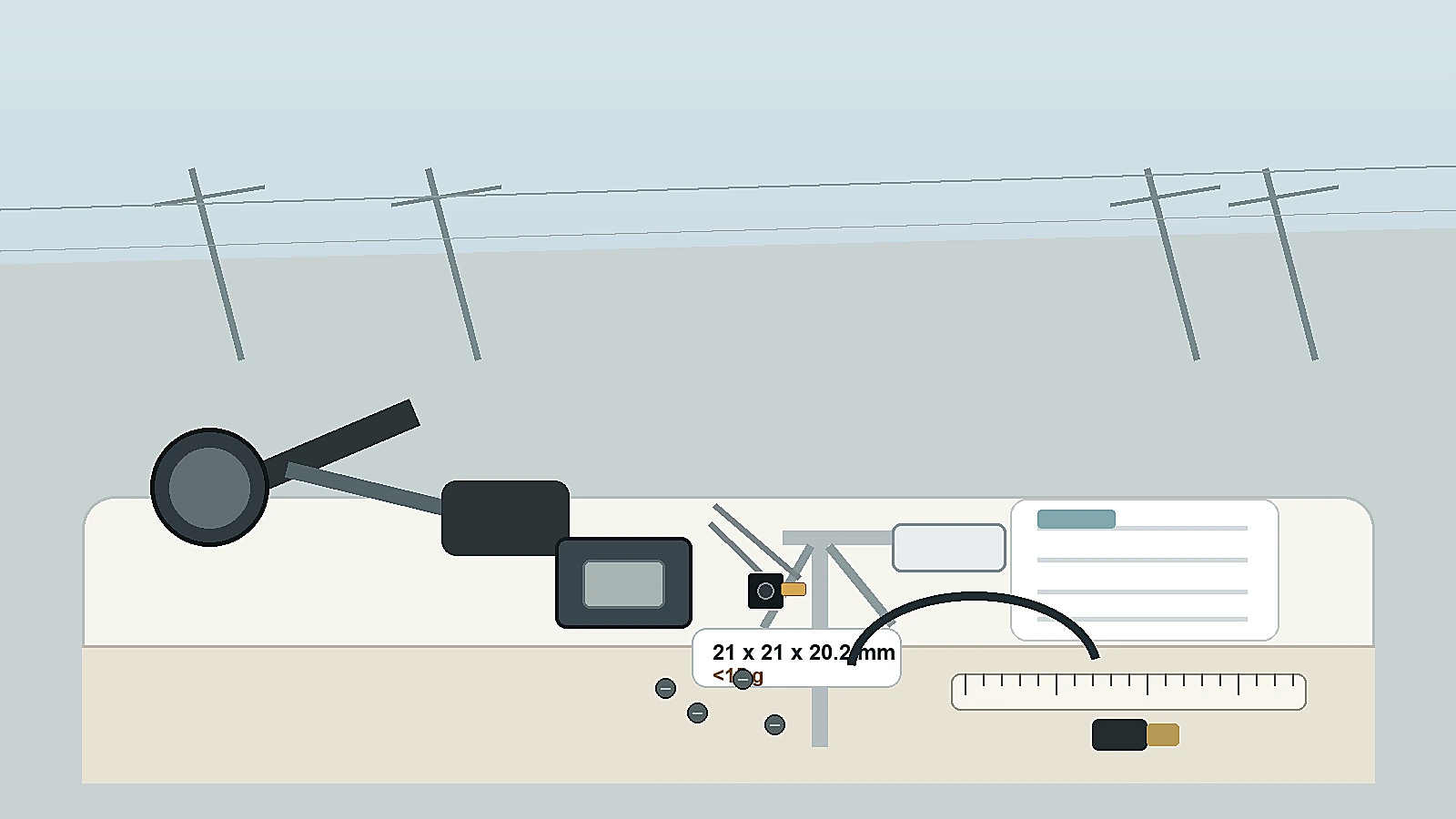
AeroMini 640 is listed as 21 mm x 21 mm x 28 mm and under 20 g, excluding the lens and flange. These are scoped module figures, not the complete 9 mm payload envelope. Confirm the selected lens, tailboard, cable exit, connector access, enclosure window, vibration requirements and service clearance against matched drawings before committing the bracket.
2. Integrated live view is not the same as your required video path
Many buyers say “thermal video” when they mean several different things. A development bench may need USB UVC; an embedded host may need MIPI CSI-2; a legacy receiver may need CVBS PAL or NTSC. AeroMini 640 can be supplied with USB UVC and MIPI CSI-2 on the same module. Confirm the required output, frame rate, firmware and control path for the selected USB + CVBS + MIPI board. Factory frame rate does not guarantee simultaneous full-rate output on every interface.
This is a common buyer mistake: the aircraft demo looks good, then the custom payload cannot talk to the existing receiver. Communities around FPV and drone payload builds regularly ask how thermal sensors can feed digital or analog transmitters; one FPV discussion is useful only as a question source, not as product proof. Convert that uncertainty into RFQ language: “Confirm USB UVC for development, the matched host-control commands, and CVBS mode and wiring for our receiver on the selected AeroMini board.”
3. Mission workflows need more than detector resolution
Thermal drone marketing often centers the aircraft and the camera stack. The inspection team, however, cares about the target: roof fault, solar hotspot, utility connector, perimeter event, field service check, or emergency-response search pattern. Resolution helps, but distance, field of view, lens, flight height, weather, operator workflow, and data handoff decide whether the image is useful. Specify relative heat observation or calibrated temperature measurement: the selected non-radiometric AeroMini provides imaging only.
Teledyne FLIR’s SIRAS professional drone page, now marked discontinued, illustrates how complete systems were framed around industrial inspection, utilities, firefighting, public safety and search-and-rescue missions. Use it as a workflow reference. Define the mission first, then evaluate the current module, interface and support needed for your product.
4. Procurement documentation should not wait until the sample works
Procurement risk often appears late. The engineering sample works, then the buyer asks for drawings, interface notes, CE/RoHS or ISO-related review materials where applicable, and an NDAA statement for a North America customer. If the required documents are not tied to the exact configuration, the project can stall after the technical team is already convinced.
State which procurement documents your customer requires and ask CAMCUDA which are available for the exact product, configuration and destination. Where relevant, request an NDAA statement and applicable CE/RoHS or ISO-related review materials early. Document availability and suitability require confirmation; a module listing or this article does not establish certification, procurement eligibility or blanket compliance.
Selection chart: ready drone system or CAMCUDA module path
| Decision | Ready thermal drone path | Module-level path | RFQ note |
|---|---|---|---|
| Best fit | Field team needs a standardized aircraft quickly | OEM needs a custom payload, embedded product, or repeatable module source | State whether the buyer wants aircraft, payload, or thermal core |
| Thermal detail | Use the platform’s built-in thermal capability | Specify detector, lens, FOV, target distance, and host processing | For AeroMini imaging, specify 640 x 512, 12 um and the selected 9 mm lens |
| Interface | Platform app, controller, or bundled data path | USB UVC, MIPI CSI-2 or CVBS on the selected board; confirm mode, frame rate and control | Confirm the receiver and control path before enclosure work |
| Mechanical control | Payload is already mounted or fixed by platform | Buyer controls bracket, lens opening, cable exit, enclosure, and service access | Use drawings, not only photos |
| Procurement | Buy the complete system SKU | Confirm product, configuration, documents, destination, and quantity | Ask for NDAA statement availability early when relevant |
dji thermal drones comparison: where AeroMini 640 fits
The table below screens AeroMini 640 in the non-radiometric 9 mm USB + CVBS + MIPI configuration. Read the AeroMini datasheet alongside the current model FAQ: factory options and board-specific limits qualify the family specifications. The Type-C + CVBS kit is a separate board option with its own wiring guide.
| Product model | CAMCUDA AeroMini 640; non-radiometric, 9 mm, USB + CVBS + MIPI |
|---|---|
| Detector type | Vanadium oxide uncooled infrared focal plane detector |
| Resolution | 640 x 512 |
| Pixel pitch | 12 um |
| Spectral range | 8-14 um |
| Factory frame rate | 60 Hz default / 30 Hz factory option; confirm the required output path |
| NETD | <=30 mK @ 25 deg C, F/1.0 |
| Digital video | USB UVC; MIPI CSI-2 available on the same module; confirm host format and firmware |
| Host control | Confirm the exact-board control interface, logic levels and matched serial-command documentation |
| Analog video | CVBS PAL/NTSC on the selected board; confirm receiver mode and wiring |
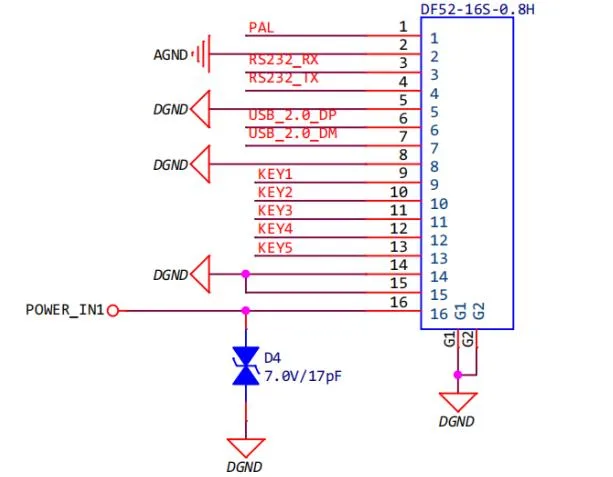
| Supply voltage | 5 V at the illustrated POWER_IN1 / POWER_IN2 inputs; never connect these pins to 12 V |
| Power consumption | <0.5 W typical module consumption at 25 deg C; complete-kit power may differ |
| Dimensions | 21 mm x 21 mm x 28 mm, excluding lens and flange; verify complete assembly |
| Weight | <20 g, excluding lens and flange; verify complete payload mass |
| Operating temperature | -40 deg C to +80 deg C |
| Humidity | 5%-95%, non-condensing |
For application-specific planning, use CAMCUDA’s drone thermal camera page when the project involves UAV payloads, pilot viewing, flight workflow, gimbal constraints, or aerial inspection. Use outdoor field thermal imaging when the same thermal module decision supports utility yards, field service, site patrol, or fixed monitoring. Broader product comparison can start with thermal imaging cores, thermal modules, and uncooled thermal modules.
Application case: a utility integrator moves from aircraft benchmark to module RFQ
Illustrative RFQ example, not a customer case: a North American utility inspection integrator starts with dji thermal drones as a familiar field-workflow benchmark. Its concept covers substation checks, roof inspections and short field-service flights. A complete aircraft can support initial workflow evaluation. The planned product needs a branded compact payload for its own controller and recorder, with relative heat observation separated from any requirement for calibrated temperature reporting.
The RFQ can say: “We are benchmarking DJI thermal drones for field workflow and evaluating AeroMini 640 non-radiometric imaging with a 9 mm lens and USB + CVBS + MIPI board. Please confirm 60 Hz default or 30 Hz factory configuration, USB UVC, our CVBS receiver mode, host-control documentation, the 5 V board input, complete assembly drawings and available procurement documents. We need relative heat observation; flag any requirement that instead needs calibrated temperature measurement.”
That wording gives engineering and procurement the same object to evaluate. It does not ask CAMCUDA to copy a finished aircraft. It asks whether the thermal module can support the buyer’s bracket, host, receiver, destination market, and repeat sample path. If RAW or minimally processed video is mandatory, state it separately: standard AeroMini does not meet that requirement, and customization needs its own cost and development assessment.
Common mistakes when dji thermal drones set the benchmark
- Using a complete drone as if it were a detector datasheet. A platform spec describes a system. OEM buyers still need module, lens, interface, and drawing confirmation.
- Choosing resolution before defining the target. Inspection distance, scene width, thermal contrast, lens, and flight height shape whether the thermal image is useful.
- Asking for analog video too late. If a recorder, monitor, analog transmitter, or low-latency path matters, request CVBS analog output on applicable configurations during RFQ.
- Ignoring payload service access. A compact module can still fail mechanically if the bracket blocks the connector or the cable bends into the enclosure wall.
- Leaving NDAA and documentation questions to purchasing. North America and government-adjacent buyers should request documentation needs while configuration is still open.
RFQ checklist for buyers comparing dji thermal drones with module builds
| RFQ field | What to send CAMCUDA | Why it matters |
|---|---|---|
| Benchmark | Which dji thermal drones or integrated systems are being used as field references | Clarifies whether the benchmark is aircraft workflow, thermal detail, or payload size |
| Application | Utility inspection, roof/solar inspection, field service, security monitoring, outdoor patrol, or OEM UAV payload | Connects module choice to the real mission |
| Target geometry | Target size, distance, scene width, flight height, and expected thermal contrast | Guides resolution and lens/FOV review |
| Host and receiver | Controller, edge computer, recorder, analog transmitter, monitor, or app workflow | Prevents video-path mismatch |
| Interface | USB UVC, CVBS PAL/NTSC or MIPI CSI-2; exact-board host control, output frame rate and any mandatory RAW requirement | Defines cable, firmware, and host work |
| Mechanical envelope | Bracket sketch, available volume, lens opening, cable exit, module orientation, and weight limit | Confirms whether the compact module can become a real payload |
| Documents | Datasheet, matched mechanical and interface drawings, and required procurement documents; ask about exact-configuration NDAA statement availability | Reduces late procurement holds |
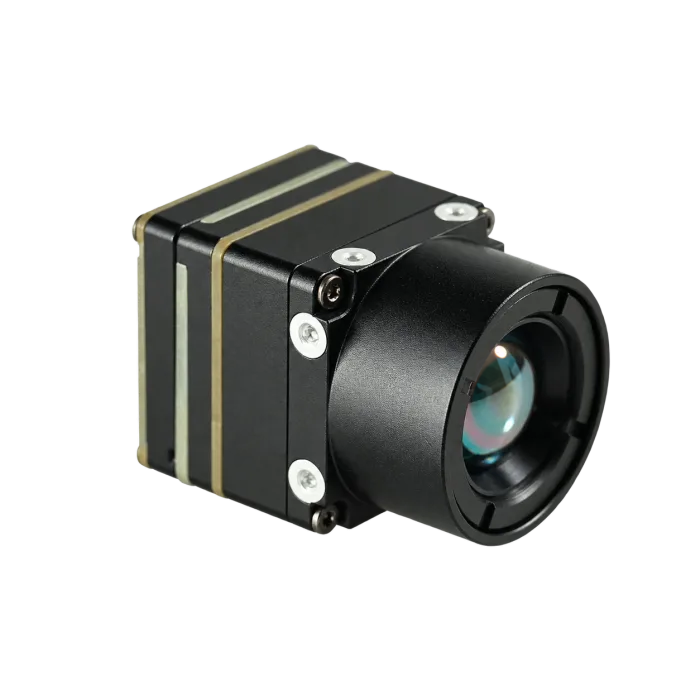
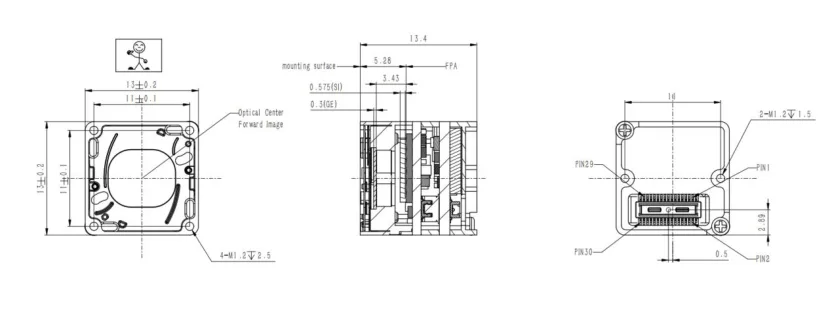
For a separate bare-core comparison, SuperMini 640 imaging / 50 Hz uses a 640 x 512, 8 um detector. Its 13 mm x 13 mm x 13.4 mm and under 3.5 g figures exclude the lens, flange and user expansion board. SuperMini 640T is a distinct thermographic model at 30 Hz.
This SuperMini core requires MAIN_POWER at 3.8-5.2 V plus tightly specified 3.3 V and 1.8 V rails, a 30-pin connector and 1.8 V UART logic. CVBS needs an external video-buffer IC. Use the SuperMini V1.0.0 manual and model-specific host software; AeroMini SDK resources do not establish SuperMini compatibility.
Turn the drone benchmark into a module RFQ
If your team is comparing dji thermal drones but building a custom payload, send CAMCUDA the benchmark aircraft, application, target geometry, host receiver, video and control requirements, bracket envelope, destination and document needs. Start the imaging evaluation with AeroMini 640, 9 mm, USB + CVBS + MIPI, then confirm the factory frame rate, complete kit, wiring and procurement-document availability during RFQ.
Review AeroMini 640 | Read the AeroMini datasheet | AeroMini manuals, serial commands and USB SDK | Request an engineering quote
Technical author: Daniel · Hardware Support; Sales contributors: Vivian, Lena and Sophie.
FAQ
Are dji thermal drones the right benchmark for every thermal UAV project?
No. They are useful references for integrated aircraft workflow, but OEM buyers may need a separate module-level evaluation when building custom payloads, embedded products, or repeatable sourcing programs.
When should an OEM buyer choose a thermal module instead of a complete drone?
Choose the module path when the final product needs a custom enclosure, private host electronics, special video output, brand-owned payload, or procurement control over the thermal imaging component.
Is AeroMini 640 a complete drone?
No. AeroMini 640 is an OEM thermal imaging module. The selected non-radiometric 9 mm USB + CVBS + MIPI kit needs host, power, wiring, enclosure and payload integration. It does not measure calibrated temperatures or function as a complete drone camera accessory.
Can the selected AeroMini 640 kit support analog video?
The selected USB + CVBS + MIPI board supports CVBS. Confirm PAL or NTSC, wiring, output frame rate and receiver compatibility for the delivered configuration. Its included USB cable requires customer soldering. Use the matched board guide; the separate Type-C kit has different wiring.
Why does the host-control interface matter in a thermal payload?
Video carries the image; control commands manage settings and repeatable host behavior. Confirm the chosen board’s electrical interface and logic levels before wiring. Use the AeroMini CV Serial port documentation and matched USB SDK resources, then test the required commands on your host. Family-level serial options do not guarantee every board exposes them.
How much space does AeroMini 640 need in a payload?
Published AeroMini dimensions are 21 mm x 21 mm x 28 mm and weight is under 20 g, excluding the lens and flange. Confirm the full 9 mm assembly, tailboard, connector and cable clearance before designing the bracket. The separate SuperMini bare-core drawing above is not an AeroMini assembly drawing.
Should North America drone inspection buyers ask about NDAA documentation?
Yes, when procurement or customer review requires it. Tell CAMCUDA which NDAA statement and other documents your customer needs, then confirm their availability and relevance for the exact product, configuration and destination. A product listing or general statement does not by itself establish procurement eligibility.
Can the same module support outdoor field monitoring?
It can be evaluated for outdoor and field thermal imaging if the enclosure, lens, power, operating temperature, video path, and monitoring workflow match the application. Include those conditions in the RFQ.
What is the most useful first RFQ email?
Send the benchmark drone, application, target size and distance, host receiver, video and control interface, mechanical envelope, power budget, destination market, sample quantity, and required documents.
Does a higher-resolution module automatically improve every drone inspection?
No. Resolution helps only when paired with the right lens, distance, field of view, flight workflow, and image interpretation process. Define the inspection target before choosing the module.