flir boson thermal camera core price: when the benchmark quote hides the real module decision
Procurement memo for OEM thermal module buyers
flir boson thermal camera core price: when the benchmark quote hides the real module decision
A buyer searching flir boson thermal camera core price is usually not only asking about a catalog number. The real question comes later, when an engineer has to fit a thermal core into a UAV bracket, a small enclosure, or a host board and the quote no longer explains the video path, documents, power budget, or sample risk.
Quick answer
If you are using flir boson thermal camera core price as a benchmark, compare more than the line-item price. Separate the decision into resolution, interface, physical fit, documentation, support path, and sample-order risk. CAMCUDA’s current Featured choices include AeroMini 640 for a configurable 640 x 512 module and interface-kit review, and SuperMini 640 / 640T for a compact bare-core design at the same detector resolution. Select imaging or thermography, then price the exact lens, board, cables and host work. A lower-resolution sensing module may still suit a simpler application. The right RFQ should ask which module survives your enclosure, video chain, and procurement requirements, not which number looks cheapest in a spreadsheet.
Why the flir boson thermal camera core price search is incomplete
The first buyer moment is familiar. A sourcing manager has a benchmark brand in one browser tab, a drone payload drawing in another, and a request from engineering that says “find a thermal core around this class.” The flir boson thermal camera core price query feels like the shortest path to a decision. It is useful as a market reference, but it is not enough to release a purchase order.
Thermal core pricing becomes meaningful only after the buyer knows what the core must do inside the system. A compact UAV payload may need 640 x 512 detail, USB video, a documented control interface, and confirmation of CVBS analog output on the selected board. A small room sensor or appliance board may care more about a suitable host interface, low power, and the required field of view. The two projects can both begin with “thermal camera core price,” yet they should not end with the same product.
Current industry writing reinforces this systems view. NVIDIA’s manufacturing coverage frames vision and robotics as factory systems, not isolated sensors, because real-time inspection depends on the chain around the camera. Micron’s edge AI material makes a similar point from the data side: useful edge devices depend on how data is moved, stored, and processed near the source. Teledyne FLIR’s own drone coverage also treats thermal imaging as part of payload and mission workflow. The lesson for CAMCUDA buyers is simple: quote review should follow the system path.
For internal next steps, compare the CAMCUDA thermal imaging cores category, the uncooled thermal modules category, and the product pages before asking for a formal price. If the project involves UAV inspection or payload replacement, the drone thermal camera application page should be part of the handoff. If the deployment is a yard, perimeter, field service, or outdoor monitoring project, the outdoor field thermal imaging page is more relevant.
Normalize the benchmark quote before comparing suppliers: record the exact Boson part number, resolution, lens, frame rate, radiometric capability, included accessories, quantity, delivery terms and support scope. Compare CAMCUDA configurations against those same requirements. A similar detector class or price does not establish mechanical, electrical or software interchangeability.
Selection chart: turn a price benchmark into a module decision
| Decision area | Why it changes the quote | What to ask before sample order |
|---|---|---|
| Resolution | 640 x 512 supports more detail for UAV inspection and outdoor monitoring; 160 x 120 can be sufficient for embedded sensing. | What target size, working distance, and field of view must the module cover? |
| Interface | USB, SPI, UART control, DVP, MIPI, and CVBS analog output on applicable configurations imply different host-board and video-chain work. | Does the project need digital video, analog video, serial control, or an evaluation-board path? |
| Mechanical fit | A low quote can become expensive if the module, lens, bracket, or connector path forces enclosure redesign. | Can the supplier provide dimensions, connector notes, and mechanical drawings for review? |
| Power and heat | Payloads and sealed enclosures often fail late when power assumptions are copied from a different core class. | What supply voltage, power budget, and thermal environment should the module survive? |
| Documents | North America, security, industrial, and government-adjacent buyers often need procurement evidence, not just a sales quote. | Can CAMCUDA provide CE/RoHS/ISO-related materials where applicable and an NDAA statement on request? |
| Support path | The cheapest sample is risky if firmware, lens, image settings, or interface questions cannot be answered during bring-up. | Who reviews the RFQ: sales only, or sales plus engineering? |
Featured product comparison for flir boson thermal camera core price buyers
The flir boson thermal camera core price search is broad benchmark intent, and the two current CAMCUDA Featured product families answer different integration questions. AeroMini 640 is a configurable module and interface-kit starting point for UAV and outdoor imaging. SuperMini 640 / 640T is the compact-core comparison when size and weight matter, with imaging-only and thermographic models to distinguish. Both use 640 x 512 detectors. Neither is presented as the cheapest choice; compare current quotations for the complete selected configuration.
| Featured product | Best-fit buyer | Known parameters from product data | RFQ caution |
|---|---|---|---|
| CAMCUDA AeroMini 640 | UAV payload, outdoor inspection and OEM imaging with a selected interface kit | 640 x 512 uncooled VOx LWIR, 12 µm pitch, 8–14 µm, NETD ≤30 mK at 25 °C, F/1.0. Non-radiometric: 60 Hz default; 30 Hz factory option. Radiometric: 25 Hz, availability enquiry only. Typical module power <0.5 W at 25 °C. Published 21 x 21 x 28 mm dimensions and <20 g weight exclude lens and flange. | Choose USB + CVBS + MIPI, Type-C + CVBS, or both tailboards for non-radiometric imaging. Match video format and UART/control requirements to the actual board and firmware. The illustrated POWER_IN1 / POWER_IN2 inputs accept 5 V only. Request complete-kit power, dimensions, weight and the ordered assembly drawing; confirm the radiometric interface separately. |
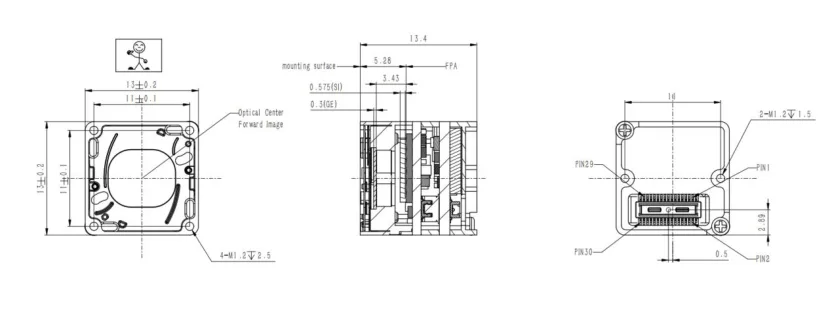
| CAMCUDA SuperMini 640 / 640T | Space-constrained OEM or UAV core integration, with host-board and power design included in the budget | 640 x 512 uncooled VOx LWIR, 8 µm pitch, 8–14 µm, NETD ≤40 mK at 25 °C, F1.0. SuperMini 640: 50 Hz imaging only. SuperMini 640T: 30 Hz thermography. Typical core power ≤0.5 W at 25 °C, excluding expansion board. Bare core: 13 x 13 x 13.4 mm and <3.5 g, excluding optics and boards. | Use the model-specific 30-pin core interface and all three power rails. Confirm lens, expansion board, supplied items, host capture and software support. UART is 1.8 V logic; bare-core CVBS requires an external video-buffer IC. Thermography specifications apply only to 640T. Complete-camera dimensions, weight and power differ from bare-core figures. |
The practical trade-off is system fit. AeroMini 640’s selected tailboard determines the connection and evaluation path. SuperMini 640 / 640T’s smaller bare-core footprint comes with a separate 30-pin, power and host-design review. Include optics, carrier boards, cables, power conversion and software work in both quotations. If a lower-resolution module is enough for presence or heat-distribution sensing, include that alternative rather than assuming a 640 x 512 core will lower the project cost.
For AeroMini, the official PDF specifications and interface pages are useful references, but the PDF does not include a dimensioned assembly drawing. Request the drawing for the ordered lens, flange and board before freezing a bracket. For SuperMini, use the 30-pin orientation and complete signal table on PDF pages 6–7 and power requirements on page 8. The bare core requires MAIN_POWER at 3.8–5.2 V, a +3.3 V rail at 3.28–3.32 V, and a +1.8 V rail at 1.78–1.82 V, with the manual’s sequencing and noise limits. TX/RX are referenced to the core. Optional expansion-board inputs are separate configurations.
Application case: the quote looked fine until the video path moved
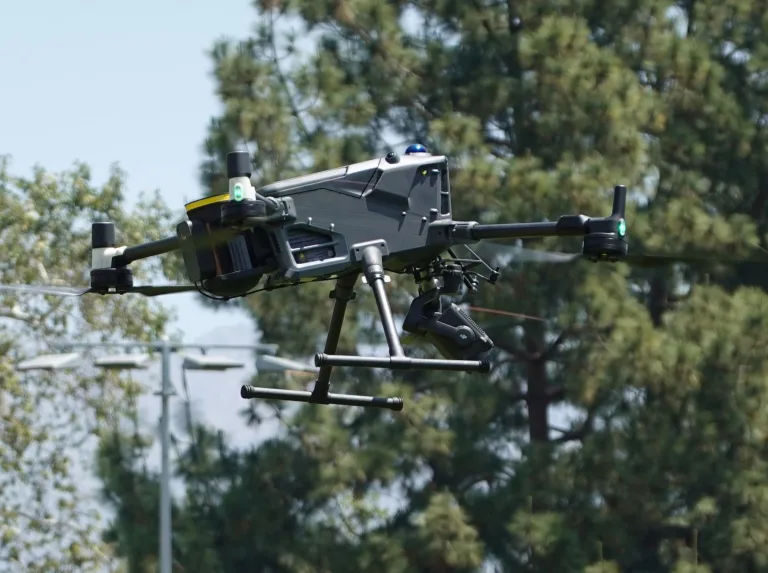
Consider a typical procurement scenario: a North America integrator preparing a small UAV inspection payload for utility yard checks. The prototype bracket has room for a compact module. The pilot display path is already analog because the existing transmitter and field monitor were selected months earlier. Procurement asks for a familiar benchmark, so the team starts with flir boson thermal camera core price.
The realistic mistake is waiting until after sample ordering to ask whether the analog path exists. If the module quote assumes only USB video, the team may need an extra converter board, new bracket space, more power margin, and another round of vibration review. The better RFQ names the mission first: UAV inspection, compact bracket, existing analog video chain, USB evaluation requirement, board-specific serial control, target working distance, and document requirements.
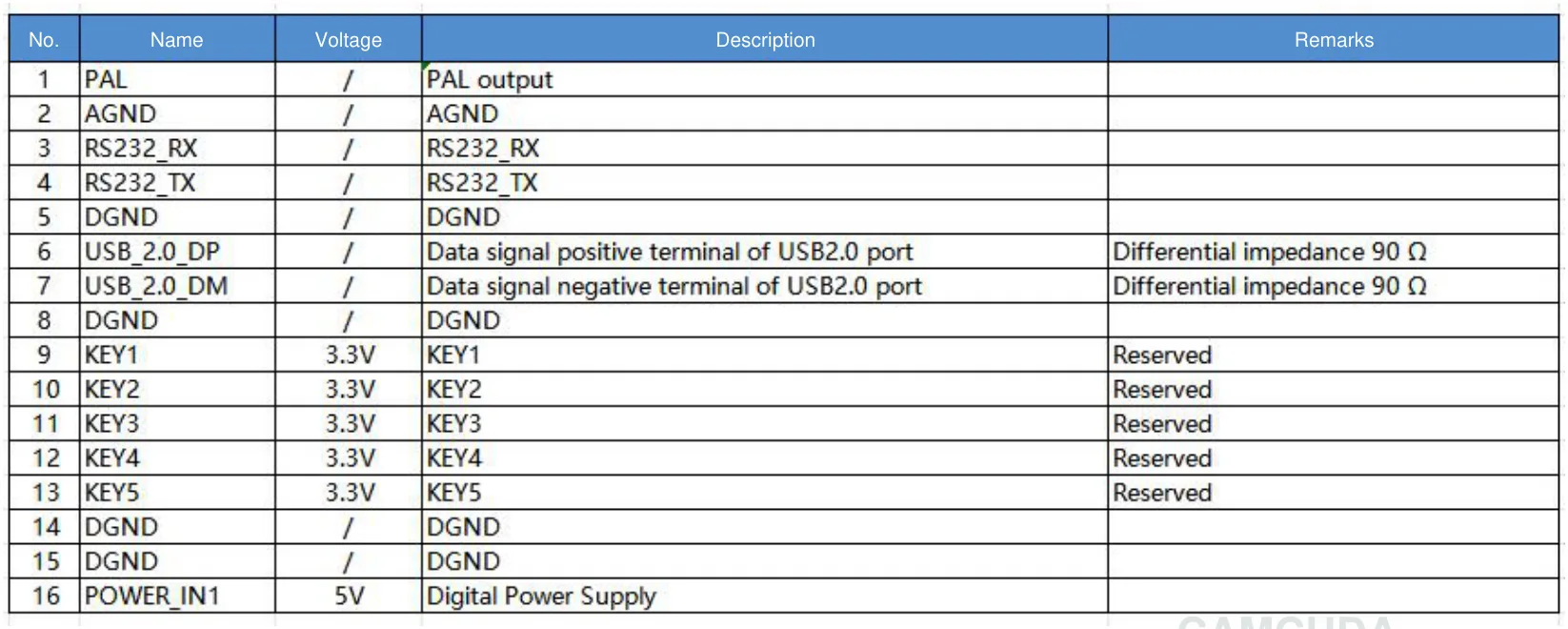
For this scenario, AeroMini 640 is a current CAMCUDA starting point for a 640 x 512 imaging and interface-kit review. Its non-radiometric default is 60 Hz, with a 30 Hz factory option. Confirm CVBS output, the serial-control path and the exact tailboard before quoting the analog chain; a Type-C + CVBS board is a different configuration from the USB + CVBS + MIPI board illustrated below. Buyers should also request an NDAA statement and any applicable CE/RoHS/ISO-related evidence for the specific product and destination, then assess the documents against their procurement requirements.
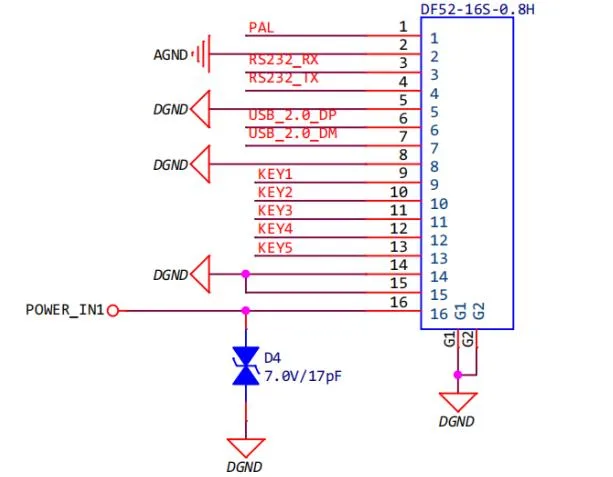
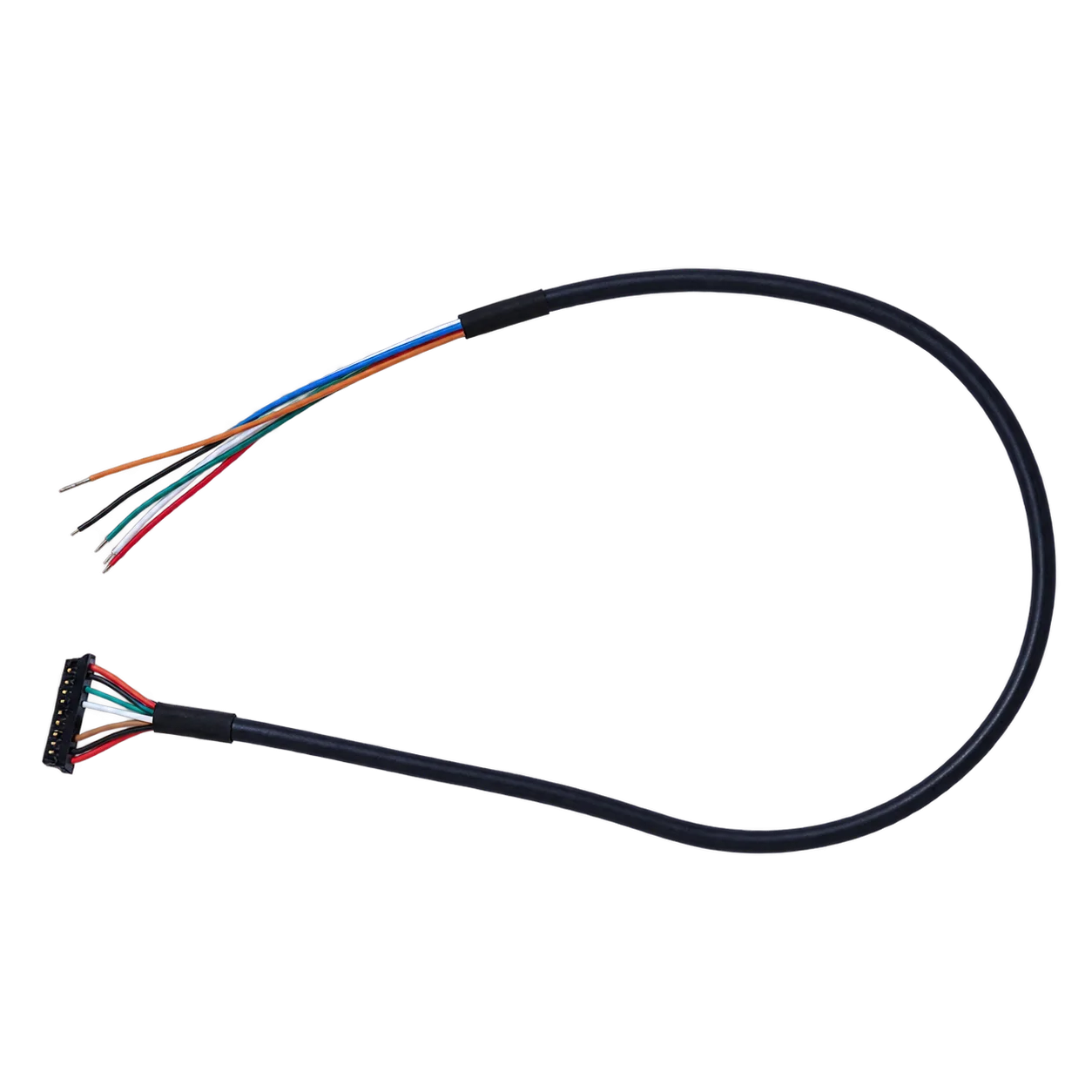
The separate 26-pin MIPI/DVP reference is on AeroMini PDF page 4. The 16-pin and 26-pin definitions apply to the illustrated board, not the Type-C tailboard or SuperMini core. POWER_IN1 and POWER_IN2 are 5 V inputs only; do not apply 12 V to either. Confirm the actual board’s control signaling and host requirements rather than carrying over another module’s serial-interface assumption.
Include software resources in the sample plan. The official AeroMini SDK FAQ links to a public technical-resource folder containing manuals, USB Client Software.zip and USB-SDK.zip. The FAQ describes USB-SDK.zip as Linux drivers, examples and SDK resources. Those links do not establish tested host compatibility; match the board, firmware, host, image format and frame rate. They are AeroMini resources; use SuperMini’s own manual and confirm its software support separately.
If the same buyer is building a compact HVAC sensor, a lower-resolution module may be the cleaner choice when it meets the required presence, heat-distribution or field-of-view task. Confirm its actual interface and complete-system power instead of borrowing another model’s figures. Where 640 x 512 detail is still justified but core size is constrained, compare SuperMini 640 for 50 Hz imaging or SuperMini 640T for 30 Hz thermography, including the lens, carrier, power rails and host processing in the RFQ.
Common mistakes when a benchmark price drives the RFQ
1. Comparing detector class but ignoring the host system
A detector comparison is useful, but the host board, enclosure, processor, display, and cable path decide whether the sample can be evaluated quickly. A quote that omits the host-side assumptions is incomplete.
2. Treating CVBS as a universal checkbox
CAMCUDA can support CVBS analog output on applicable configurations, but buyers should not assume every module and every firmware path includes it by default. If analog video is needed for legacy displays, recorders, drone transmission, or low-latency monitoring, confirm CVBS during RFQ.
3. Forgetting documentation until procurement asks
Security monitoring, drone inspection, industrial monitoring, and North America projects may require compliance or origin-related statements. Request an NDAA statement and the available product-specific evidence early, then have the buyer review whether it meets the project requirements before engineering commits to a sample.
4. Buying a sample before the lens/FOV question is clear
Resolution does not choose the lens. Buyers should explain target distance, scene width, enclosure limits, and image-detail expectations before assuming a quoted module will show the right field scene.
RFQ checklist for a safer thermal module price comparison
- State whether the project is UAV payload, outdoor monitoring, embedded sensing, industrial inspection, security monitoring, or another OEM device.
- List the benchmark query or reference class, including flir boson thermal camera core price if that is how the project began.
- Define the required detector resolution and whether the task needs imaging or calibrated thermography; include a lower-resolution alternative when sufficient for the sensing task.
- Specify video and control requirements, the selected board, connector, host processor, operating system, image format and frame rate. Confirm USB, MIPI/DVP, UART and CVBS availability for that configuration and any required support circuitry.
- Share mechanical limits: module envelope, bracket space, lens clearance, connector direction, vibration environment, and desired weight.
- Describe the video chain: onboard computer, analog transmitter, display, recorder, edge AI board, or GUI evaluation setup.
- Ask for the ordered assembly drawing, matched electrical interface and power references, product specifications, model-specific software resources, and procurement documents.
- For North America or compliance-sensitive projects, request the NDAA statement together with any available CE/RoHS/ISO-related materials for buyer review.
- Send expected prototype quantity, annual quantity, destination market, and timeline so CAMCUDA can match the quote to a real buying path.
- Provide target size and working distance. Use the thermal imaging calculator for preliminary lens/FOV geometry, then validate the selected lens and scene; a geometric estimate is not a detection or identification guarantee.
Send the module decision, not just the price request
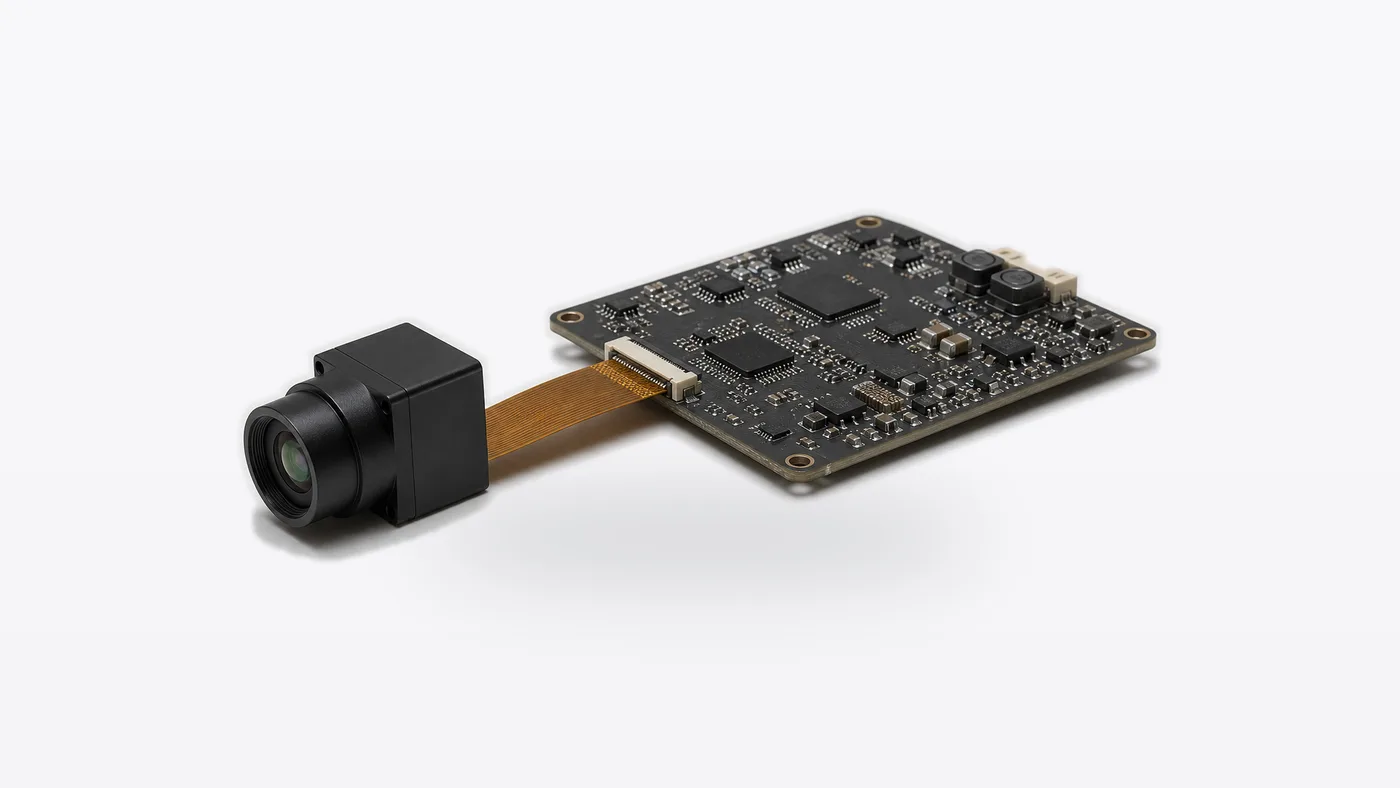
If your team started with a flir boson thermal camera core price benchmark, send CAMCUDA the use case behind the benchmark. For UAV and outdoor imaging, review AeroMini 640 and the drone camera path. Compare SuperMini 640 / 640T when compact-core integration and the imaging-versus-thermography choice are central. Include a lower-resolution alternative if it meets the task. Then use the downloads and support page or contact CAMCUDA with the benchmark configuration, interface, lens, document, quantity and sample requirements.
Authority references used for this buying view
NVIDIA’s discussion of AI-driven manufacturing at Hannover Messe 2026 is useful because it frames vision hardware inside real factory systems. Micron’s edge AI overview reinforces why data movement and local processing matter in compact devices. Teledyne FLIR’s SIRAS announcement shows how professional thermal drones are discussed as payload-plus-mission systems. FAA’s Part 107 summary is relevant for UAV buyers who must keep the operational environment in view while selecting hardware.
FAQ
Is flir boson thermal camera core price enough to choose a module?
No. The flir boson thermal camera core price query can provide a benchmark, but a module decision also needs interface, lens, mechanical, document, sample, and support information.
When is AeroMini 640 a fit for a 640 x 512 UAV module requirement?
AeroMini 640 is a current Featured starting point when the selected lens, interface kit, complete assembly and power budget fit the UAV. Non-radiometric imaging defaults to 60 Hz with a 30 Hz factory option; the 25 Hz radiometric version requires an availability enquiry. Confirm CVBS and board-specific control requirements, cables, host support and the ordered mechanical drawing before treating the quotation as a usable payload configuration.
When should I choose SuperMini 640 or 640T instead of AeroMini 640?
Compare SuperMini 640 / 640T when bare-core size and weight are critical and the project can support its 30-pin interface, three power rails and host integration. SuperMini 640 is 50 Hz imaging-only; 640T is 30 Hz thermographic. Its 13 x 13 x 13.4 mm and <3.5 g references exclude optics and boards. Both families have 640 x 512 detectors; choose by the complete configuration and verified requirements, not an assumed resolution or price advantage.
Does every CAMCUDA module include CVBS analog video?
No. Confirm CVBS for the exact model, board, firmware and host video chain during RFQ. AeroMini output availability depends on the selected tailboard. SuperMini’s bare-core CVBS pin requires an external video-buffer IC, so include that circuitry or the appropriate expansion board in the complete analog path.
Why does a low quote become expensive after sample order?
Late costs usually come from enclosure redesign, interface converters, lens mismatch, missing documents, host-board changes, or firmware questions that were not included in the first RFQ.
Should a drone buyer link price review to application workflow?
Yes. UAV inspection buyers should explain payload space, vibration, power, pilot display, video transmission, target distance, and document requirements. That is why the drone thermal camera application context matters before final pricing.
Can CAMCUDA provide an NDAA statement?
Request an NDAA statement and the available supporting documents during RFQ for the specific product, configuration, destination country and intended use. The buyer should review that evidence against the project’s procurement requirements; this article does not establish a compliance certification.
What should I send CAMCUDA if I am comparing against a benchmark price?
Send the application, benchmark class, target resolution, interface requirements, lens/FOV needs, mechanical limits, video chain, destination market, document requirements, prototype quantity, annual quantity, and timeline.
Does a higher resolution always mean a better module choice?
No. Higher resolution can help UAV inspection and detailed outdoor monitoring, but low-power embedded sensing may be better served by a smaller 160 x 120 module if the host board, FOV, and power budget fit the task.