CVBS thermal camera module: why analog video still appears in UAV RFQs
Buyer conversation
CVBS thermal camera module: why analog video still appears in UAV RFQs
When a buyer asks for a CVBS thermal camera module, they are rarely asking a nostalgic question about old video standards. In UAV payload RFQs, CVBS usually means the buyer has a real field constraint: an analog monitor, a transmitter path, a recorder, a low-latency viewing habit, or an existing payload architecture that cannot be rebuilt just because the thermal core is new.
Quick answer
The CVBS question is really a workflow question.
A CVBS thermal camera module request usually means: “Can this thermal module fit the video path we already use?” For drone payload buyers, the answer depends on the module configuration, host electronics, display chain, cable path, control interface, and procurement documents. CAMCUDA’s featured AeroMini 640 offers CVBS on applicable interface-board configurations. Confirm the selected board, PAL/NTSC standard and delivered frame/field rate during RFQ rather than assuming every sample order is wired the same way.
This article is intentionally not another generic “thermal camera module buying guide.” The topic comes from a real buyer pattern: UAV teams still ask whether thermal modules support CVBS. At the same time, large industrial technology companies are writing about the opposite direction of travel: more edge AI, more robotics, more connected manufacturing systems, and more software-defined workflows. NVIDIA’s manufacturing and robotics writing frames vision as a systems problem. Micron’s edge AI content emphasizes local processing and data movement. FLIR’s thermal drone materials show that field buyers still care about mission output, not only sensor specs. The tension is useful: modern payloads get smarter, but the field video chain often contains older, practical hardware.
That is why CVBS has not disappeared from UAV thermal conversations. A buyer may be building a new drone payload, but the customer may still use an analog downlink, a rugged monitor, a ground recorder, or an inspection workflow built around composite video. The engineering question is not whether analog video is fashionable. The question is whether analog video is still part of the acceptance test.
CVBS thermal camera module: where analog video still fits
The table below is a practical way to discuss CVBS before sample ordering. It does not replace a configuration review, but it helps turn a vague question into a useful RFQ.
| Buyer situation | What the CVBS question may mean | What to confirm with CAMCUDA |
|---|---|---|
| Legacy field monitor | The buyer already uses an analog display in vehicle, field station, or inspection kit. | Whether CVBS analog output is available on the required module configuration. |
| Drone video transmission | The payload path includes analog video equipment or a low-latency viewing chain. | Video output route, connector/cable path, power, and acceptance scene. |
| Recorder compatibility | The customer wants thermal video recorded by existing equipment. | Signal expectations, test device, and sample validation method. |
| OEM retrofit | The thermal module must fit a product architecture designed around composite video. | Mechanical constraints, host interface, control path, and RFQ configuration. |
| Procurement review | Technical and compliance teams need documents before approving a sample. | NDAA statement availability, destination market, and document package. |
A real RFQ pattern
“Does it support CVBS?” often means “Can I keep my field kit?”
Imagine a UAV inspection team replacing a visible-light payload with a compact thermal module. The aircraft and gimbal space can handle the new camera core. The engineer is comfortable with USB during bench testing. But the field operator already owns a monitoring and recording setup that expects composite video. If the supplier only answers with resolution and price, the first sample may still fail the operational test.
The better answer is a short engineering conversation: what display chain is used, whether analog video is mandatory, whether USB is still needed for development, how control commands are handled, and what documents procurement expects. This is the kind of detail that turns a CVBS thermal camera module inquiry into a useful module configuration discussion.
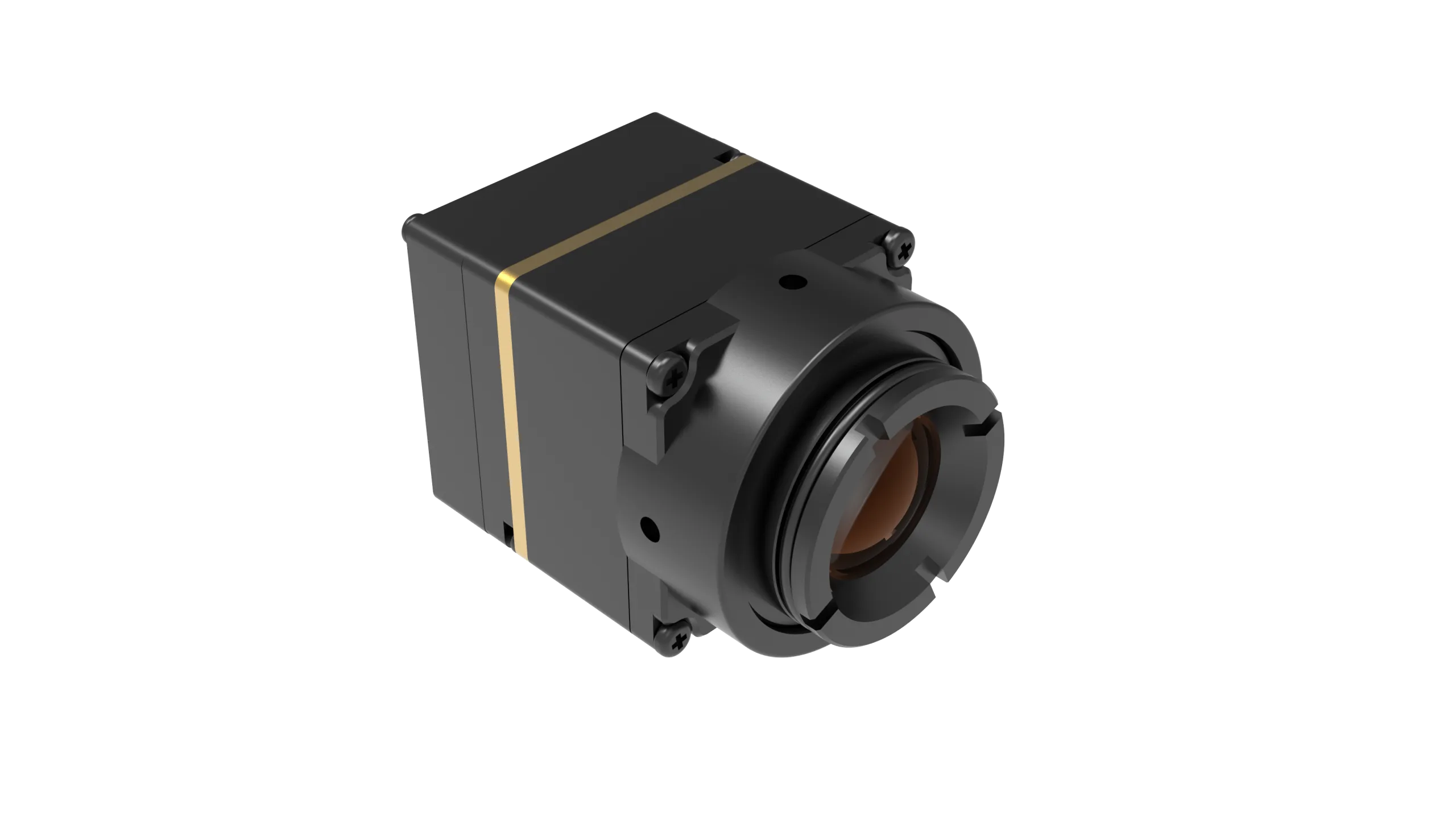
AeroMini 640 context for a CVBS thermal camera module RFQ
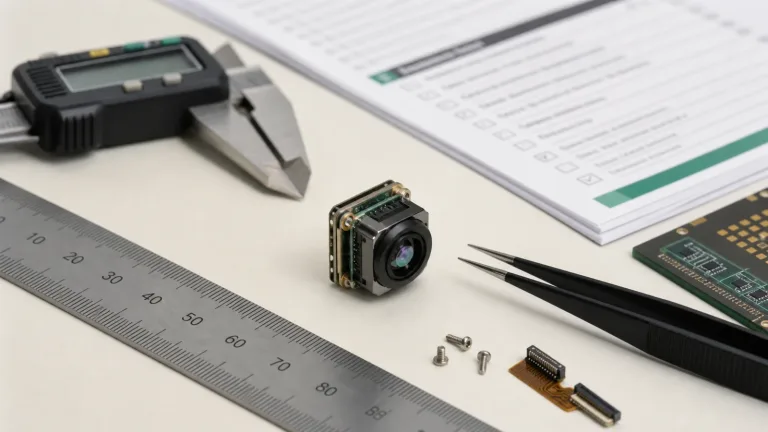
The current CAMCUDA featured product is the CAMCUDA AeroMini 640. Its USB + CVBS + MIPI and Type-C + CVBS packages are separate interface-board choices. USB, analog video and serial-control availability depend on the selected board and firmware. The values below should be used as the product reference, not guessed from a generic module article.
| Product | CAMCUDA AeroMini 640 |
|---|---|
| Detector type | Vanadium oxide uncooled infrared focal plane detector |
| Resolution | 640 × 512 |
| Pixel pitch | 12 μm |
| Non-radiometric imaging frame rate | 60 Hz default; 30 Hz factory option specified before ordering |
| Radiometric version | 25 Hz; availability enquiry only, with interface and measurement requirements reviewed separately |
| Spectral range | 8–14 μm |
| NETD | ≤30 mK at 25°C, F/1.0 |
| Supply voltage | Board-dependent; the illustrated POWER_IN1 and POWER_IN2 inputs are 5 V only |
| Typical power consumption at 25°C | <0.5 W module consumption; complete-kit consumption may differ |
| Digital video | YUV, USB, BT.656; board and firmware dependent, with host compatibility to be confirmed |
| Analog video support | CVBS with PAL/NTSC on applicable boards; confirm the delivered standard, frame/field rate and field equipment |
| Communication interface | UART, RS232 or RS422, depending on the selected interface board; confirm electrical levels and commands |
| Weight | <20 g, excluding lens and flange |
| Dimensions | 21 × 21 × 28 mm, excluding lens and flange; confirm the complete assembly envelope |
| Operating temperature | −40°C to +80°C |
| Storage temperature | −50°C to +85°C |
The module imaging rate is not a promise of the same CVBS frame rate. Ask the supplier to match PAL or NTSC output, delivered frame/field rate and any output conversion to the actual monitor, recorder or transmitter. The non-radiometric version shows thermal patterns without calibrated temperature readings; review the separate 25 Hz radiometric availability enquiry if measurements are required.
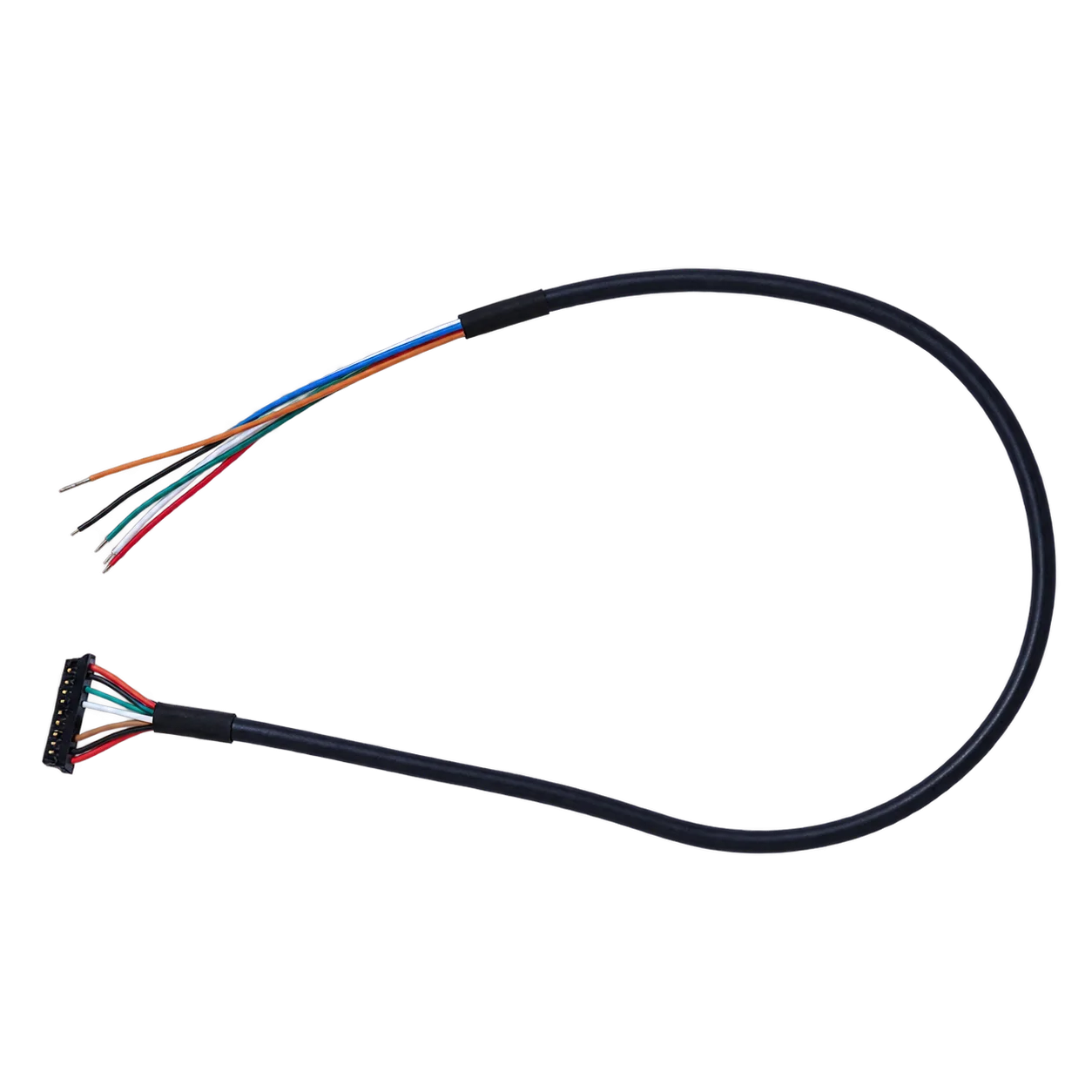
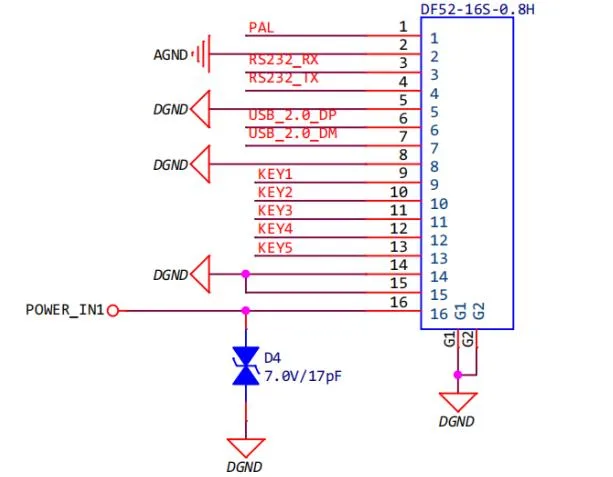
The 16-pin USB/CVBS and 26-pin MIPI/DVP references on PDF page 4 apply to the illustrated USB + CVBS + MIPI board, not the separate Type-C + CVBS board. Request the matched Type-C wiring guide and confirm connector orientation before wiring. POWER_IN1 and POWER_IN2 are 5 V inputs; the family-level 12 V specification does not make those pins 12 V compatible.
A UAV payload story where analog video still makes sense
A small industrial inspection team wants to add LWIR to a drone used for night roof checks and yard patrol. Their pilot wants a thermal image on a rugged monitor immediately, not after a software pipeline is rebuilt. Their engineering team wants USB for development. Their procurement manager asks if documentation can support a North America customer review.
In this case, the right question is not “Is CVBS old?” It is “Does this sample need both a development path and a field-viewing path?” If the answer is yes, CVBS analog output on applicable configurations should be discussed early. So should the selected board’s control path, power supply, lens/FOV, mechanical envelope, and NDAA statement availability.
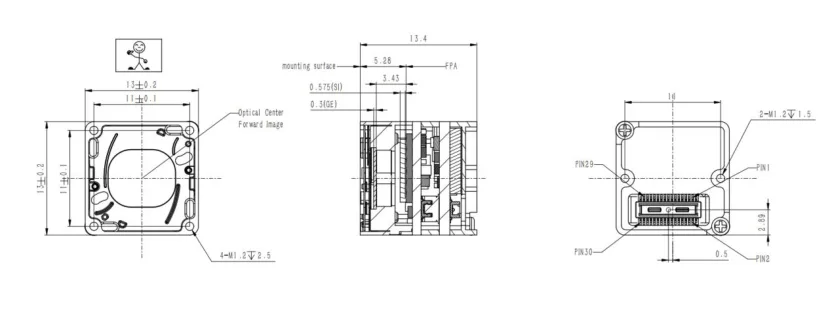
For a tighter payload envelope, compare the SuperMini 640 / 640T as a separate integration path. Both use 640 × 512 resolution: SuperMini 640 is imaging-only at 50 Hz, while SuperMini 640T supports thermography at 30 Hz. Their published 13 × 13 × 13.4 mm dimensions and <3.5 g weight describe the bare core, excluding optics and boards. Budget the complete lens, board, cable and enclosure assembly before comparing payload weights.
SuperMini has its own 30-pin core interface, 1.8 V UART control and three required supply rails: MAIN_POWER at 3.8–5.2 V (typical 5 V), +3.3 V at 3.28–3.32 V and +1.8 V at 1.78–1.82 V. Its CVBS output requires an external video-buffer IC. Review the separate SuperMini Product Manual V1.0.0, PDF pages 6–8 for the core pin table, power sequence and rail requirements; AeroMini’s 16/26-pin diagrams and SDK resources do not define this interface.
RFQ language that avoids confusion
Instead of writing only “Need CVBS thermal module,” send a short message like this:
| RFQ line | Better wording |
|---|---|
| Application | UAV night patrol / roof inspection payload for Europe or North America. |
| Module path | Evaluating AeroMini 640, 640 × 512 uncooled LWIR module; specify imaging or a separate radiometric availability enquiry. |
| Video | Need USB for development and CVBS for the field monitor/recorder. Please confirm the interface-board package, PAL/NTSC standard and delivered frame/field rate; non-radiometric imaging is 60 Hz by default or 30 Hz by factory option. |
| Control | Confirm the selected board’s control interface, logic levels, connector guide and commands for the named host board; specify whether USB + CVBS + MIPI or Type-C + CVBS is required. |
| Mechanical | Payload space, working distance and lens/FOV target attached; complete-assembly weight target under review. Use the thermal imaging calculator for geometric FOV and target-pixel estimates, then validate the selected optics in the field. |
| Documents | Please confirm NDAA statement availability and any standard product documentation that can support procurement review. |
What makes CVBS conversations go wrong
- The buyer says CVBS but does not describe the display, recorder, or transmitter chain.
- The supplier says the module supports multiple interfaces but does not clarify configuration dependencies.
- The team tests USB on the bench and discovers the analog field path too late.
- The enclosure is finalized before connector direction and cable clearance are checked.
- Procurement asks for NDAA or compliance context after the sample is already in technical review.
Industry direction does not erase field hardware overnight
Industrial technology is moving toward edge AI, robotics, and connected workflows. That direction is visible in NVIDIA’s physical AI and manufacturing coverage, Micron’s edge AI writing, and FLIR’s thermal drone application materials. But field equipment changes slower than software narratives. A practical drone payload may still need to bridge a modern thermal core with an analog viewing chain.
That bridge is where a CVBS thermal camera module inquiry becomes commercially important. It is not about defending an old standard. It is about reducing sample-order risk for the buyer’s real workflow.
Useful broader references: NVIDIA on AI-driven manufacturing systems, Micron on edge AI, Teledyne FLIR on thermal drone inspection workflows, and LightPath on drone thermal imaging camera integration for OEMs.
Ask the CVBS question with the whole payload in view.
Send the UAV platform, display chain, recorder or transmitter requirement, host board, lens/FOV, and documentation needs. CAMCUDA can help review whether the AeroMini 640 path fits the sample order and confirm the interface board, CVBS standard, delivered video rate and matched documentation for the applicable configuration.
View AeroMini 640 Open UAV thermal application page Send RFQ
CVBS thermal camera module FAQ
Why do UAV buyers still ask for CVBS?
Because the field workflow may still include analog monitors, recorders, transmitters, or legacy payload equipment. The buyer is usually asking whether the new thermal module can fit that existing chain.
Does AeroMini 640 support CVBS?
The current product page lists CVBS with PAL/NTSC on applicable interface boards. Confirm USB + CVBS + MIPI or Type-C + CVBS, the matched wiring guide, delivered video standard and frame/field rate, and your monitor or recorder during RFQ. The non-radiometric model’s 60 Hz default imaging rate does not guarantee a 60 fps CVBS output.
Is CVBS better than USB?
Not generally. USB is useful for development and digital integration. CVBS can be practical for analog field viewing or legacy equipment. The right answer depends on the payload system.
Should I mention my monitor or recorder model?
Yes. If analog video compatibility matters, tell CAMCUDA what display, recorder, transmitter, or ground-station equipment you plan to use.
Can a thermal module support both digital and analog workflows?
Some configurations may support more than one path, but this must be confirmed against the exact product and project requirement. Do not assume all interfaces are present on every sample.
Does CVBS affect image quality?
CVBS is an analog video path, so the system should be evaluated against the buyer’s display and recording expectations. For detailed image analysis or digital processing, a digital path may be more appropriate.
Where does RS-422 fit into this discussion?
RS-422 is a communication/control consideration, not the same as video output. AeroMini 640 lists UART, RS232 and RS422 as board-dependent options; confirm the selected board, electrical levels and commands. The AeroMini SDK FAQ identifies USB-SDK.zip as the Linux drivers, examples and SDK archive in the public AeroMini technical documentation folder, which also lists manuals and CV Serial port resources. Confirm the board, firmware, host, format and rate for your setup; this article does not report an SDK compatibility test. Use the separate SuperMini manual for SuperMini integration.
Can CAMCUDA provide NDAA documentation?
CAMCUDA can provide an NDAA statement on request. Include destination market and procurement context when sending the RFQ.
What should I send in a CVBS-related RFQ?
Send the application, UAV platform, video path, monitor/recorder requirement, enclosure constraints, lens/FOV expectation, communication path, and document needs.