cheapest 640×480 thermal camera core or module 2024: a Practical 7-Point Price Trap Memo for Reliable RFQs
Procurement memo for 640-class thermal module sourcing
cheapest 640×480 thermal camera core or module 2024: a Practical 7-Point Price Trap Memo for Reliable RFQs
A buyer searching for cheapest 640x480 thermal camera core or module 2024 is usually trying to solve a real budget problem, not asking for a bargain-bin part. The difficult moment comes later, when the sample arrives and the engineer discovers that the price comparison ignored output interface, mechanical envelope, documentation, lens path, or repeatable supply.
Quick answer
cheapest 640x480 thermal camera core or module 2024 searches can help buyers benchmark the market, but they should not drive the RFQ alone. Treat any low-price 640-class module as unverified until you confirm detector resolution, pixel pitch, frame rate, NETD, lens/FOV, video output, control interface, power, operating temperature, mechanical dimensions, weight, documentation, and whether procurement statements are available. For Camcuda’s Featured HR21-L612-USB, the verified buyer-review facts include 640 x 512 uncooled LWIR output, 12 um pixel pitch, 50 Hz detector frame rate, <=40 mK NETD, USB video, USB serial communication, RS-422, CVBS analog output on applicable configurations, 5 V supply, <1.2 W typical power with expansion board, 21 mm x 21 mm x 20.2 mm size, and <15 g module weight.
Why a cheapest 640x480 thermal camera core or module 2024 search can mislead a 2026 RFQ
The phrase cheapest 640x480 thermal camera core or module 2024 looks like a price query, but it is really a risk filter. Many buyers use older search results, surplus listings, forum threads, and generic marketplace pages to estimate what a 640-class thermal core should cost. That is understandable. Procurement needs an anchor before asking suppliers for samples.
The trap is that thermal module cost is rarely decided by resolution alone. A 640 x 480 or 640 x 512 class core may be cheap because it is a bare sensor path, a used module, an unsupported configuration, a region-limited part, a module without drawings, or a sample without a stable reorder path. The visible price can be lower while the engineering cost rises.
One practical mistake is treating a 2024 price page as if it answers a 2026 product question. The buyer sees a number, copies it into a target-cost sheet, and asks suppliers to match it. The engineering team then has to absorb the missing information: Does the module output USB, MIPI, CVBS, DVP, or something else? Is there a control interface? Can the supplier share a mechanical drawing? Will the lens path fit the enclosure? Can procurement request CE/RoHS-related files or an NDAA statement when the project needs it?
Industry examples show why the details matter. BAE Systems positions the TWV640 thermal camera core around detector architecture and optics implications, not just a low purchase price. Vision Systems Design’s coverage of 12 um thermal cores notes interface and frame-rate context in the product story, which is exactly the type of detail buyers lose when they compare only price. Teledyne FLIR’s SIRAS drone launch coverage also frames thermal payload value around field workflow, payload design, and application fit.
Camcuda’s recommendation is simple: use the cheapest 640x480 thermal camera core or module 2024 search as a market-scan input, then convert it into a technical RFQ. The RFQ should prove whether the part can become a repeatable thermal input path for a drone payload, outdoor monitoring device, embedded vision system, handheld product, or industrial inspection platform.
Selection chart: 7 price checks before the cheapest sample becomes expensive
| Price check | What low-price listings often hide | RFQ question to ask | Why it matters |
|---|---|---|---|
| Resolution class | 640 x 480, 640 x 512, and marketing shorthand may be mixed. | What exact detector resolution and pixel pitch will ship? | Image size affects lens choice, processing load, and buyer expectations. |
| Video output | USB, MIPI, CVBS, DVP, and proprietary outputs are not interchangeable. | Which video output is supported on this configuration? | The wrong output can force a host-board or payload redesign. |
| Control path | A cheap module may show video but lack a practical command interface. | Is USB serial, RS-422, or another control path available? | Field use often needs palette, correction, mode, or configuration control. |
| Mechanical fit | Photos rarely reveal real size, board stack, lens clearance, or connector route. | Can you provide dimensions, weight, drawing, and connector details? | Payload brackets and product enclosures fail late when size is guessed. |
| Power and heat | A sample may work on a bench but exceed the product power budget. | What supply voltage and typical power should be designed around? | Battery runtime, enclosure temperature, and host-board stability depend on it. |
| Documentation | Low-cost offers may not include drawings, interface references, or compliance files. | Which datasheets, drawings, interface references, and statements are available? | Procurement and engineering need repeatable evidence, not only a demo image. |
| Reorder path | Surplus or one-off modules may not support future batches. | What is the prototype and production sourcing path? | A cheap first sample can become costly if the next order changes. |
HR21-L612-USB parameters for 640-class module comparison
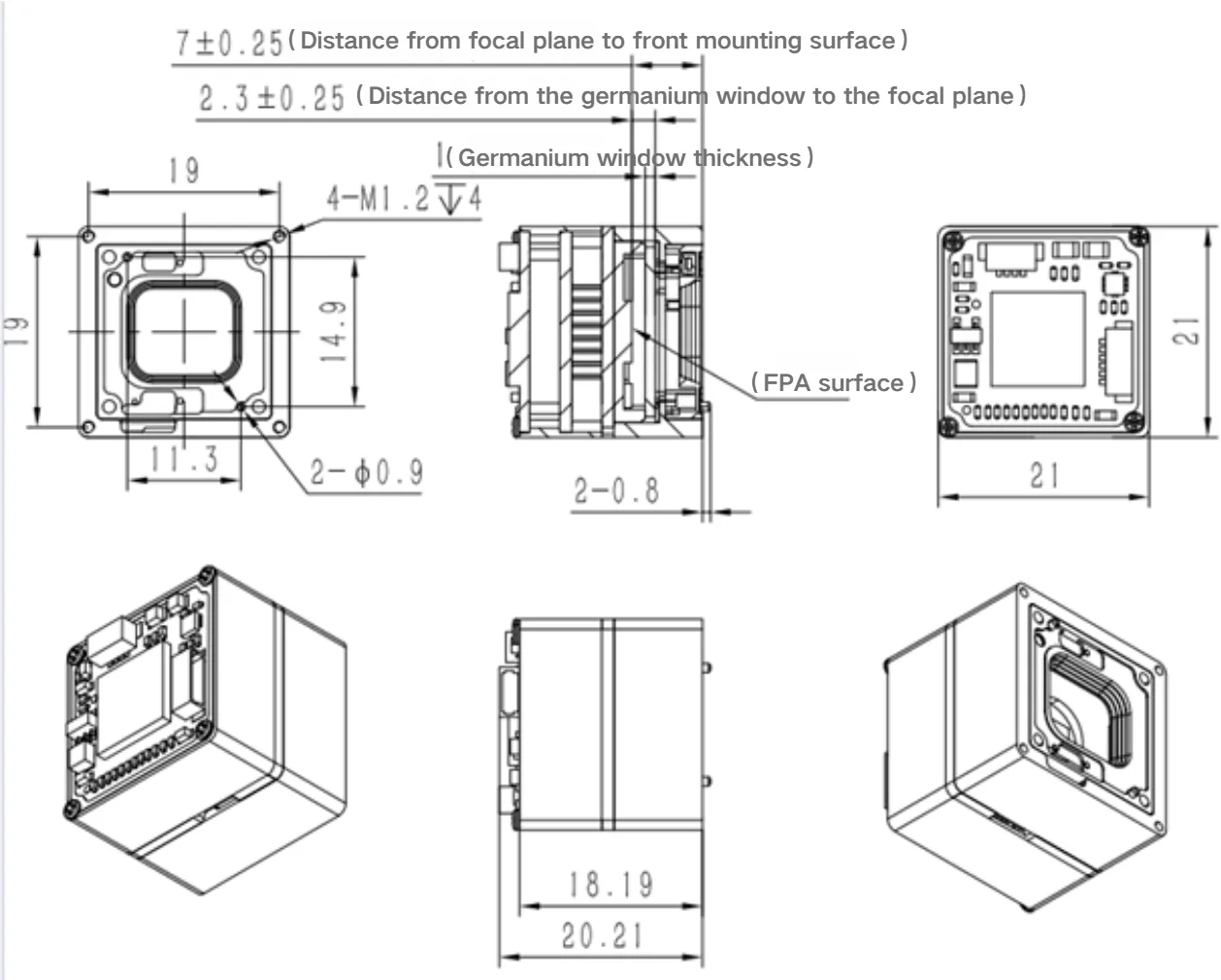
If your search for cheapest 640x480 thermal camera core or module 2024 is really a search for a compact 640-class OEM thermal path, compare low-price options against a known product record. Camcuda’s Featured HR21-L612-USB is a module-level uncooled LWIR thermal imaging core for UAV payloads, embedded vision devices, inspection platforms, and OEM thermal products.
| Product model | HR21-L612-USB 640×512 Uncooled LWIR Thermal Imaging Module |
|---|---|
| Detector type | Vanadium oxide uncooled infrared focal plane detector |
| Resolution | 640 x 512 |
| Detector frame rate | 50 Hz |
| Pixel pitch | 12 um |
| Spectral range | 8-14 um |
| NETD | <=40 mK @ 25 C, F#1.0 |
| Digital video | USB |
| Communication interface | USB serial port, 1 x RS-422 |
| Analog video support | CVBS supported on applicable configurations; confirm during RFQ |
| Supply voltage | 5 V +/-0.5 V |
| Typical power consumption | <1.2 W at 25 C, including expansion board |
| Dimensions | 21 mm x 21 mm x 20.2 mm |
| Weight | <15 g |
| Operating temperature | -40 C to +85 C |
| Storage temperature | -50 C to +90 C |
| Humidity | 5%-95%, non-condensing |
| Shock and vibration | 6.06 g random vibration, all axes; 80 g @ 4 ms post-peak sawtooth waveform, 3 axes / 6 directions |
Start with the HR21-L612-USB product page when the buying task involves a compact 640-class LWIR module. For broader comparison, review thermal imaging cores and uncooled thermal modules before asking for sample pricing.
Interface risk: when a cheap module cannot talk to the product
The fastest way for a cheapest 640x480 thermal camera core or module 2024 shortlist to fail is to ignore the video path. A drone payload team may need low-latency analog video into an existing transmitter. A robotics team may prefer USB into an edge processor. A fixed outdoor monitoring product may need a documented control path and a repeatable power design. Those are different RFQs.
Camcuda modules can support interface paths such as USB, MIPI, DVP, RS-422, and CVBS depending on module family and configuration. For the HR21-L612-USB listing, USB video, USB serial communication, and RS-422 are the main review points. CVBS analog output can be supported on applicable configurations; confirm during RFQ. Do not assume every low-price listing includes every output by default.
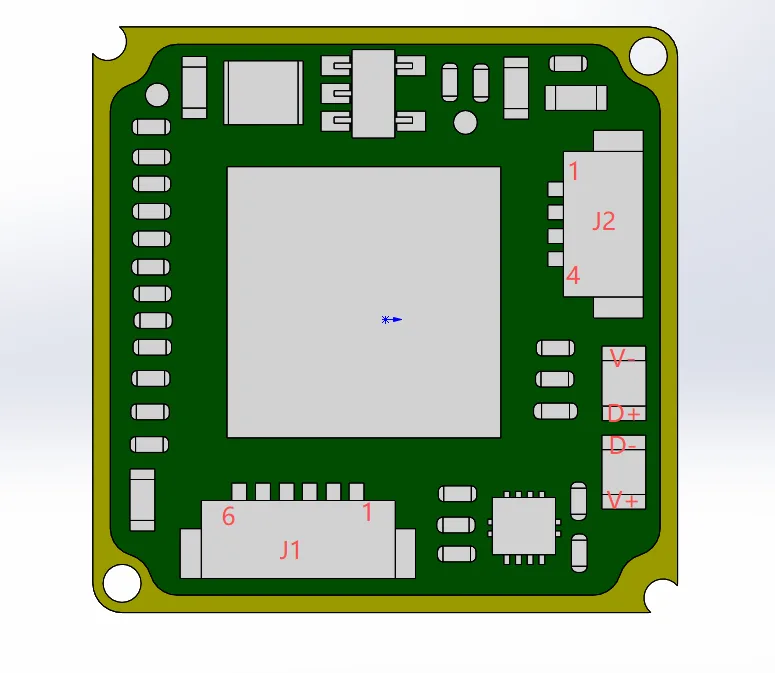
Buyer forums make this point in plain language. In drone and FPV discussions, people often separate analog VTX paths, USB capture, and digital display expectations because one output cannot magically satisfy every host system. A relevant EEVblog thermal imaging discussion is useful as a reminder of how price questions quickly turn into module support, lens, software, and sourcing questions. Treat forum posts as buyer-question research, not as verified supplier evidence.
Application case: the low-price drone payload sample that misses the bracket
Consider a small UAV inspection integrator building a thermal add-on for roof and utility patrol. The procurement manager searches cheapest 640x480 thermal camera core or module 2024 and finds an attractive sample price. The first email asks only for resolution and unit cost. The supplier answers quickly. Everyone feels the project is moving.
Two weeks later, the engineering handoff is less clean. The module photo did not show the board stack. The lens barrel interferes with the compact payload bracket. The analog video requirement was never confirmed. The host can accept USB for bench testing, but the field display path expects another signal. Procurement now asks for an NDAA statement and interface references for a North America customer, but the document package was not part of the original quote.
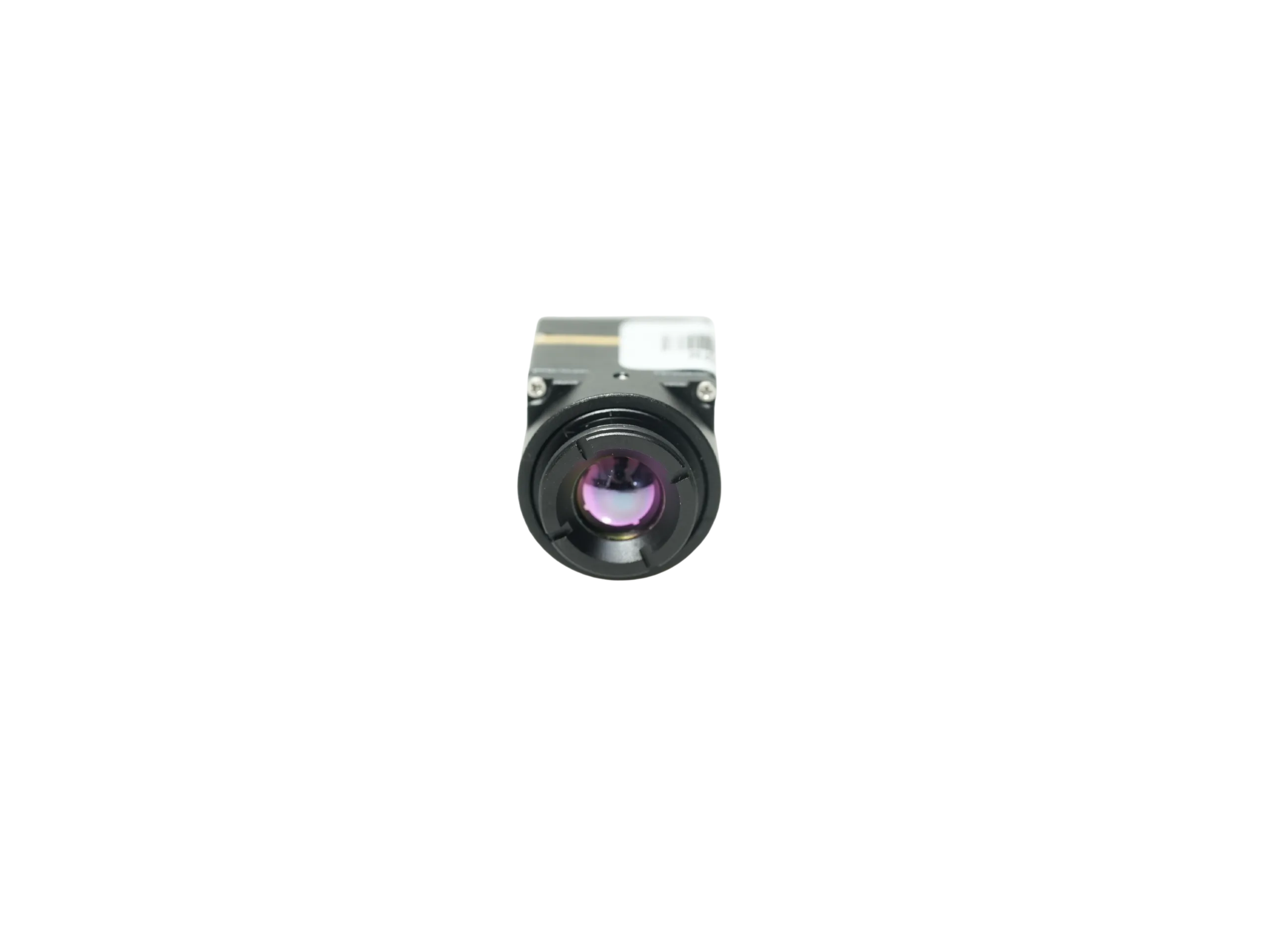
This is where a slightly higher verified module path may be cheaper in practice. For drone payloads, the buyer should link the module selection to the actual drone thermal camera application: weight, bracket, power, video handoff, field workflow, and documentation. For outdoor service or security monitoring, the same RFQ should connect to outdoor and field thermal imaging requirements such as operating temperature, environmental exposure, service workflow, and repeatable evidence capture.
Common mistakes when price becomes the headline
- Comparing 640 x 480 and 640 x 512 as if the only difference is price. Confirm the actual shipped detector format, frame rate, pixel pitch, and firmware path.
- Assuming the image output fits the host. USB, MIPI, DVP, CVBS, and RS-422 answer different integration questions.
- Freezing the enclosure before requesting drawings. A compact module still needs lens clearance, connector space, and mounting review.
- Ignoring procurement documentation until the customer asks. For North America, security monitoring, drone inspection, industrial monitoring, or government-adjacent projects, ask early whether an NDAA statement is available on request.
- Buying a sample without a reorder discussion. A low first price has little value if the next batch changes model, interface, or support conditions.
RFQ checklist for the cheapest 640×480 thermal camera core or module 2024 shortlist
Before asking Camcuda or any supplier to quote a 640-class thermal module, turn the price search into a structured request:
- Target application: drone payload, outdoor monitoring, handheld product, industrial inspection, robotics, or embedded thermal vision.
- Detector target: exact resolution, pixel pitch, frame rate, NETD expectation, and LWIR spectral band.
- Optical requirement: lens/FOV, working distance, enclosure window, and target size.
- Video and control path: USB, MIPI, DVP, RS-422, and whether CVBS analog output must be confirmed for the exact configuration.
- Mechanical limits: maximum board size, lens clearance, mounting method, connector direction, and weight budget.
- Power limits: supply voltage, typical power, heat path, battery/runtime constraints, and host-board capacity.
- Documentation: datasheet, mechanical drawing, electrical interface reference, product specifications, CE/RoHS-related review where applicable, and NDAA statement available on request.
- Commercial plan: sample quantity, pilot quantity, expected annual volume, destination market, and any export/compliance review needs.
Use the support and downloads page for document planning and send the finished requirement set through Camcuda contact/RFQ. A clear RFQ gives the supplier room to say which price is realistic and which missing condition could create later cost.
Turn a price search into a reliable module RFQ
If your team found Camcuda while searching cheapest 640x480 thermal camera core or module 2024, the next step is not to chase the lowest visible number. Share the application, interface, mechanical envelope, documentation needs, and target quantity. Camcuda can help compare a compact 640-class LWIR path such as HR21-L612-USB against the real product constraints before you order samples.
FAQ
Is the cheapest 640×480 thermal camera core or module 2024 result still useful?
Yes, but only as a starting benchmark. A cheapest 640x480 thermal camera core or module 2024 result can show price expectations, older products, surplus offers, or buyer questions. It cannot replace a current RFQ that confirms resolution, interface, documentation, sourcing, and application fit.
Why does Camcuda compare 640 x 480 searches with a 640 x 512 module?
Many buyers use 640 x 480 as a shorthand for 640-class thermal imaging. Camcuda’s HR21-L612-USB is a 640 x 512 uncooled LWIR module, so buyers should compare exact shipped resolution rather than relying on shorthand.
What is the biggest hidden cost in a low-price thermal module?
The biggest hidden cost is usually integration rework: wrong output interface, missing control path, mechanical mismatch, unavailable drawing, unsupported lens path, or a sample that cannot be reordered in the same configuration.
Does HR21-L612-USB support CVBS analog video?
CVBS analog output is supported on applicable configurations and should be confirmed during RFQ. For HR21-L612-USB review, also confirm USB video, USB serial communication, RS-422, firmware expectations, and the host system requirement.
Is a cheap 640-class module suitable for drone inspection?
It can be, but only after checking weight, dimensions, lens clearance, bracket design, power budget, video handoff, control path, and documentation. For UAV projects, review the drone thermal camera application path before sample ordering.
What documentation should procurement request?
Ask for product specifications, mechanical drawings, electrical interface references, lens/FOV details, interface notes, CE/RoHS-related materials where applicable, and an NDAA statement available on request when procurement or compliance review requires it.
Can a 2024 marketplace listing be used for 2026 budgeting?
Use it cautiously. Component availability, configuration, support, shipping terms, documentation, and compliance expectations can change. Current supplier confirmation is more important than an old price snapshot.
Should buyers choose USB or CVBS first?
Choose based on the host system. USB often fits software capture, bench evaluation, and embedded processors. CVBS analog output can be useful for applicable low-latency displays, recorders, transmitters, or retrofit paths. Confirm the exact output during RFQ.
When should I contact Camcuda instead of continuing price research?
Contact Camcuda once you know the application, target resolution, interface path, size limits, power budget, destination market, and document needs. Those details let the team recommend a realistic module path instead of guessing from a price-only search.