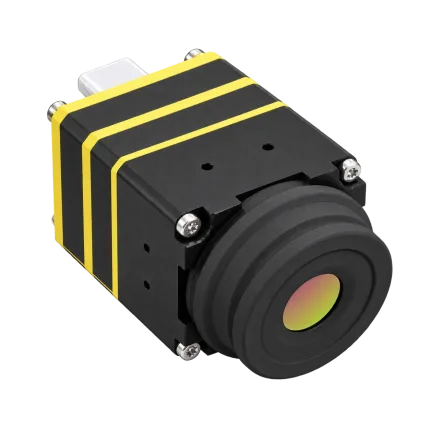
CAMCUDA AeroMini 256 Uncooled LWIR USB Thermal Camera Core for UAV Integration
256 × 192 uncooled LWIR thermal imaging for compact UAV payloads, gimbals and OEM integration. Select your lens, interface package and 60 Hz or 30 Hz factory configuration.
Non-radiometric samples: 7 mm US$185 · 9.1 mm US$179. Other focal lengths and the 25 Hz radiometric version: request a quotation.
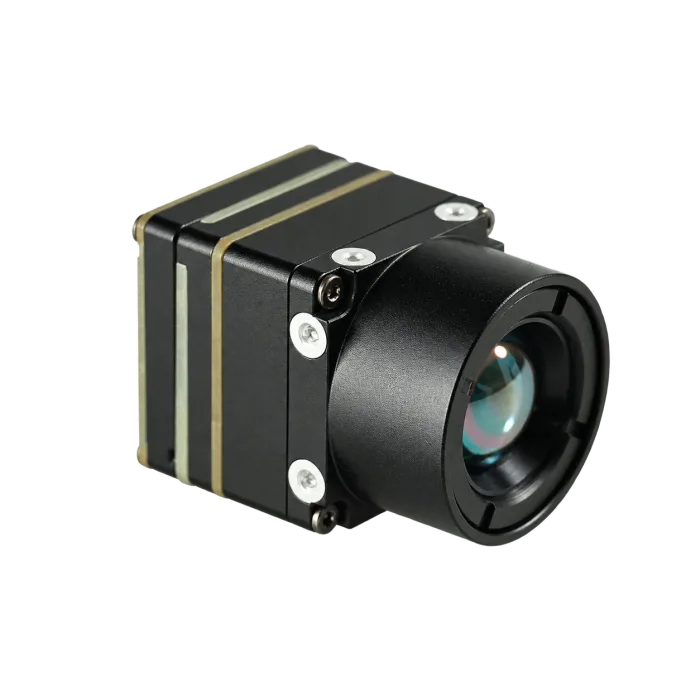 1 / 6
Price range: $179.00 through $215.00
Configure and purchase
Choose your configuration
Review the current online unit price, then check out or request an OEM quotation.
Pricing and availability by enquiry.
Enquire about this configurationConfirming configuration…
Non-radiometric imaging does not provide calibrated temperature measurements.
Express checkout
OEM & volume pricing
Configuration review for custom projects and production orders.
Pricing is confirmed for your selected configuration.
Discuss a custom configurationDescription
AEROMINI 256 · UAV & OEM INTEGRATION
Compact thermal vision.
Built for your payload.
CAMCUDA AeroMini 256 brings 256 × 192 uncooled LWIR imaging to the AeroMini platform for compact drone payloads and custom gimbals. Choose your lens, interface package and factory frame rate.
Technical specifications
Choose the camera version and interface board for your integration. Temperature measurement applies only to the radiometric version.
| Parameter | Specification | Configuration notes |
|---|---|---|
| Resolution | 256 × 192 | Both versions |
| Detector type | VOx | Uncooled detector |
| Frame rate — non-radiometric | 60 Hz default / 30 Hz factory option | Factory default 60 Hz; select 30 Hz when ordering. |
| Frame rate — radiometric | 25 Hz | Radiometric version only; availability enquiry. |
| Pixel pitch | 12 μm | Both versions |
| Spectral response | 8–14 μm | Long-wave infrared |
| NETD | ≤30 mK at 25 °C, F/1.0 | At 25 °C, F/1.0 |
| F-number | 1 | Both versions |
| Polarity | White hot / Black hot | Selectable image polarity |
| Typical supply voltage | 5 V | Typical supply: 5 V. Use the connector definitions for the selected board. |
| Typical power consumption | <0.7 W | Typical module consumption; complete-kit consumption may differ. |
| Digital video | YUV, USB, BT.656 | Board and firmware dependent. Confirm host compatibility. |
| Analog video | CVBS, PAL, NTSC | Output availability depends on the selected board. |
| Serial communication | UART, RS232, RS422 | Availability depends on the selected interface board. |
| Weight, without lenses and flanges | <20 g | Excludes lens and flange. |
| Dimensions, without lenses and flanges | 21 × 21 × 28 mm | Excludes lens and flange; confirm the complete assembly dimensions. |
| Temperature measurement range | −20 °C … +550 °C | Radiometric version only. Accuracy and RAW data format require confirmation. |
| Radiometric lens options documented | 9.1 / 13 / 18 mm only | Radiometric version: 9.1 / 13 / 18 mm; currently enquiry only. |
| Operating temperature | −40 °C … +80 °C | Both versions |
| Storage temperature | −50 °C … +85 °C | Both versions |
| Humidity | 5–95%, non-condensing | Non-condensing |
LENS OPTIONS
Choose your field of view.
Lens options and nominal FOV follow the AeroMini 640 platform specifications.
| Lens | Horizontal × vertical FOV | Non-radiometric sample · USD |
|---|---|---|
| 4 mm | 100° × 82° | Request quote |
| 7 mm | 64° × 52° | US$185 |
| 9.1 mm | 48.7° × 38.6° | US$179 |
| 13 mm | 31.9° × 25.7° | Request quote |
| 18 mm | 24.2° × 19.5° | Request quote |
| 25 mm | 17.5° × 14° | Request quote |
| 35 mm | 12.5° × 10° | Request quote |
| 50 mm | 8.8° × 7° | Request quote |
| 60 mm | 7.3° × 5.9° | Request quote |
| 75 mm | 5.9° × 4.7° | Request quote |
Interfaces & integration
Check the connector and board revision before wiring. The 16-pin and 26-pin connections below are not a substitute for the matched Type-C board guide.
POWER_IN1 and POWER_IN2 are marked 5 V. Do not connect these pins to 12 V. Confirm the approved input voltage for your selected board.
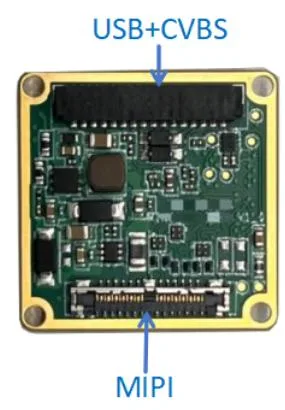
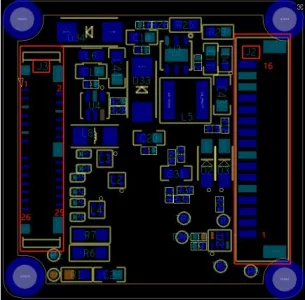
16-pin USB / CVBS connections
Connector: DF52-16S-0.8H. Confirm the connector and board revision before integration.
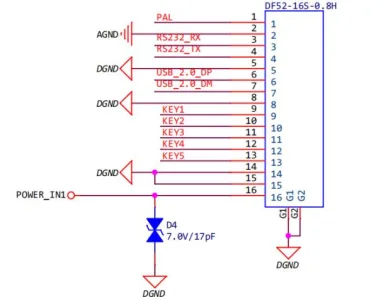
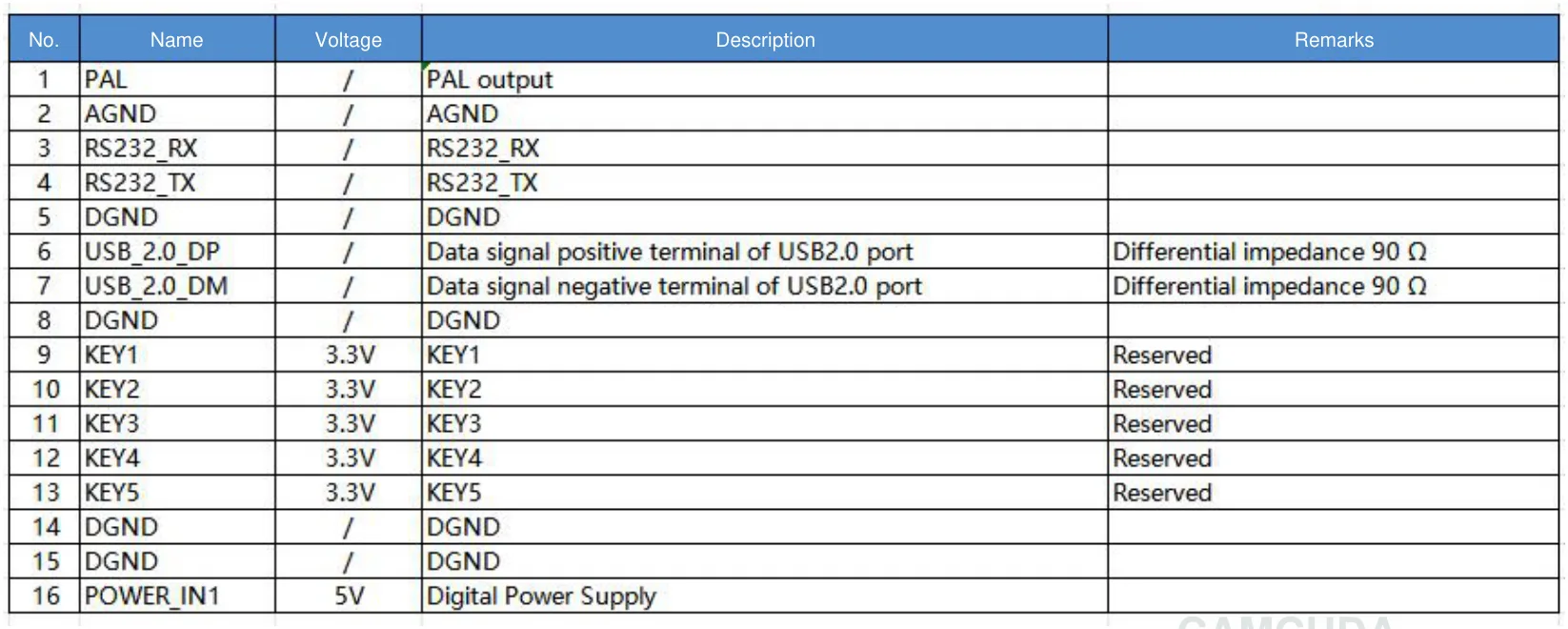
| Pin | Signal | Signal voltage | Description | Remarks |
|---|---|---|---|---|
| 1 | PAL | / | PAL output | |
| 2 | AGND | / | AGND | |
| 3 | RS232_RX | / | RS232_RX | |
| 4 | RS232_TX | / | RS232_TX | |
| 5 | DGND | / | DGND | |
| 6 | USB_2.0_DP | / | Data signal positive terminal of USB2.0 port | Differential impedance 90 Ω |
| 7 | USB_2.0_DM | / | Data signal negative terminal of USB2.0 port | Differential impedance 90 Ω |
| 8 | DGND | / | DGND | |
| 9 | KEY1 | 3.3V | KEY1 | Reserved |
| 10 | KEY2 | 3.3V | KEY2 | Reserved |
| 11 | KEY3 | 3.3V | KEY3 | Reserved |
| 12 | KEY4 | 3.3V | KEY4 | Reserved |
| 13 | KEY5 | 3.3V | KEY5 | Reserved |
| 14 | DGND | / | DGND | |
| 15 | DGND | / | DGND | |
| 16 | POWER_IN1 | 5V | Digital Power Supply |
“/” indicates that no signal voltage is specified.
26-pin MIPI / DVP connections
Connector: DF56C_26S_0.3V(51). Confirm the connector and board revision before integration.
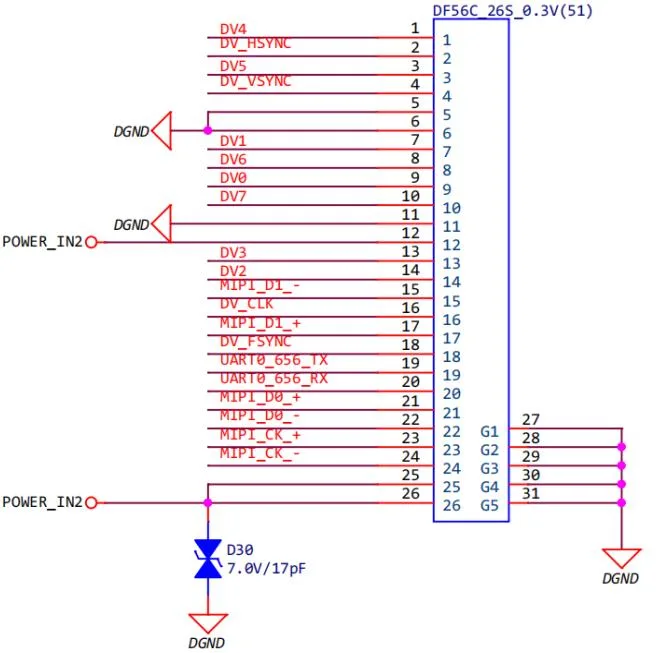
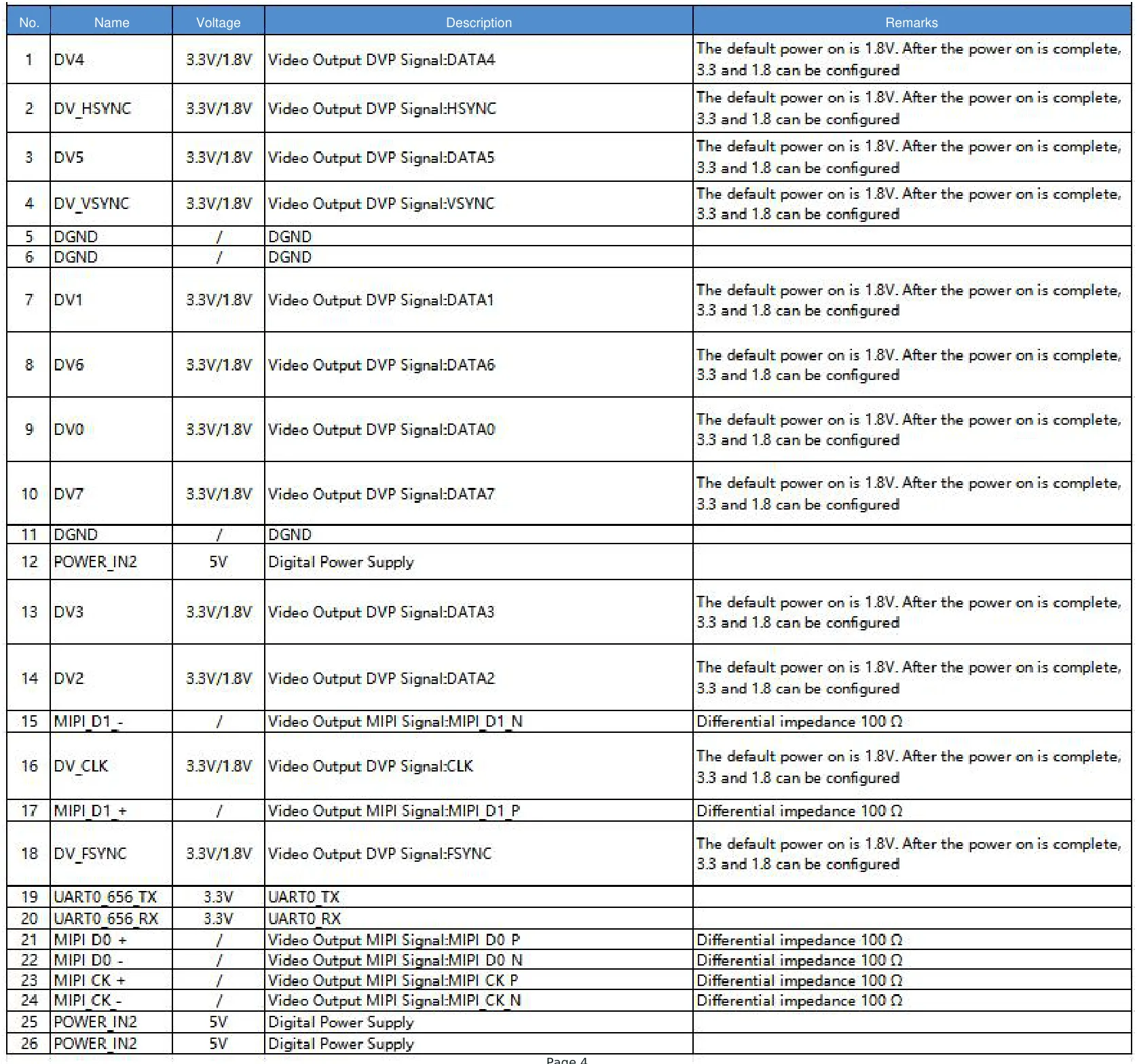
| Pin | Signal | Signal voltage | Description | Remarks |
|---|---|---|---|---|
| 1 | DV4 | 3.3V/1.8V | Video Output DVP Signal:DATA4 | The default power on is 1.8V. After the power on is complete, 3.3 and 1.8 can be configured |
| 2 | DV_HSYNC | 3.3V/1.8V | Video Output DVP Signal:HSYNC | The default power on is 1.8V. After the power on is complete, 3.3 and 1.8 can be configured |
| 3 | DV5 | 3.3V/1.8V | Video Output DVP Signal:DATA5 | The default power on is 1.8V. After the power on is complete, 3.3 and 1.8 can be configured |
| 4 | DV_VSYNC | 3.3V/1.8V | Video Output DVP Signal:VSYNC | The default power on is 1.8V. After the power on is complete, 3.3 and 1.8 can be configured |
| 5 | DGND | / | DGND | |
| 6 | DGND | / | DGND | |
| 7 | DV1 | 3.3V/1.8V | Video Output DVP Signal:DATA1 | The default power on is 1.8V. After the power on is complete, 3.3 and 1.8 can be configured |
| 8 | DV6 | 3.3V/1.8V | Video Output DVP Signal:DATA6 | The default power on is 1.8V. After the power on is complete, 3.3 and 1.8 can be configured |
| 9 | DV0 | 3.3V/1.8V | Video Output DVP Signal:DATA0 | The default power on is 1.8V. After the power on is complete, 3.3 and 1.8 can be configured |
| 10 | DV7 | 3.3V/1.8V | Video Output DVP Signal:DATA7 | The default power on is 1.8V. After the power on is complete, 3.3 and 1.8 can be configured |
| 11 | DGND | / | DGND | |
| 12 | POWER_IN2 | 5V | Digital Power Supply | |
| 13 | DV3 | 3.3V/1.8V | Video Output DVP Signal:DATA3 | The default power on is 1.8V. After the power on is complete, 3.3 and 1.8 can be configured |
| 14 | DV2 | 3.3V/1.8V | Video Output DVP Signal:DATA2 | The default power on is 1.8V. After the power on is complete, 3.3 and 1.8 can be configured |
| 15 | MIPI D1 – | / | Video Output MIPI Signal:MIPI D1 N | Differential impedance 100 Ω |
| 16 | DV_CLK | 3.3V/1.8V | Video Output DVP Signal:CLK | The default power on is 1.8V. After the power on is complete, 3.3 and 1.8 can be configured |
| 17 | MIPI D1 + | / | Video Output MIPI Signal:MIPI D1 P | Differential impedance 100 Ω |
| 18 | DV_FSYNC | 3.3V/1.8V | Video Output DVP Signal:FSYNC | The default power on is 1.8V. After the power on is complete, 3.3 and 1.8 can be configured |
| 19 | UART0 656 TX | 3.3V | UART0 TX | |
| 20 | UART0 656 RX | 3.3V | UART0 RX | |
| 21 | MIPI D0 + | / | Video Output MIPI Signal:MIPI D0 P | Differential impedance 100 Ω |
| 22 | MIPI D0 – | / | Video Output MIPI Signal:MIPI D0 N | Differential impedance 100 Ω |
| 23 | MIPI CK + | / | Video Output MIPI Signal:MIPI CK P | Differential impedance 100 Ω |
| 24 | MIPI CK – | / | Video Output MIPI Signal:MIPI CK N | Differential impedance 100 Ω |
| 25 | POWER_IN2 | 5V | Digital Power Supply | |
| 26 | POWER_IN2 | 5V | Digital Power Supply |
“/” indicates that no signal voltage is specified. G1–G5 are connected to DGND; the table lists the 26 signal pins.
AEROMINI PLATFORM
Explore the integration platform.
View the AeroMini 640 hardware reference and recorded thermal footage.
AeroMini 256 frequently asked questions
What is AeroMini 256 designed for?
AeroMini 256 is a 256 × 192 uncooled LWIR thermal camera core for compact UAV payloads, custom gimbals and OEM integration.
What are the sample prices?
Non-radiometric samples start at US$185 for 7 mm and US$179 for 9.1 mm with a single tailboard. The dual-tailboard package adds US$30. Other lenses and the radiometric version are available by quotation. Shipping and applicable taxes are calculated at checkout.
Can I choose 60 Hz or 30 Hz?
The non-radiometric version is configured at 60 Hz by default. Select 30 Hz when ordering if required. Firmware changes after delivery carry a risk of failure; factory configuration is recommended.
Does the non-radiometric version measure temperature?
No. It provides thermal imagery without calibrated temperature measurements. For the 25 Hz radiometric version, contact CAMCUDA about lens, interface, pricing and availability.
What is included with the interface packages?
Every package includes one camera core with the selected lens, its selected tailboard and 1 × wiring cable. Type-C + CVBS and the dual-tailboard package also include 1 × USB-C data cable. The dual-tailboard package includes both the USB + CVBS + MIPI and Type-C + CVBS tailboards.
Are the photos and 640 videos captures from AeroMini 256?
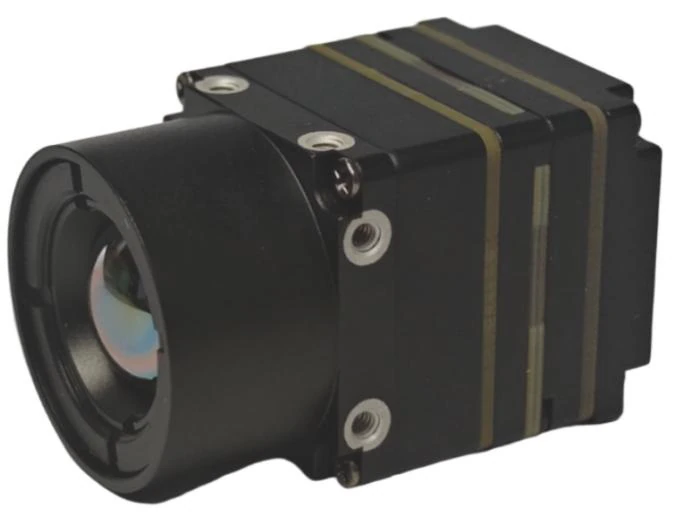
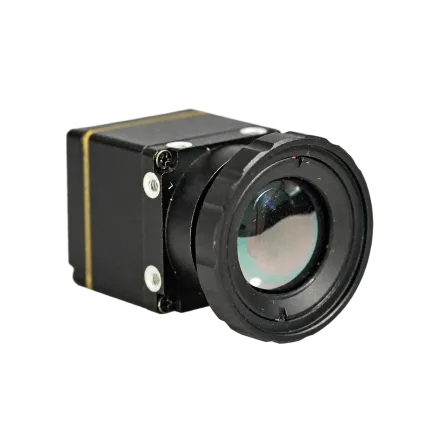
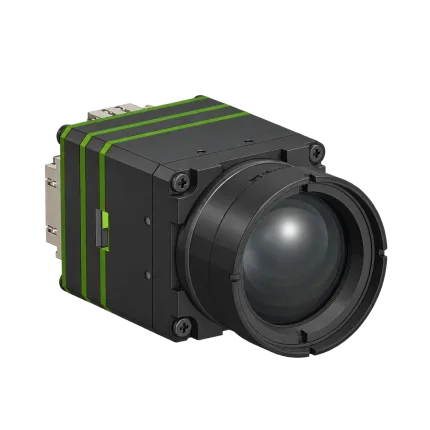
The product images show the shared AeroMini hardware platform. Thermal videos on the AeroMini 640 page were recorded with AeroMini 640 and are not 256-resolution sample captures.
How do I request integration resources?
Contact CAMCUDA with your lens, interface, host platform and quantity to request matching documentation and developer resources.
Additional information
| Camera version | non-radiometric, radiometric |
|---|---|
| Lens focal length | 4 mm, 7 mm, 9.1 mm, 13 mm, 18 mm, 25 mm, 35 mm, 50 mm, 60 mm, 75 mm |
| Interface package | USB + CVBS + MIPI, Type-C + CVBS, Both tailboards + both cables, CVBS only, interface-to-be-confirmed |
| Resolution | 256 × 192 |
| Typical supply voltage | 5 V |
| Typical power consumption | <0.7 W |
Related products
-
50 fps USB imaging

CAMCUDA AeroCore 640 USB LWIR Thermal Camera Module for UAV Integration
Project quotationConfiguration reviewRequest a quote → -
CVBS · PAL

CAMCUDA AnalogMini 384 CVBS LWIR Thermal Camera Module
Project quotationConfiguration reviewRequest a quote → -
14-bit RAW · Y16
CAMCUDA FlexMini 640 Raw Data Output Thermal Camera Module
Price range: $423.10 through $899.00Online order1–99 units Price range: $423.10 through $899.00Configuration & volume pricing100+ / 1000+ unitsEvery quotation states the configuration, quantity and delivery terms.Request volume pricing →Choose configuration This product has multiple variants. The options may be chosen on the product page -
Radiometric USB RAW
CAMCUDA ThermoCore 640 14/16-bit RAW USB Radiometric Thermal Camera Module
Price range: $1,250.00 through $1,550.00Inquiry-only lens options: Request a quoteOnline order1–99 units Price range: $1,250.00 through $1,550.00Configuration & volume pricing100+ / 1000+ unitsEvery quotation states the configuration, quantity and delivery terms.Request volume pricing →Choose configuration This product has multiple variants. The options may be chosen on the product page