thermal drone for sale: 3 Reliable Payload Decisions the Listing Cannot Make
Buyer conversation for UAV integrators and OEM sourcing teams
thermal drone for sale: 3 Reliable Payload Decisions the Listing Cannot Make
A buyer typing thermal drone for sale may be looking for a ready-to-fly aircraft, but the real decision is often smaller and more expensive to get wrong: which thermal payload path, video interface, mechanical envelope, and procurement document set can survive the first field test and the second purchase order?
Quick answer
A thermal drone for sale listing can help buyers understand market price and mission language, but it cannot decide the thermal module inside an OEM payload. Before buying or quoting, confirm three things: whether the project needs a complete drone or a compact LWIR module, how the thermal video and control signals reach the host, and whether the mechanical and documentation package fits the final market.
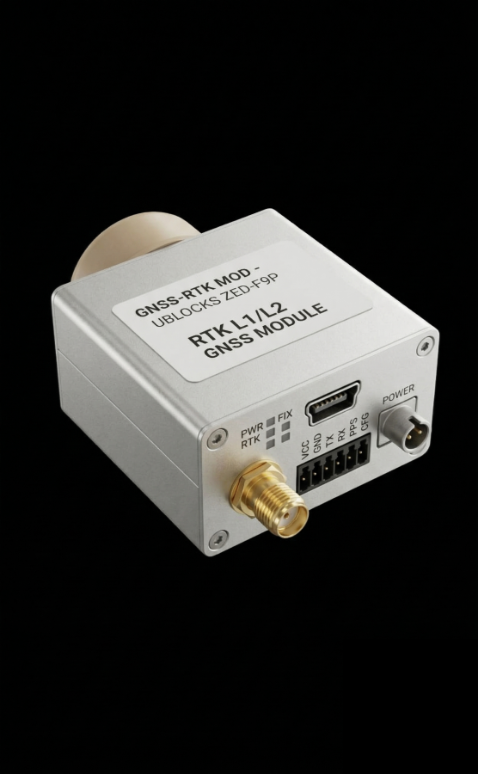
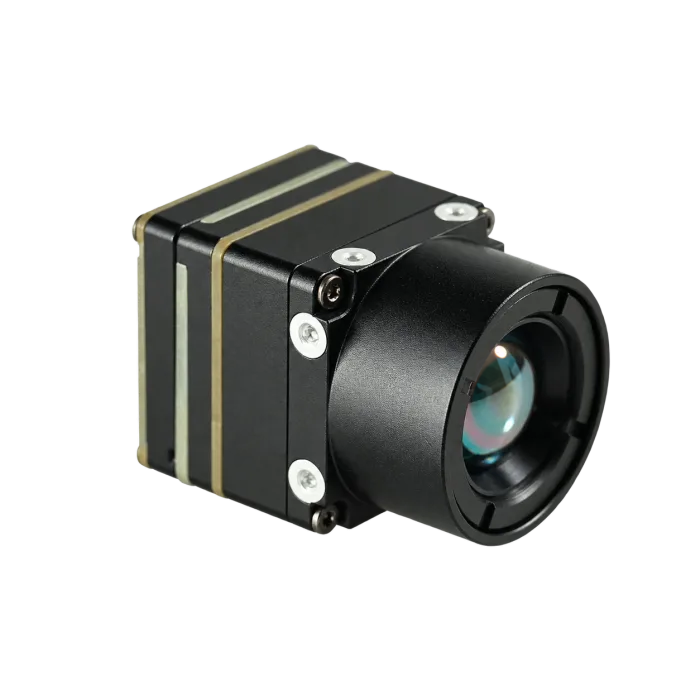
CAMCUDA AeroMini 640 is a compact 640 x 512 uncooled LWIR integration module. The non-radiometric 9 mm USB + CVBS + MIPI configuration provides thermal images without calibrated temperature readings. Its published 21 x 21 x 28 mm dimensions and under 20 g weight exclude the lens and flange. Confirm the complete assembly, receiving device, control wiring and document needs during RFQ.
thermal drone for sale searches can hide the real payload question
The meeting starts with a screenshot. Someone has found a thermal drone for sale, circled the price, and asked whether the team should buy the whole package or build a payload around a smaller thermal module. Procurement likes the simple SKU. The engineer asks about USB, CVBS, control commands, bracket space, and whether the thermal feed can be recorded by the existing ground system. The pilot asks whether the image will be useful at the actual inspection distance.
That split is the point of this article. A marketplace or dealer listing can be useful for budget context, but it often skips the details that make an OEM payload repeatable. It rarely tells you whether the thermal core can be replaced, whether the interface matches your controller, whether a future enclosure can fit the module, or which documents a North America buyer requires and which can be provided for the exact configuration and destination.
Finished-aircraft coverage provides workflow context. Teledyne FLIR’s 2022 SIRAS announcement is a historical public-safety and inspection reference; its current product page marks SIRAS discontinued. LightPath’s OEM procurement guide addresses mission, size, weight, power and supplier selection for UAV integrators. For United States operations, FAA Part 107 pilot guidance provides operating context, not evidence of a thermal module’s certification or procurement eligibility.
CAMCUDA fits the module side of that decision. Its featured AeroMini 640 is the primary path here for a thermal drone for sale buyer evaluating a compact UAV imaging payload. Start with the non-radiometric 9 mm USB + CVBS + MIPI configuration, then confirm the complete assembly and host requirements. Lower-resolution embedded sensing or compact monitoring where 160 x 120 is enough remains a separate requirements discussion; it does not establish this module’s power, interfaces or fit.
thermal drone for sale: three decisions to make before buying the sample
1. Decide whether you need a drone, a payload, or a thermal module
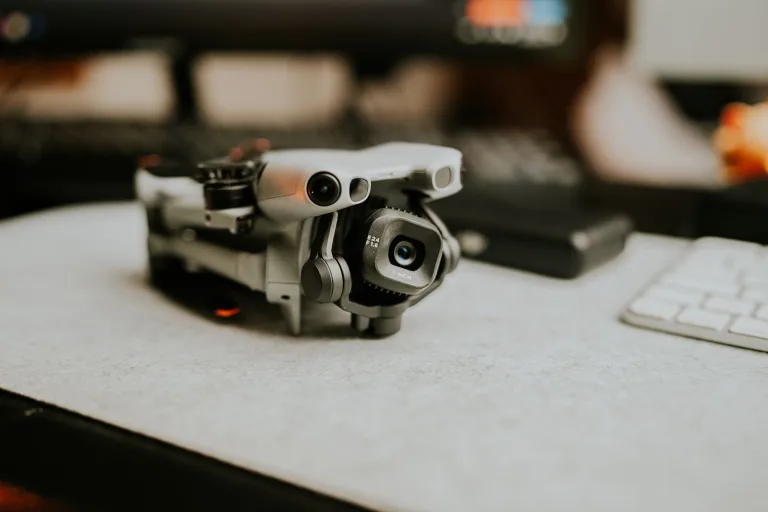
A finished thermal drone for sale package can be the right choice for a field team that needs a standardized aircraft quickly. An OEM integrator, however, may need a thermal module that can be placed inside a custom gimbal, small fixed mount, robotics bay, or inspection device. Those are different buying units.
The practical trade-off is support versus control. A full drone bundle can reduce setup time, but it may lock the buyer into a fixed payload ecosystem. A compact module gives the engineering team more control over enclosure, power, video path, and host software, but it requires a sharper RFQ and a more disciplined sample test. If the product roadmap includes repeat manufacturing or a branded payload, the module path usually deserves serious review before a ready drone is purchased as the reference.
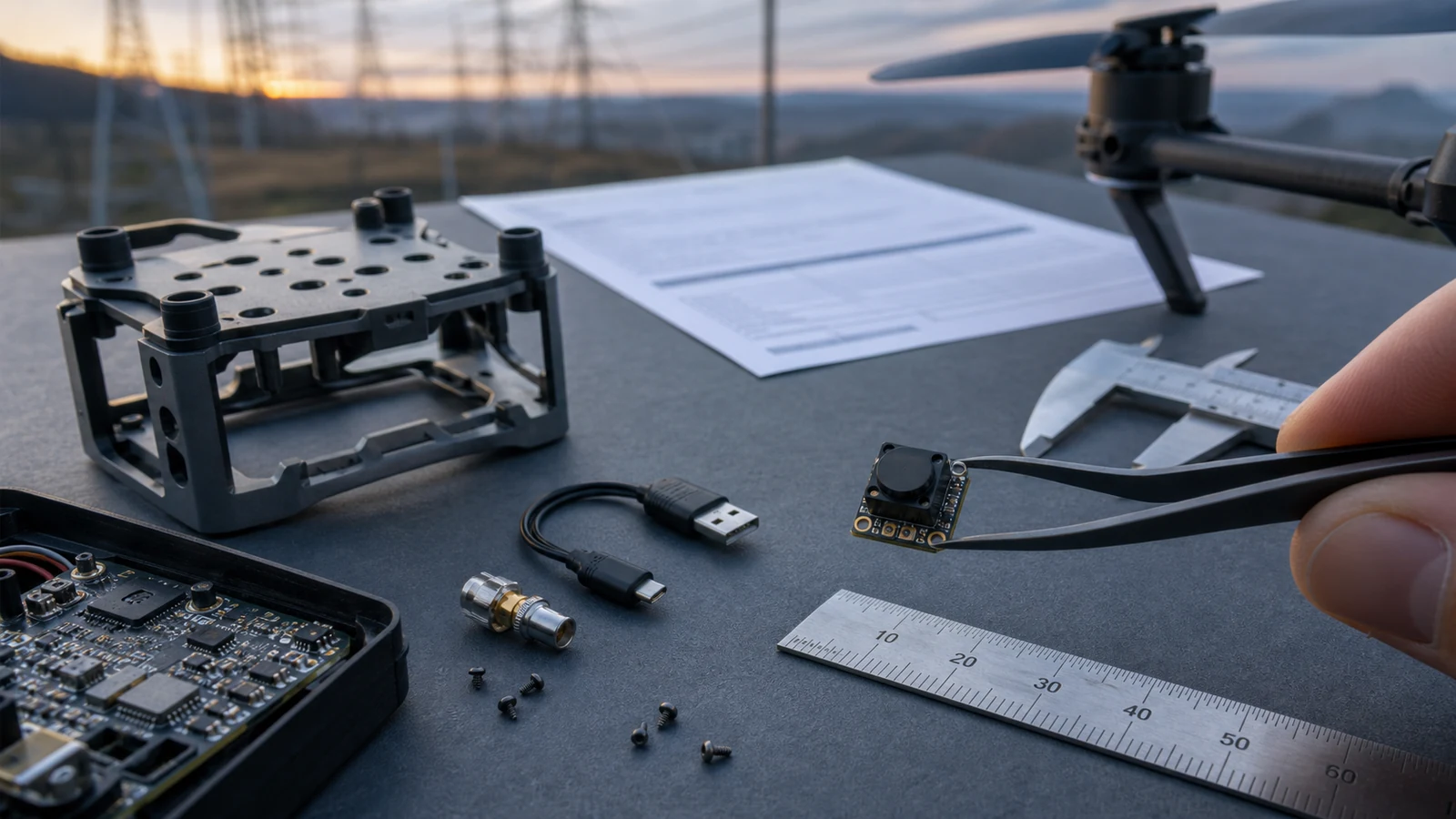
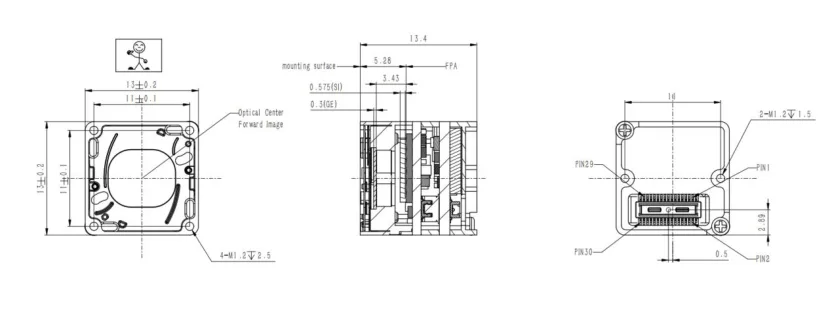
The AeroMini 640 product data describes a small 640 x 512 uncooled LWIR integration module. The listed 21 x 21 x 28 mm dimensions and under 20 g weight exclude the lens and flange. Review the ordered 9 mm assembly, lens clearance, cable exit, connector routing, bracket material and enclosure window. The published 7 mm STEP reference is not a complete 9 mm assembly drawing; request the matching mechanical envelope before fixing the bracket.
2. Decide the thermal video path before the enclosure is drawn
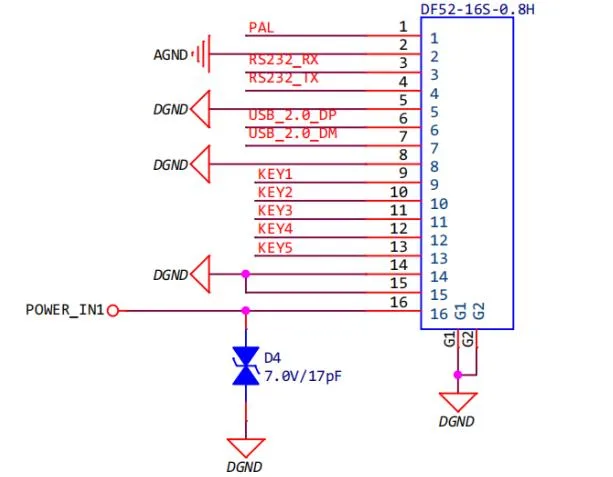
A late integration mistake is treating video as a single word. AeroMini’s USB + CVBS + MIPI configuration offers different video paths; confirm the receiving device, output format and required frame rate. Control is a separate connection: the illustrated 16-pin USB/CVBS board labels RS232_RX and RS232_TX on pins 3 and 4, while the 26-pin MIPI/DVP connection labels 3.3 V UART on pins 19 and 20. USB video does not establish USB serial control. Request the matched board guide and serial commands.
This is where online discussions can be useful as question sources, not as product evidence. A single question about camera output and transmitter input can expose a missing interface requirement. One FPV discussion shows how quickly the question becomes a receiver and transmitter problem. For a commercial RFQ, turn that uncertainty into specific wording: “Confirm USB video for development and CVBS output from the selected AeroMini 640 board for our transmitter, including the video standard, delivered frame rate and separate control connection.”
Do not wait until the first enclosure print to ask this. The video path changes connectors, board placement, service access, and sometimes the test equipment used by the field team. A thermal drone for sale listing will not solve that for a custom payload.
3. Decide the document path while the quote is still open
Procurement often asks for documents after the sample appears to work. That timing is risky. If the project serves North America inspection, security monitoring, industrial monitoring, or government-adjacent buyers, ask early about datasheets, mechanical drawings, interface references, configuration notes, CE/RoHS or ISO-related review materials where applicable, and which buyer-required documents, including any requested NDAA-related statement, can be provided for the exact configuration and destination.
Careful wording matters. Do not ask for a blanket promise that every configuration has every document. Ask CAMCUDA to confirm the document set for the exact product, lens, interface path, destination country, and intended use. That makes the RFQ useful for engineering and procurement at the same time.
Selection chart for a thermal drone for sale buyer
| Decision | Ready drone listing says | OEM payload RFQ must ask | CAMCUDA path |
|---|---|---|---|
| Buying unit | Complete aircraft, controller, battery, payload bundle | Do we need the aircraft or the thermal module inside a custom payload? | AeroMini 640 non-radiometric 9 mm USB + CVBS + MIPI module for payload integration |
| Thermal image job | Thermal camera included | Inspection distance, target size, FOV, image workflow, host processing, and whether calibrated temperatures are required | 640 x 512, 12 um, 8-14 um; selected non-radiometric version provides imagery, not calibrated temperatures |
| Video interface | Live view or app preview | Required USB, MIPI or CVBS video path, receiving device, output rate and separate serial-control connection | USB + CVBS + MIPI configuration; 16-pin RS232 control or separate 26-pin 3.3 V UART path, matched to the board |
| Mechanical fit | Payload installed | Available bracket volume, cable exit, lens clearance, enclosure window, and vibration expectation | 21 x 21 x 28 mm and <20 g, excluding lens and flange; confirm complete 9 mm assembly |
| Power and environment | Flight time listed | Payload power budget, heat path, operating temperature, humidity, and field enclosure | Illustrated board inputs: 5 V only; <0.5 W typical module power at 25 deg C, not complete-kit power; -40 to +80 deg C operation |
| Procurement | Price and stock | Datasheet, drawings, interface reference, sample configuration, destination market documents | Ask which buyer-required documents can be provided for the exact configuration and destination |
Product facts to use after the thermal drone for sale search
The following table uses the current AeroMini 640 non-radiometric 9 mm USB + CVBS + MIPI configuration. It is a screening table before RFQ confirmation. The 60 Hz factory default and 30 Hz factory option do not guarantee that every output runs simultaneously at that rate; confirm the interface, firmware and host.
| Product model | AeroMini 640; non-radiometric, 9 mm, USB + CVBS + MIPI |
|---|---|
| Detector platform | Vanadium oxide uncooled infrared focal plane detector |
| Resolution | 640 x 512 |
| Pixel pitch | 12 um |
| Spectral range | 8-14 um |
| Factory frame rate | 60 Hz default / 30 Hz factory option; confirm delivered output rate for the board, firmware and host |
| NETD | <=30 mK @ 25 deg C, F/1.0 |
| Video path | USB and MIPI digital-video paths on the selected configuration; confirm host format and frame rate |
| Control/communication | 16-pin: RS232_RX/TX, pins 3/4; 26-pin: 3.3 V UART, pins 19/20; use the matched board guide |
| Analog output | CVBS; confirm PAL/NTSC format and receiver compatibility for the selected board |
| Supply voltage | 5 V only at the illustrated POWER_IN1 / POWER_IN2 inputs; not 12 V |
| Power consumption | <0.5 W typical module consumption at 25 deg C; complete-kit consumption may differ |
| Dimensions | 21 x 21 x 28 mm, excluding lens and flange |
| Weight | <20 g, excluding lens and flange |
| Operating temperature | -40 deg C to +80 deg C |
| Storage temperature | -50 deg C to +85 deg C |
| Humidity | 5%-95%, non-condensing |
For application-specific next steps, review the drone thermal camera application page when the project involves UAV payloads, flight workflow, gimbal constraints, or pilot video. Use outdoor field thermal imaging when the same module decision supports fixed monitoring, site patrol, utility yards, or field-service inspection. Buyers comparing broader product paths can also use CAMCUDA’s thermal imaging cores, thermal modules, and uncooled thermal modules category pages. For this AeroMini configuration, use the product FAQ, AeroMini datasheet and technical documentation folder. The folder lists USB-SDK.zip and CV Serial port resources; request the files and revisions matched to the ordered board and host.
Application case: replacing a shopping-page decision with a buildable RFQ
In this illustrative scenario, a European inspection startup begins with a thermal drone for sale search because the first customer wants roof and solar-site checks. The first internal plan is to buy one complete drone bundle, copy its result, and decide later whether to build a branded payload. That sounds fast, but the second-order problems appear quickly.
The company already has a small payload controller and a video transmitter used by a visible-light inspection product. The thermal module needs to fit into a compact bracket, stay under a tight payload weight allowance, and provide a video path that field technicians can view without redesigning the entire ground kit. Procurement also wants to know which destination-specific documents, including any requested NDAA-related statement, can be provided for a North America customer.
The better RFQ is concise but specific. It says: “We are evaluating a thermal drone for sale reference, but our product needs a compact 640-class LWIR module for a custom UAV payload. Please review AeroMini 640 non-radiometric, 9 mm, USB + CVBS + MIPI for our custom bracket. Confirm the complete assembly envelope and weight, USB video, CVBS compatibility with our transmitter, matched control wiring and serial commands, 5 V board inputs, complete-kit power, and which required procurement documents can be provided.”
If roof or solar-site acceptance requires calibrated temperatures, specify a separate radiometric configuration and validate that workflow; this non-radiometric sample supplies thermal imagery only. That is the buyer moment this article is meant to support. The drone listing still helps benchmark the market. The module RFQ decides whether the product can be built twice.
Common mistakes after finding a thermal drone for sale
- Buying the aircraft when the product needs a module. A complete drone can be useful for field operations, but OEM teams often need a thermal core that fits their own enclosure and support model.
- Letting the listing define the acceptance test. Decide scene distance, target size, recording path, field workflow, and host control before ordering samples. Use the thermal imaging calculator to plan FOV and scene coverage, then validate the selected lens and flight conditions. Its geometric estimates are not guaranteed inspection performance.
- Assuming all video outputs are equivalent. USB, MIPI and CVBS are video paths; serial control requires its own matched wiring. Confirm the board, video standard, host and frame rate during RFQ.
- Ignoring the tiny mechanical details. The under 20 g AeroMini figure excludes the lens and flange. The ordered assembly, cable exit, bracket, enclosure window and service access still need a drawing review.
- Waiting too long to ask for procurement documents. Ask which datasheets, mechanical drawings, interface notes and buyer-required procurement documents can be provided while the sample configuration is still being discussed.
RFQ checklist before a thermal drone for sale decision becomes a payload order
| RFQ field | What to provide |
|---|---|
| Reference context | Say whether the thermal drone for sale listing is a budget reference, an application reference, or a target payload benchmark. |
| Application | Roof inspection, solar inspection, utility patrol, emergency response support, industrial monitoring, outdoor field service, security monitoring, or OEM payload development. |
| Buying unit | Complete drone, payload subsystem, compact thermal module, or evaluation sample. |
| Thermal requirement | Resolution class, target distance, FOV/lens, scene type and output-rate workflow; state whether calibrated temperature data is required. The selected non-radiometric AeroMini provides imagery only. |
| Interface requirement | USB, MIPI or CVBS video, receiver model, output format and frame rate, plus the matched serial-control path; USB video does not establish USB serial control. |
| Mechanical package | Available envelope, bracket sketch, lens clearance, cable direction, vibration expectation, full assembly weight and enclosure window; request the complete ordered 9 mm assembly drawing. |
| Power and environment | Approved board input voltage, complete-kit power budget, heat path, operating temperature, humidity and field conditions; illustrated AeroMini POWER_IN1 / POWER_IN2 inputs are 5 V only. |
| Documents | Datasheet, mechanical drawing, interface reference and configuration notes; ask which buyer-required compliance documents, including any requested NDAA-related statement, can be provided for this configuration and destination. |
Use the listing as context, then ask for the payload configuration
If your team found a thermal drone for sale but needs a repeatable UAV payload, send CAMCUDA the aircraft or payload reference, bracket envelope, video receiver, control interface, destination market, and document requirements. Start with the AeroMini 640 non-radiometric 9 mm USB + CVBS + MIPI configuration for thermal imaging, then confirm the host video path, matched control wiring, complete assembly and document set during RFQ.
Review AeroMini 640 | Check support downloads | Request an engineering quote
Technical author: Daniel · Hardware Support; Sales contributors: Vivian, Lena and Sophie.
FAQ
What does a thermal drone for sale search usually mean for OEM buyers?
It usually means the buyer is comparing ready aircraft, thermal payload capability, price, and mission fit. For OEM teams, the better next step is to decide whether the final product needs a complete drone, a payload subsystem, or a compact thermal module.
When should a buyer choose a module instead of a complete thermal drone?
Choose the module path when the project needs a custom enclosure, branded payload, embedded host, special video path, repeatable production, or tighter control over mechanical and electrical integration.
Is AeroMini 640 a complete drone payload?
No. AeroMini 640 is a compact 640 x 512 uncooled LWIR integration module. The selected non-radiometric 9 mm USB + CVBS + MIPI sample needs host, enclosure, power, video and control review; it is not a complete drone payload and does not provide calibrated temperature readings.
Why does CVBS matter for drone thermal video?
CVBS can matter when an existing analog transmitter, monitor, recorder, or low-latency viewing path is part of the payload system. The selected AeroMini board includes a CVBS path; confirm the video standard and receiving equipment during RFQ.
Does USB video replace analog output?
Not always. USB video can be helpful for development, host processing, and computer-based workflows. Analog output can still matter for legacy receivers or some drone video transmission paths. The receiving device should decide the interface request.
How compact is AeroMini 640?
Published AeroMini dimensions are 21 x 21 x 28 mm and weight is under 20 g, both excluding the lens and flange. Request the complete 9 mm assembly envelope and review the cable, interface board, bracket and enclosure. The available 7 mm STEP reference is not the complete 9 mm assembly drawing.
What should North America buyers ask for during RFQ?
Ask for product specifications, drawings, interface references and configuration notes, then ask which destination-market documents, including any buyer-requested NDAA-related statement, can be provided for the exact configuration. A document request does not establish certification or procurement eligibility.
Can the same module support outdoor field monitoring?
It can be evaluated for outdoor and field thermal imaging when the enclosure, lens, power, temperature range, video path, and monitoring workflow match the application. The RFQ should describe the field conditions clearly.
What is the biggest mistake after finding a thermal drone for sale?
The biggest mistake is buying against a listing photo instead of writing an application-specific RFQ. The sample should be tested against payload fit, receiving device, field workflow, documentation, and repeat-order needs.
What should be in the first RFQ email?
Include the drone or listing reference, application, required image job, host device, video and control interfaces, mechanical envelope, power budget, environment, destination market, sample quantity, and document needs.