flir a700 thermal core camera: 4 risky assumptions before a module RFQ
Comparison memo for industrial and OEM thermal buyers
flir a700 thermal core camera: 4 risky assumptions before a module RFQ
A buyer searching for a flir a700 thermal core camera may be doing two different jobs at once. One job is comparing a finished industrial smart thermal camera for monitoring, measurement, or research. The other job is trying to source an OEM thermal module that can fit inside a product, drone payload, security device, or host-board design.
Those are not the same RFQ. The mistake is subtle: a 640 x 480 fixed camera listing can make the buyer think they have already defined the module requirement. They have not. The real decision is whether the project needs a finished camera architecture or a module-level thermal input with mechanical, electrical, interface, and documentation evidence.
Quick answer
A flir a700 thermal core camera search should first clarify product class. If the project needs a fixed industrial smart camera or image-streaming kit, an A700-style product may fit that path. If the project needs an OEM thermal module, compare Camcuda Featured products by integration role: TC160-NF for compact 160 x 120 low-power SPI embedded sensing, and HR21-L612-USB for compact 640 x 512 UAV/OEM payload work with USB video, USB serial communication, RS-422, and CVBS analog output on applicable configurations. Confirm documents, interface path, and NDAA statement availability during RFQ.
flir a700 thermal core camera research starts with the product boundary
Teledyne FLIR’s A400/A500/A700 Science Kits page describes the A700 path around a 640 x 480 detector, 12 um pitch, 7.5-14.0 um spectral range, 30 Hz frame rate, and kit-style streaming/research use. FLIR’s continuous monitoring page frames A-Series cameras around process control, safety, and fixed monitoring scenarios.
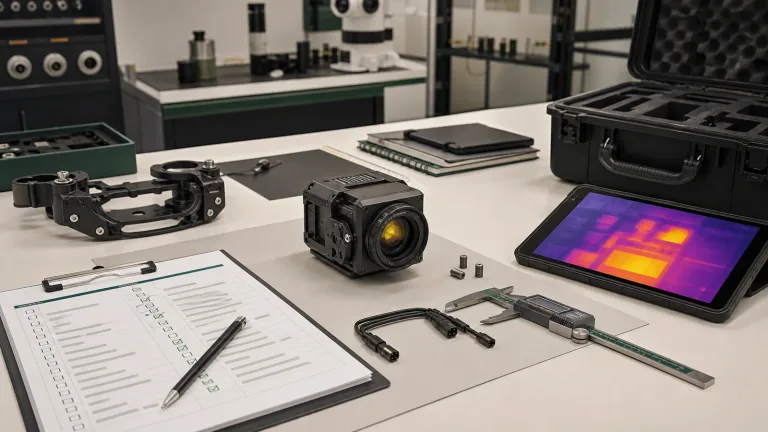
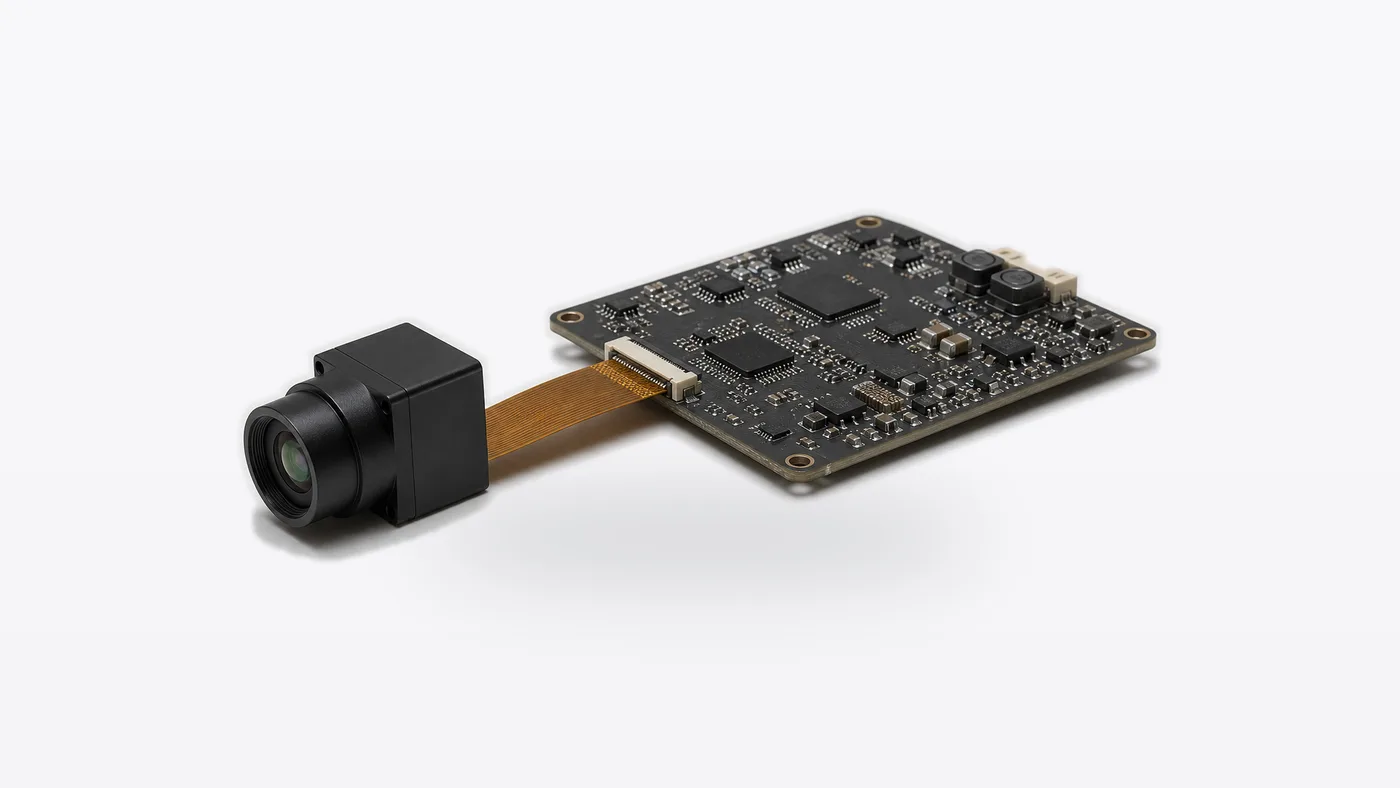
That is useful context. It is also a warning. A finished industrial thermal camera is purchased as a system: housing, lens path, streaming/measurement workflow, software ecosystem, mounting, and field support. An OEM thermal module is purchased as a component that must become part of another system. A Camcuda module RFQ must therefore answer board fit, power, interface, enclosure, optics, software, and documentation questions that a finished camera listing may hide.
Google’s helpful-content guidance was used as an editorial check here: the useful answer is not “which camera is better.” The useful answer is, “which product class are you actually buying?”
Four risky assumptions in a flir a700 thermal core camera RFQ
1. Assuming 640 x 480 camera research defines an OEM module
Resolution is only one decision. A 640 x 480 or 640 x 512 thermal path can still be wrong if the host board cannot accept the interface, the enclosure cannot hold the optics, the cable route is impossible, or the software team expected a different video format. An OEM buyer should write the module RFQ around the product being built, not only around a competitor camera spec.
NVIDIA’s Hannover Messe 2026 manufacturing coverage frames industrial vision as part of wider systems involving simulation, robotics, AI, and factory workflows. That systems framing is the right mental model here. The sensor is one part of a chain.
2. Assuming a fixed monitoring camera and a compact module solve the same deployment
Fixed monitoring cameras are usually selected around process visibility, safety monitoring, analytics, installation, and networked operation. Compact modules are selected around the product you are building: board outline, lens window, bracket, control path, weight, thermal scene, enclosure, and support documents.
If the buyer is monitoring a factory line with an existing network and a complete camera is acceptable, a finished camera path may be cleaner. If the buyer is designing a smart device, UAV payload, robotics sensor head, or outdoor security node, a module path becomes more relevant.
3. Assuming interface details can wait until after price
This is the late-stage mistake that causes the most awkward email thread. The buyer asks for price first, then later reveals that the product needs SPI into a host board, USB video into a processor, RS-422 control, or CVBS analog video for a legacy display, recorder, transmitter, or low-latency payload path.
Camcuda supports interface paths such as USB, MIPI, DVP, RS-422, and CVBS depending on product family and configuration. Use careful RFQ language: CVBS analog output is available on applicable configurations and should be confirmed during RFQ for the exact model, firmware, host system, and destination market.
4. Assuming documents are a procurement afterthought
Europe and North America buyers often need drawings, interface references, datasheets, compliance-related materials, and sourcing documentation before a sample order is released. For North America procurement, security monitoring, drone inspection, industrial monitoring, or government-adjacent buyers, Camcuda can provide an NDAA statement available on request. Do not wait until the bracket is designed to ask for the files procurement needs.
flir a700 thermal core camera selection chart: finished camera or Camcuda module?
| Buyer situation | Better starting point | Why | Next step |
|---|---|---|---|
| Factory wants fixed process monitoring with a complete camera workflow | Finished industrial smart camera research | Housing, lens, streaming, mounting, and software workflow may matter more than module integration. | Define monitoring range, measurement needs, software, and installation constraints. |
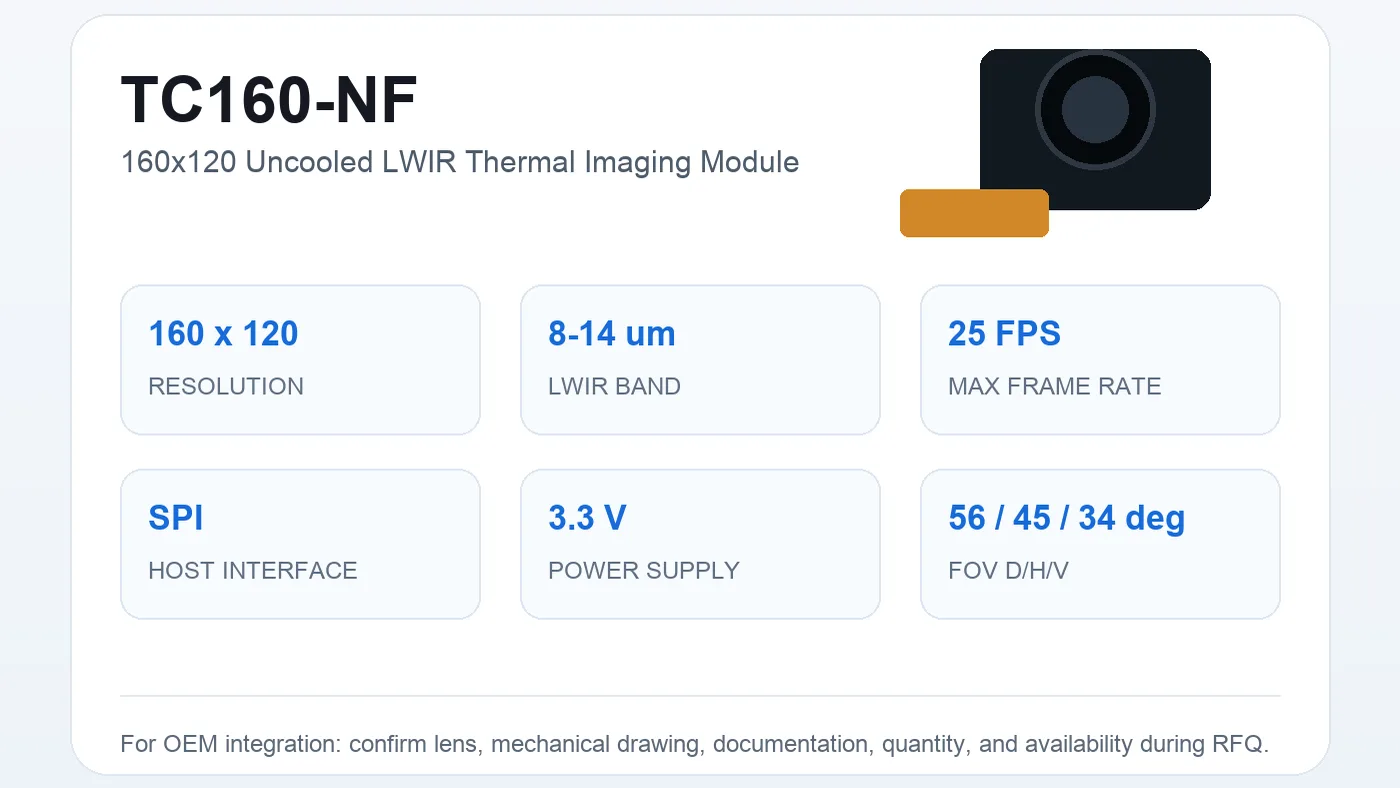
| Smart device or HVAC product needs a compact low-power thermal input | TC160-NF module RFQ | 160 x 120, SPI, 3.3 V, and low-power operation suit compact embedded sensing when resolution needs are modest. | Review TC160-NF |
| Custom UAV, robotics, or higher-detail OEM payload needs compact LWIR video | HR21-L612-USB module RFQ | 640 x 512, compact dimensions, USB video, USB serial, RS-422, and applicable CVBS support fit payload-style questions. | Review HR21-L612-USB |
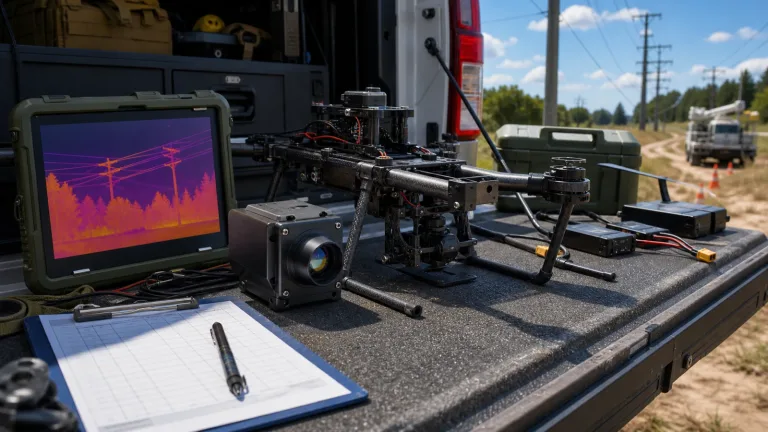
| Outdoor monitoring, perimeter, or utility field deployment is the real scenario | Application-led RFQ | Enclosure, target distance, installation, field service, and documents may decide the product class. | Outdoor field thermal imaging |
| Drone inspection or payload retrofit requires video-path review | Drone module/application review | Weight, bracket, control, lens/FOV, USB/RS-422/CVBS, and procurement files need early confirmation. | Drone thermal camera |
Featured product comparison for buyers who outgrow the flir a700 thermal core camera search
The selected product mode is dual_product_comparison. Both Camcuda Featured products can serve the buyer, but only after the product class is clear. TC160-NF is not a substitute for an A700-style fixed industrial camera; it is a compact embedded LWIR input. HR21-L612-USB is not a complete drone; it is a compact 640 x 512 module for UAV/OEM payload integration.
| Decision point | TC160-NF | HR21-L612-USB |
|---|---|---|
| Best fit | Compact embedded sensing, HVAC, smart appliance, low-power board designs, IoT thermal input. | UAV/OEM payloads, robotics, higher-detail thermal imaging, compact 640 x 512 module projects. |
| Resolution | 160 x 120 | 640 x 512 |
| Detector / band | Uncooled LWIR, 8-14 um | VOx uncooled LWIR, 8-14 um |
| Frame rate | Up to 25 FPS | 50 Hz detector frame rate |
| Core interface path | SPI host integration; USB evaluation path available through planning, confirm during RFQ. | USB video, USB serial communication, 1 x RS-422; CVBS supported on applicable configurations, confirm during RFQ. |
| Power | 3.3 V supply; around 76-78 mW reference low-power operation. | 5 V +/-0.5 V; less than 1.2 W including expansion board, reference at 25 deg C. |
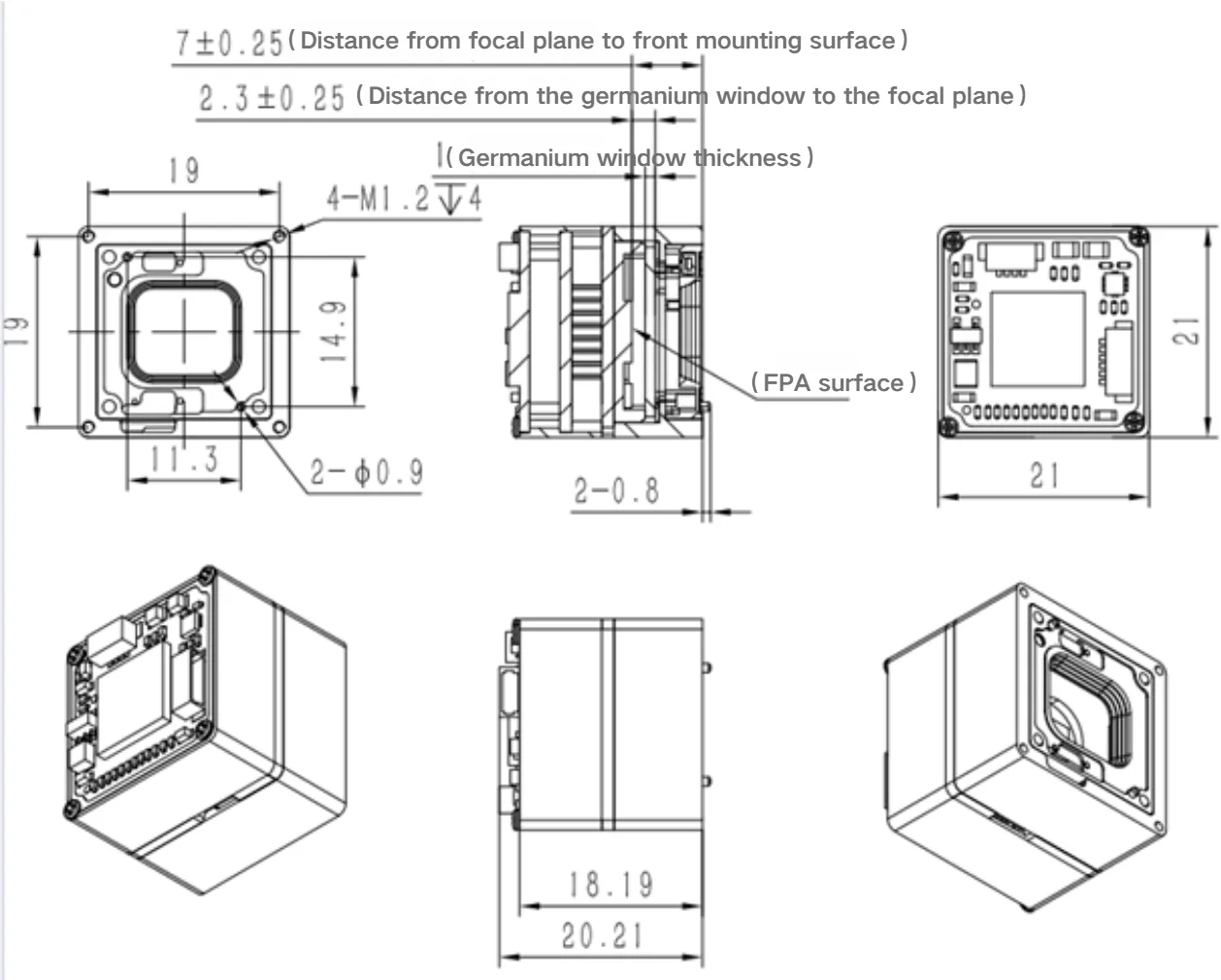
| Mechanical clue | Confirm final lens material, mechanical drawing, FPC orientation, and host connector during RFQ. | 21 mm x 21 mm x 20.2 mm; less than 15 g module weight. |
| Procurement note | Ask for drawings, interface references, quantity, availability, and documentation package. | Ask for drawings, interface references, CVBS confirmation if needed, and NDAA statement available on request. |
Micron’s smart manufacturing article notes the importance of image analytics in manufacturing workflows. The Camcuda takeaway is practical: before choosing a thermal module, define what the thermal image must decide, where the data goes, and how the host product will act on it.
For broader browsing, compare the thermal imaging cores category, then narrow the RFQ to the module that fits the actual system.
Application case: when a factory camera search becomes a module RFQ
A factory automation team starts with a flir a700 thermal core camera search because the maintenance group wants thermal visibility over a small process area. At first, a fixed smart camera sounds right. It would mount near the line, stream thermal images, and support a monitoring workflow.
Then the project changes. The product team wants to build a compact sensor head inside its own enclosure, connect thermal data to an internal processor, and sell the device as part of a larger monitoring system. Now the A700-style camera research is only background. The RFQ must ask whether TC160-NF is enough for embedded heat-zone sensing, or whether HR21-L612-USB is needed for higher-resolution module video.
The realistic mistake is ordering a sample before that boundary is written down. A buyer who only sends “640 thermal camera core” may receive a quote, but the engineering team still has no confirmed connector path, host interface, lens/FOV expectation, mechanical drawing, or document package.
Common mistakes in thermal module comparison RFQs
- Using a finished-camera keyword as a module specification. A camera listing does not define board fit, interface behavior, enclosure design, or support files.
- Buying resolution without defining the task. A lower-resolution compact core can fit embedded sensing well; a higher-resolution module may fit payload work better. Neither is automatically correct.
- Leaving analog video vague. If the project needs a legacy display, recorder, transmitter, low-latency drone feed, or retrofit path, ask about CVBS analog output on applicable configurations during RFQ.
- Ignoring support and procurement documents. Drawings, interface references, downloads, and NDAA statement availability can decide whether the sample order moves.
- Forcing both Featured products into the same design. Compare TC160-NF and HR21-L612-USB to choose a path; do not treat them as interchangeable.
RFQ checklist after a flir a700 thermal core camera comparison
| RFQ item | What to send Camcuda |
|---|---|
| Product class | State whether you need a finished camera alternative, an OEM module, a UAV payload module, or an embedded sensing core. |
| Application | Factory monitoring, HVAC, smart appliance, outdoor field monitoring, drone inspection, robotics, security sensing, or another use case. |
| Scene requirement | Target size, working distance, scene width, thermal decision, measurement expectations, and whether 160 x 120 or 640 x 512 is realistic. |
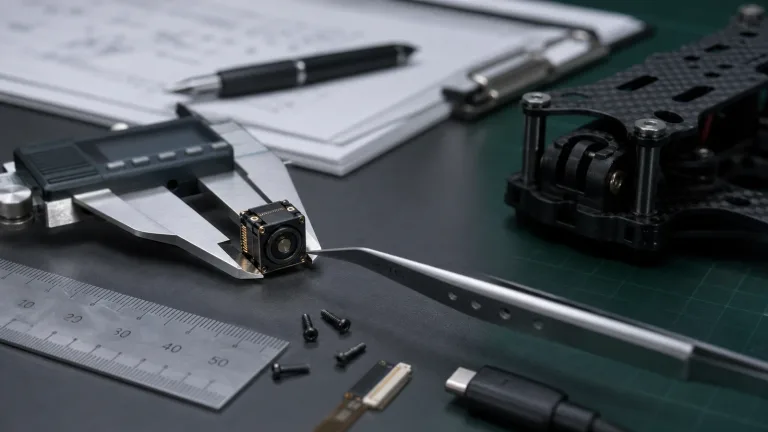
| Mechanical constraints | PCB area, enclosure window, bracket, lens clearance, weight target, FPC direction, cable route, and drawing needs. |
| Interface path | SPI, USB, MIPI, DVP, RS-422, CVBS analog output on applicable configurations, GUI, SDK, or host-board support expectations. |
| Documents | Datasheet, mechanical drawing, electrical interface reference, support downloads, CE/RoHS-related review where applicable, and NDAA statement available on request. |
| Commercial notes | Prototype quantity, expected annual volume, destination market, timeline, and whether the sample is for evaluation or product integration. |
Use Camcuda support downloads to prepare a cleaner request. For interface-specific questions, the thermal camera module interface guide is the better next read.
Send the product boundary before asking for sample price
If your flir a700 thermal core camera research is really a module-sourcing question, send Camcuda the application boundary, scene requirement, host interface, enclosure limits, documentation needs, and prototype quantity. Camcuda can help decide whether TC160-NF, HR21-L612-USB, or another route should be reviewed.
Request an engineering RFQ after you define the product boundary.
FAQ about flir a700 thermal core camera comparisons
Is a FLIR A700-style product the same as an OEM thermal module?
No. A finished smart thermal camera and an OEM thermal module solve different procurement problems. A finished camera includes more system assumptions; an OEM module must be reviewed against host board, enclosure, interface, optics, software, and documents.
Why does the flir a700 thermal core camera keyword lead to RFQ confusion?
The keyword mixes camera, core, and module language. Buyers may be comparing 640 x 480 camera specs while actually needing a component that fits inside their own product.
When should we consider TC160-NF?
Consider TC160-NF when the product needs compact embedded thermal sensing, 160 x 120 resolution, SPI host integration, 3.3 V supply, low-power operation, and a board-level integration path.
When should we consider HR21-L612-USB?
Consider HR21-L612-USB when the project needs compact 640 x 512 LWIR module performance for UAV/OEM payloads, USB video, USB serial communication, RS-422, compact 21 mm dimensions, and less than 15 g module weight.
Does Camcuda support CVBS analog output?
Camcuda thermal modules can support CVBS analog output on applicable configurations and project requirements. Confirm CVBS during RFQ for the exact model, firmware, host system, destination market, and intended video path.
Should the drone thermal camera page be linked for this topic?
Yes, when the comparison turns into a UAV payload, retrofit, inspection drone, or low-latency video-path question. If the project is fixed factory monitoring only, the outdoor or industrial monitoring context may be more relevant.
What documents should be requested before a sample order?
Ask for datasheet, mechanical drawing, electrical interface reference, support files, compliance-related materials where applicable, and NDAA statement available on request for relevant procurement contexts.
Can a lower-resolution module be better than a 640-class camera?
Yes, if the product only needs compact heat-zone sensing, low power, small board fit, and simple embedded thermal input. Resolution should follow the task, not the search keyword.
How should we phrase the RFQ after comparing A700-style cameras?
State the product class, application, target scene, host interface, enclosure constraints, document needs, prototype quantity, and whether you are evaluating TC160-NF, HR21-L612-USB, or both.