 1 / 7
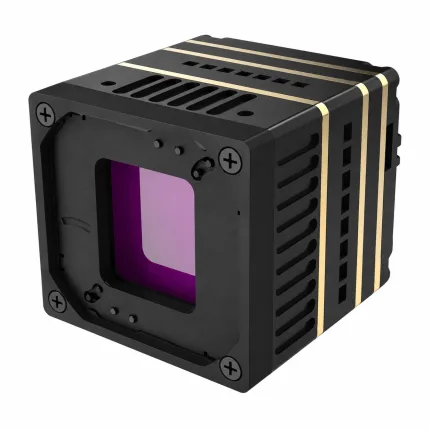
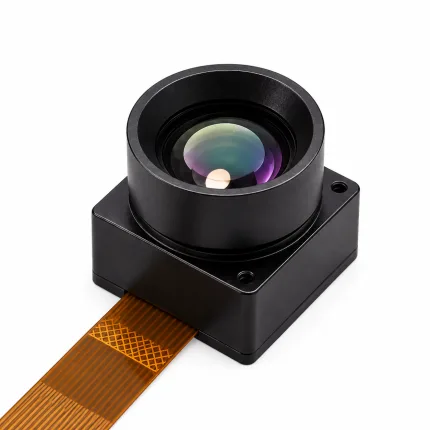
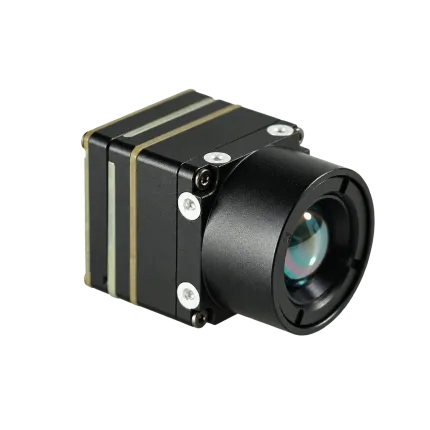
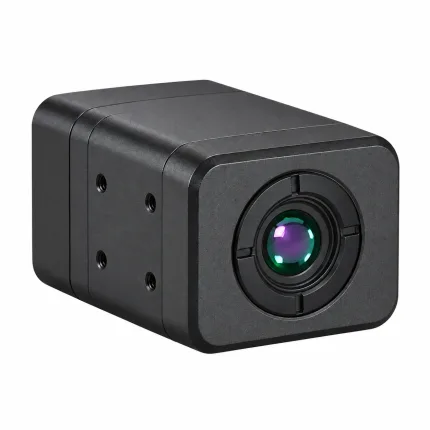
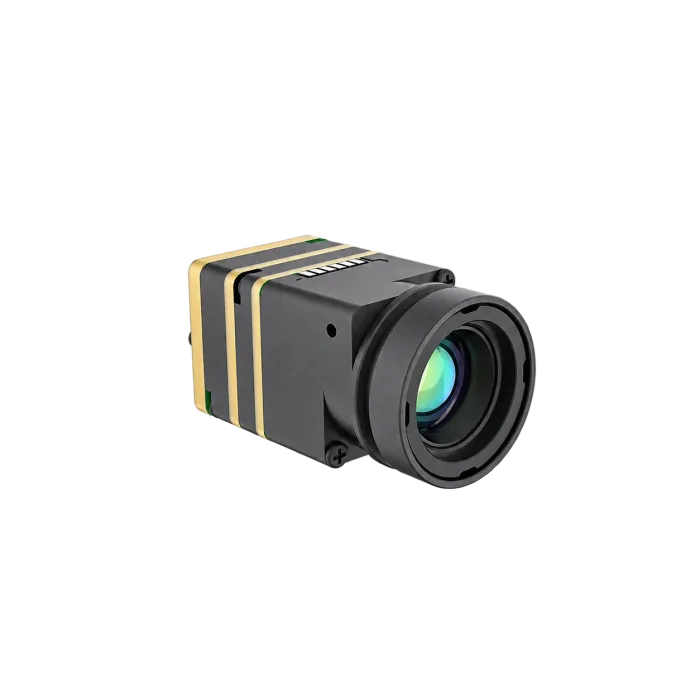
1 / 7CAMCUDA SuperMini 640 / 640T Ultra-Light LWIR Thermal Camera Module
Ultra-miniature 640 × 512 uncooled VOx LWIR thermal imaging core with an 8 μm pixel pitch, 13 × 13 × 13.4 mm core dimensions, less than 3.5 g weight and ≤0.5 W typical power. Choose the 50 Hz imaging-only CAMCUDA SuperMini 640 or the 30 Hz thermographic CAMCUDA SuperMini 640T, with four F1.0 athermal lens options. Lens, interface, supplied items and project quantity are confirmed by quotation before an order is accepted.
Configuration review
Choose your configuration
Share the quantity, destination and integration requirements for a reviewed quotation.
Configuration review required
Express checkout
OEM & volume pricing
Configuration review for custom projects and production orders.
Pricing is confirmed for your selected configuration.
Discuss a custom configurationTECHNICAL RESOURCES
Product documents
Description
640 × 512 / 8 μm / <3.5 g
Ultra-small, ultra-light LWIR imaging for space-constrained OEM systems.
CAMCUDA SuperMini 640 / 640T combines a 640 × 512 uncooled VOx detector, an 8 μm pixel pitch and a 13 × 13 mm footprint in a core weighing less than 3.5 g. The series is designed for low-SWaP integration in compact drones, micro-gimbals, FPV platforms and embedded thermal imaging systems.
Two Factory-Configured Models
Choose imaging speed or thermographic data.
The two versions share the same detector format and compact core architecture, but their functions, frame rates and output data are different. Confirm the model before hardware and software integration.
CAMCUDA SuperMini 640 Ultra-Light LWIR Module
50 Hz
- Thermal imaging without temperature measurement
- 8-bit LVCMOS / BT656 and 2-lane MIPI paths
- Designed for low-latency imaging integration
CAMCUDA SuperMini 640T
30 Hz
- Imaging and temperature measurement
- CDS3 and MIPI temperature-data paths
- −20°C to +150°C and 100°C to +650°C ranges
Temperature ranges, measurement accuracy, temperature-data output and conversion formulas apply only to CAMCUDA SuperMini 640T. They do not apply to the imaging-only CAMCUDA SuperMini 640.
Athermal Lens Options
Select field of view before requesting a quotation.
All listed lenses are F1.0 athermal configurations. Overall dimensions and weight change with the selected optical assembly.
3.7 mm
90.0° × 68.2°
F1.0 · 2.16 mrad IFOV
6.1 mm
46.6° × 37.6°
F1.0 · 1.31 mrad IFOV
8.7 mm
40.0° × 32.2°
F1.0 · 0.92 mrad IFOV
11 mm
24.9° × 20.0°
F1.0 · 0.73 mrad IFOV
Mechanical Integration
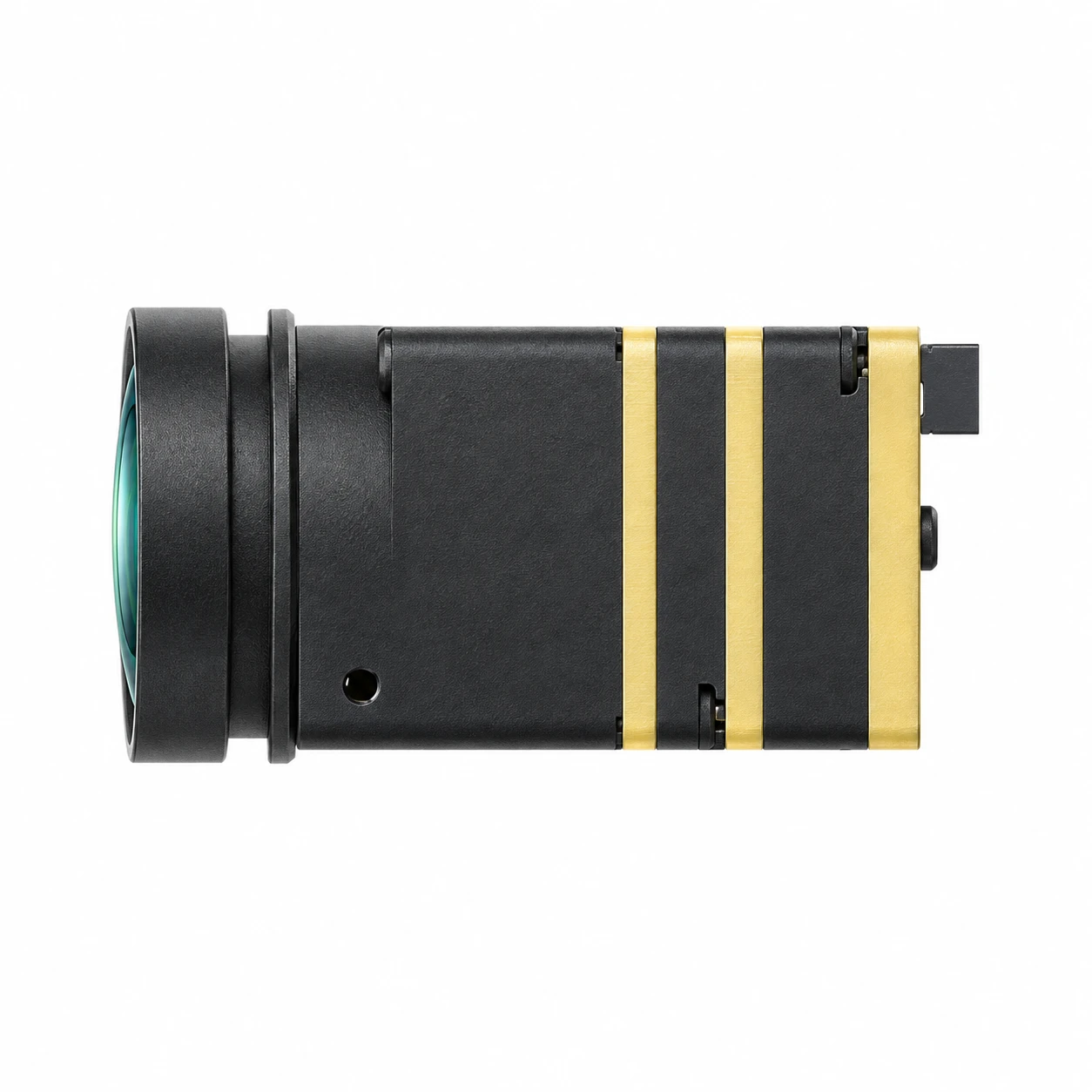
A 13 × 13 × 13.4 mm core for low-SWaP designs.
The published core dimensions and weight exclude the lens, flange and user expansion board. Freeze the exact lens, connector clearance, cable direction and heat path before enclosure tooling.
- Core dimensions: 13 × 13 × 13.4 mm
- Core weight: less than 3.5 g
- Detector: 640 × 512 VOx uncooled focal-plane array
- Spectral range: 8–14 μm
Power, Video & Control
Confirm every rail and output mode with the host design.
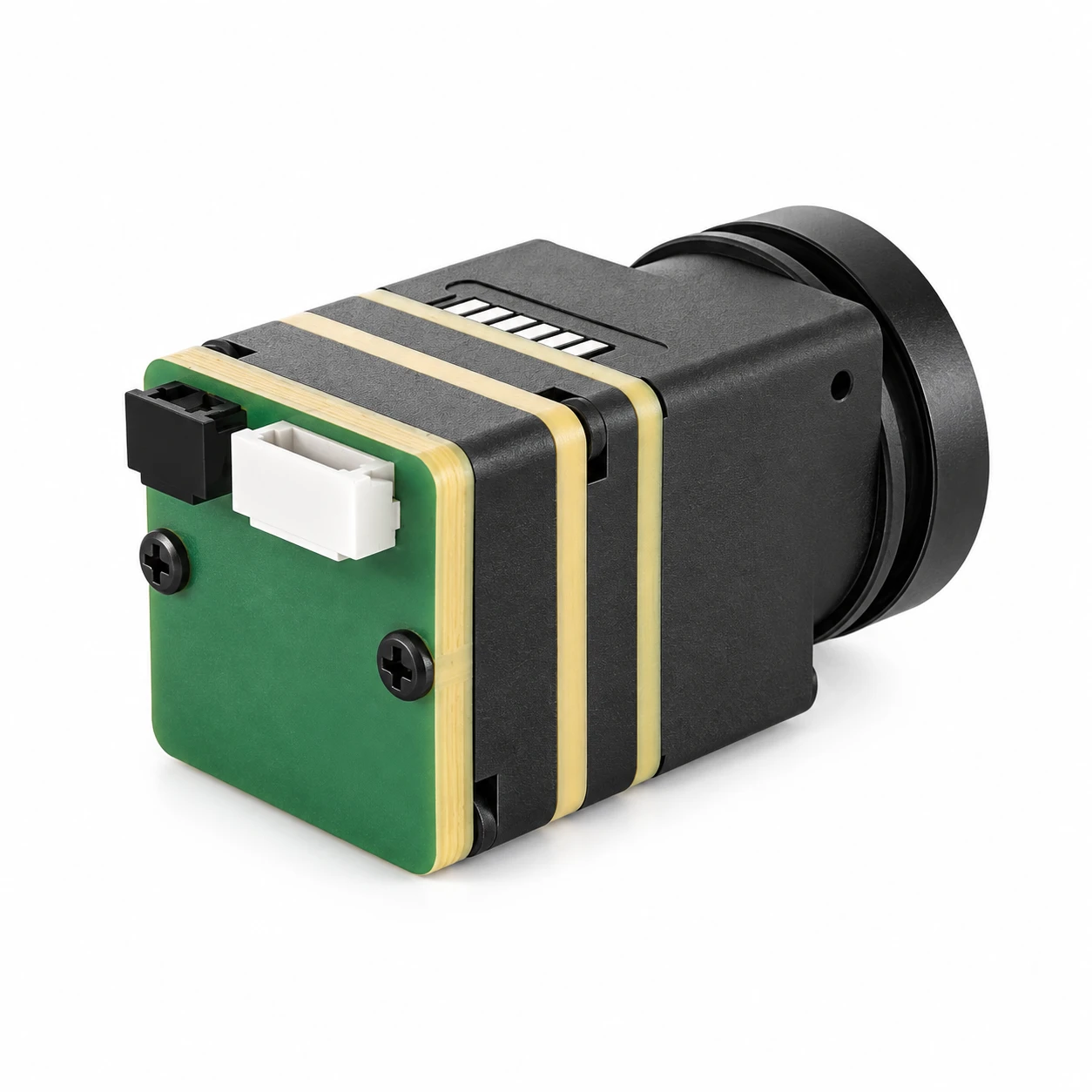
The core uses a Hirose DF40C-30DP-0.4V(51) 30-pin connector. BT656 and MIPI are available only through this interface and cannot be used simultaneously.
| Path | Published requirement | Integration note |
|---|---|---|
| MAIN_POWER | 3.8–5.2 V, typical 5 V | 10 mV p-p maximum noise |
| +3.3 V rail | 3.28–3.32 V | 10 mV p-p maximum noise |
| +1.8 V rail | 1.78–1.82 V | 1 mV RMS, 1 Hz–50 kHz |
| Digital video | 8-bit LVCMOS; 2-lane MIPI | 640: BT656 · 640T: CDS3 |
| Control | UART, 1.8 V logic | TX/RX defined from the core |
| USB / CVBS | USB 2.0 pins; CVBS pin | CVBS requires an external video-buffer IC |
Optional expansion board: TMS6102V100F022 provides a 4-pin USB interface for both the imaging and thermographic variants. Refer to the product manual for the complete 30-pin definition and power-on timing.
Published Specifications
CAMCUDA SuperMini 640 / 640T technical reference.
- Detector
- VOx uncooled infrared focal-plane detector
- Resolution
- 640 × 512
- Pixel pitch
- 8 μm
- Spectral range
- 8–14 μm
- NETD
- ≤40 mK @ 25°C, F1.0
- Frame rate
- 640: 50 Hz · 640T: 30 Hz
- Polarity
- Black hot / white hot
- Image mirroring
- Vertical / horizontal / diagonal
- Image processing
- Grayscale stretching; local contrast enhancement; temporal and spatial noise reduction; detail and edge enhancement
- Typical core power
- ≤0.5 W at 25°C, excluding expansion board
- Core dimensions
- 13 × 13 × 13.4 mm, excluding optics and boards
- Core weight
- <3.5 g, excluding optics and boards
- Operating temperature
- −40°C to +70°C; thermography −20°C to +60°C
- Storage temperature
- −45°C to +80°C
- Humidity
- 5–95%, non-condensing
- Compliance
- RoHS 2.0 compliant
640T Thermography Only
Temperature data with clearly defined limits.
CAMCUDA SuperMini 640T supports temperature measurement from −20°C to +150°C and from 100°C to +650°C. Typical accuracy is ±2°C or ±2% of reading at an ambient temperature of −20°C to +60°C.
CDS3 transmits YUV422 image data and temperature data. MIPI CSI-2 uses RAW8 packets that the host combines into 16-bit image and temperature values, low byte first.
OEM Validation
Lock the model, lens and interface before volume production.
- 01Select
Choose 640 imaging or 640T thermography, then select the lens.
- 02Confirm
Review rails, connector, video protocol, cable and mechanical drawing.
- 03Validate
Bench-test image output, controls, power, thermal path and host parsing.
- 04Scale
Freeze the approved BOM, firmware, optics and document revision.
Engineering reference · Product Manual V1.0.0
Plan the power budget and host video receiver.
The following details come from the supplied English product manual, January 2026 edition. Values apply to the bare core unless an expansion board is explicitly named.
Power-rail current and startup requirements
| Rail | Peak current | Typical steady current | Noise limit |
|---|---|---|---|
| MAIN_POWER | 200 mA | 80 mA | 10 mV p-p |
| +3.3 V | 100 mA | 20 mA | 10 mV p-p |
| +1.8 V | 100 mA | 35 mA | 1 mV RMS, 1 Hz–50 kHz |
Steady currents are reference values at 25 °C. The manual specifies t1, t2 and t3 each greater than 200 μs; use its power-on timing definition when designing the supply sequence. A startup-time specification is not provided. Wait more than 5 seconds after power-off before restarting.
Choose the receiver for the selected output mode
| Path | Published format | Host integration |
|---|---|---|
| 8-bit LVCMOS | 45 MHz; progressive RAW image; 640 × 512 | Clock, line/frame synchronization and 8 data bits; pseudocolor is not supported on LVCMOS. |
| CDS3 · 640T only | 45 MHz; YUV422 image plus temperature data | Section 3.3.3 describes embedded SAV/EAV synchronization using one clock and 8 data lines. Temperature words are low byte first. |
| 2-lane MIPI | 216 Mbps per lane; 108 MHz clock lane; specified high level 1.2 V | One differential clock pair and two differential data pairs. BT656 and MIPI cannot operate simultaneously. |
640T MIPI capture: configure RAW8 CSI-2 reception as (1280 × 2) × 512. Reassemble adjacent bytes, low byte first, into 1280 × 512 16-bit values. Each valid line contains 640 image words followed by 640 temperature words. The detector remains 640 × 512; the larger receive layout carries both image and temperature data.
Synchronization note: the manual’s summary table and detailed CDS3 timing text describe synchronization differently. Confirm the actual firmware timing with the interface documentation before implementing the receiver.
640T temperature conversion
Appendix 2 gives the following conversion rules for the thermographic 640T only. Select the formula for the actual ND or HD output mode; do not infer the mode from the numerical value.
ND mode
T = (TEMP + 7000) / 30 − 273.2
HD mode
T = (TEMP − 4600) / 10 − 273.2
T is temperature in °C after converting the received TEMP value. These formulas do not apply to imaging-only CAMCUDA SuperMini 640 and do not extend the published measurement ranges or accuracy conditions.
Connector, accessories and handling
- IR_SYNC is the 1.8 V external-trigger input on pin 23; UART_RX/TX are pins 25/27, referenced to the core. Use the complete pin table for mating orientation and wiring.
- The optional TMS6102V100F022 4-pin USB board supports both variants and uses 5 V USB_VBUS. The separately described 5-pin analog board accepts 5–20 V; this is not the bare-core input range.
- Manual vibration reference: 2 g random, 3 axes / 6 directions. Shock reference: 6 g, 2 ms terminal-peak sawtooth, 3 axes / 6 directions.
- Disconnect power before mating cables, take ESD precautions, keep the detector window untouched and avoid pointing the core at the sun or other intense radiation sources.
Read the complete V1.0.0 manual
Reference sections: 3.1–3.5 for interfaces and power, section 5 for handling, and Appendix 2 for temperature conversion. Mechanical dimensions depend on the lens and expansion-board assembly.
FAQ
Questions before requesting a CAMCUDA SuperMini 640 sample.
What is the difference between CAMCUDA SuperMini 640 and 640T?
CAMCUDA SuperMini 640 is an imaging-only 50 Hz model without temperature measurement. CAMCUDA SuperMini 640T is a 30 Hz thermographic model that outputs image and temperature data and supports the published measurement ranges.
Does the assembled camera remain 13 × 13 × 13.4 mm and under 3.5 g?
No. Those figures apply to the core module only and exclude the lens, flange and expansion board. Request the mechanical drawing for the exact optical and interface configuration.
Can BT656 and MIPI be used at the same time?
No. The product manual states that BT656 and MIPI cannot be used simultaneously. Confirm the required output path before ordering.
Which lens options are specified?
The supplied manual specifies 3.7 mm, 6.1 mm, 8.7 mm and 11 mm F1.0 athermal lenses, with the field-of-view and IFOV values shown above.
Does the module operate from one 5 V supply?
The bare core requires MAIN_POWER plus regulated 3.3 V and 1.8 V rails with the published sequencing and noise limits. The optional USB expansion board uses 5 V USB_VBUS.
What should be included in the RFQ?
Send the model, lens, required video interface, host platform, quantity, destination, target schedule and required drawing, SDK or compliance documents.
OEM / Volume RFQ
Need an ultra-light 640 × 512 core for your next compact system?
Tell us whether you need imaging or thermography, the lens and interface, your available envelope and the expected quantity. CAMCUDA will confirm the production configuration and quotation.
Additional information
| Weight | 0.0035 kg |
|---|---|
| Model | CAMCUDA SuperMini 640 — Imaging / 50 Hz, CAMCUDA SuperMini 640T — Thermographic / 30 Hz |
| Resolution | 640 × 512 |
| Pixel pitch | 8 μm |
| Frame rate | 50 Hz imaging, 30 Hz thermography |
| Lens focal length | 3.7 mm, 6.1 mm, 8.7 mm, 11 mm |
| Digital video | 8-bit LVCMOS, BT656, CDS3, 2-lane MIPI |
| Core dimensions | 13 × 13 × 13.4 mm, excluding optics and boards |
| Core weight | <3.5 g, excluding optics and boards |
Related products
-

CAMCUDA HR-1280 High-Resolution LWIR Thermal Camera Module
Request a quoteEvaluation samplesSample price on requestRequest sample pricing →Configuration & volume pricing100+ / 1000+ unitsEvery quotation states the configuration, quantity and delivery terms.Request volume pricing → -
CAMCUDA TC160-NF 160 LWIR Thermal Camera Module
Evaluation samplesSample price on requestRequest sample pricing →Configuration & volume pricing100+ / 1000+ unitsEvery quotation states the configuration, quantity and delivery terms.Request volume pricing → -
CAMCUDA AeroMini 640×512 Uncooled LWIR USB Thermal Camera Core for UAV Integration
Price range: $399.00 through $770.43Inquiry-only lens options: Request a quoteOnline order1–99 units Price range: $399.00 through $770.43Configuration & volume pricing100+ / 1000+ unitsEvery quotation states the configuration, quantity and delivery terms.Request volume pricing →Choose configuration This product has multiple variants. The options may be chosen on the product page -
W640-TIF-K1 640×512 Uncooled VOx CVBS Thermal Imaging Module
Evaluation samplesSample price on requestRequest sample pricing →Configuration & volume pricing100+ / 1000+ unitsEvery quotation states the configuration, quantity and delivery terms.Request volume pricing →