thermal imaging camera core: 5 Reliable Questions Before a Tiny Sensor Joins an IoT Board
Engineering memo for embedded thermal sensing teams
thermal imaging camera core: 5 Reliable Questions Before a Tiny Sensor Joins an IoT Board
An embedded engineer can lose a week on a thermal imaging camera core before the first thermal frame appears. The module is small, the host PCB looks ready, and procurement wants to know whether the sample can support a pilot build. Then someone notices the FPC orientation, the SPI timing question, the enclosure window, and the missing documentation line in the RFQ.
Quick answer
A thermal imaging camera core should be selected as part of a host-board system, not as an isolated sensor. For compact IoT, HVAC, smart appliance, security sensing, and edge-AI prototypes, confirm the detector resolution, field of view, SPI or other host interface, power budget, mechanical envelope, operating temperature, documentation package, and sample acceptance criteria before freezing the PCB or enclosure.
thermal imaging camera core decisions start at the host board
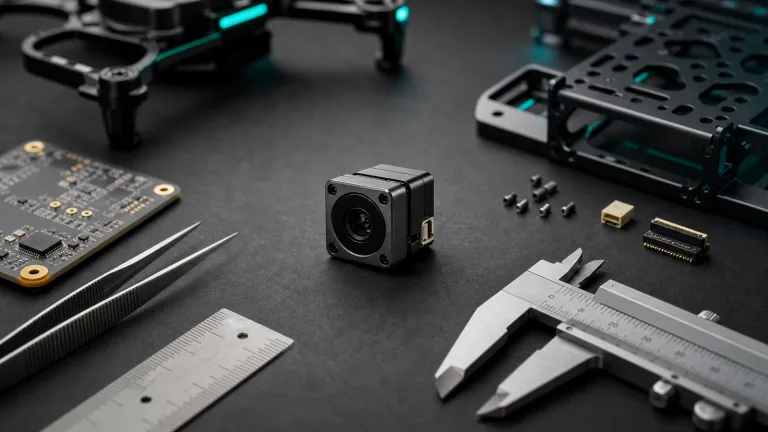
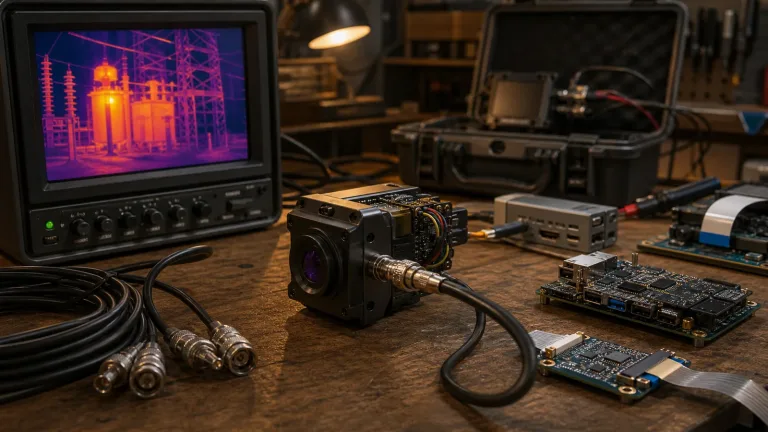
The phrase thermal imaging camera core can sound like a simple component search. In real product work, it is closer to a system decision. The sensor has to fit a physical envelope, talk to a processor, run inside a power budget, see the right scene through an enclosure, and arrive with enough documentation for the next engineer to repeat the build.
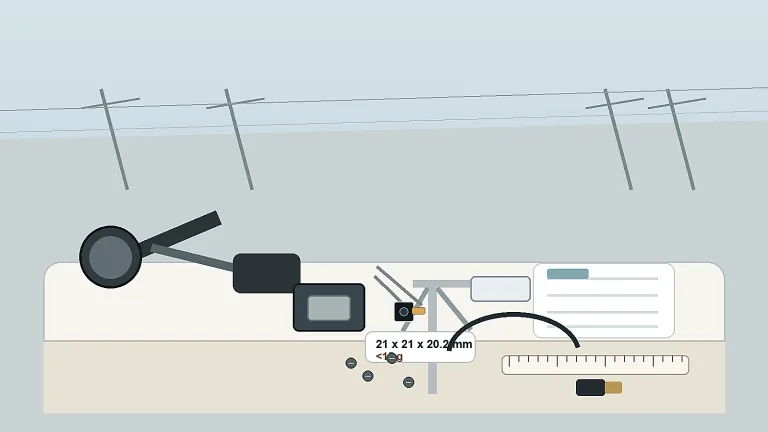
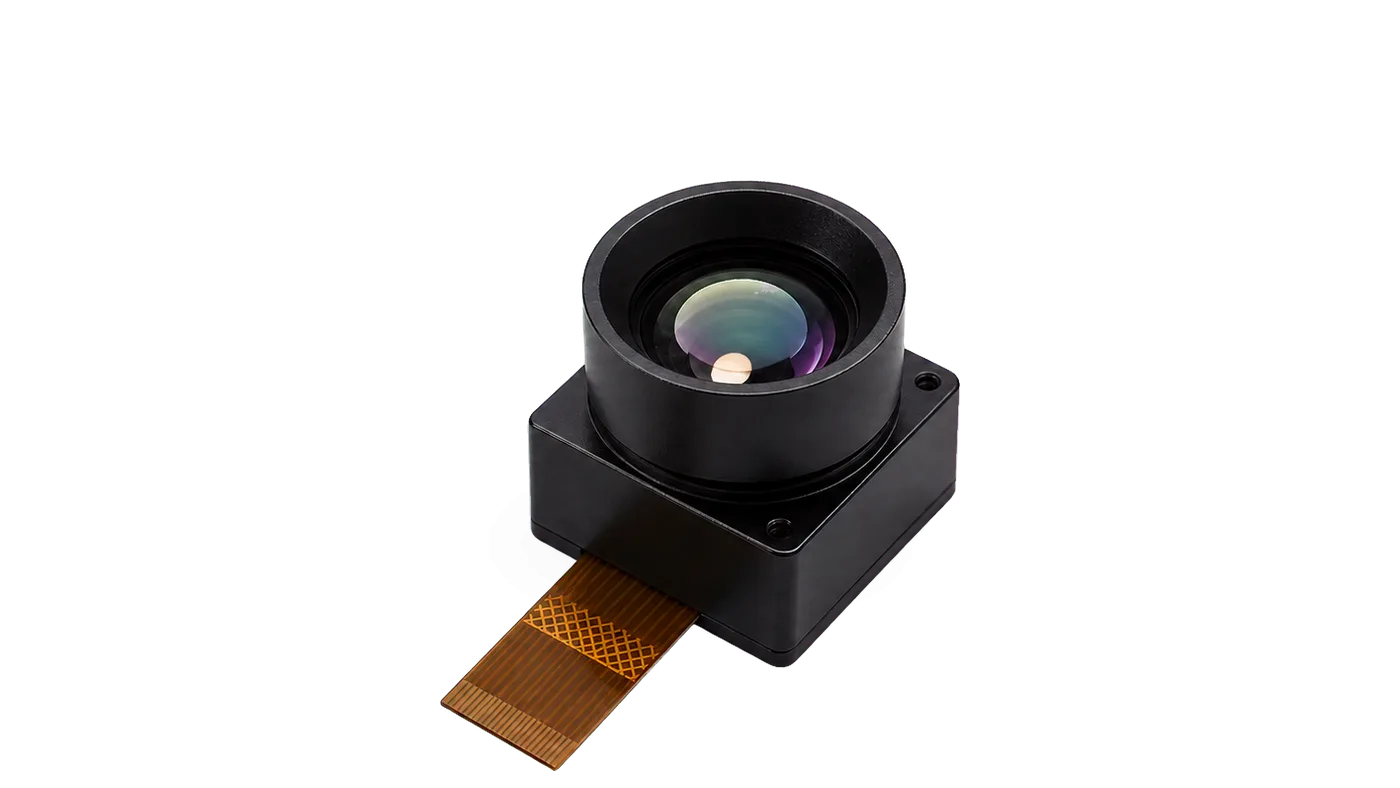
Today’s live featured CAMCUDA product for this workflow is the TC160-NF 160×120 Uncooled LWIR Thermal Imaging Module. It is not a finished handheld camera. It is a compact module-level thermal input path for teams building embedded thermal sensing products, HVAC monitoring devices, smart appliances, compact security sensing, and IoT or edge-AI systems.
This matters because most supplier pages answer the visible questions first: resolution, price, and a product image. The harder questions sit one layer lower. Does the host processor have the right SPI path? Is a 56 / 45 / 34 degree D/H/V field of view suitable for the room, cabinet, appliance, or enclosure? Will the 3.3 V supply and low-power thermal path still make sense after the rest of the board is added?
Current industrial vision coverage often frames cameras as part of a decision workflow, not just image capture. NVIDIA’s manufacturing and robotics coverage emphasizes sensor-to-action systems, while Micron’s computer-vision writing discusses how imaging data supports quality and automation decisions. Those sources do not prove anything about a CAMCUDA module, but they are useful editorial reminders: a thermal sensor becomes valuable only when the device around it can act on the data.
thermal imaging camera core: five questions before sample ordering
1. Is 160 x 120 enough for the actual decision?
A thermal imaging camera core does not need the highest resolution to be useful. For presence sensing, heat distribution, cabinet monitoring, appliance safety checks, or compact HVAC awareness, 160 x 120 can be enough when the scene is close, the field of view is matched, and the host logic only needs reliable thermal patterns rather than fine inspection detail.
The mistake is asking whether 160 x 120 is “good” in the abstract. Ask what the device must decide. Is it detecting a warm object in a narrow zone, comparing heat across a room, watching a small enclosure, or feeding a simple classifier? If the product must inspect small distant targets, move to a different resolution path. If it needs compact, low-power thermal awareness, TC160-NF belongs on the shortlist.
2. Can the host board support the interface without a late adapter?
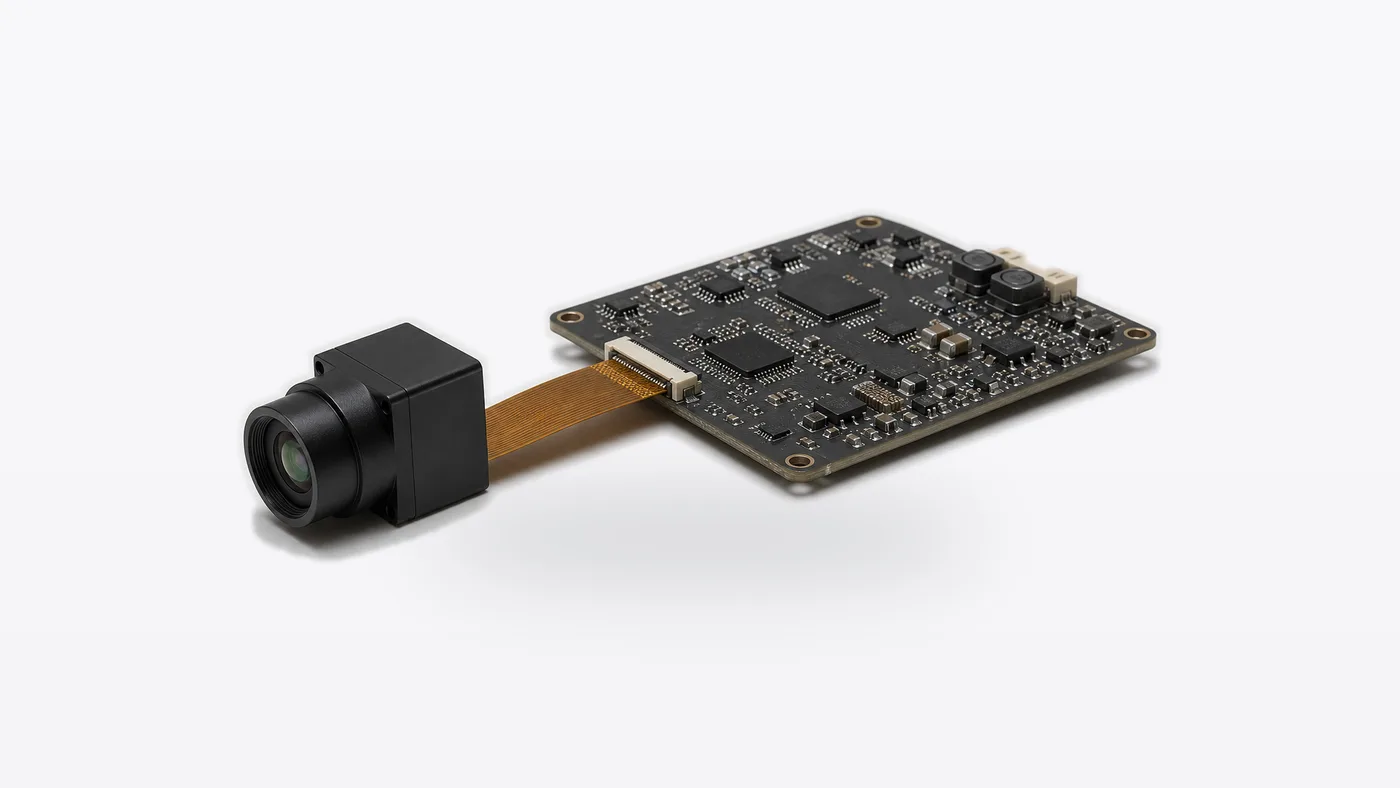
TC160-NF is planned around SPI host integration and a 10-pin FPC, 0.5 mm pitch connector reference. That sounds small enough to place later, but it should be reviewed before layout. Connector side, cable bend, board keep-out, SPI timing, host firmware ownership, and evaluation-board needs all affect whether the sample can be tested cleanly.
CAMCUDA’s wider module portfolio may support paths such as USB, MIPI, DVP, RS-422, and CVBS analog output on applicable configurations. For this TC160-NF article, the relevant public product path is SPI. If your project needs USB evaluation support, analog video, or another interface for a different module family, write that into the RFQ instead of assuming it appears by default.
3. Does the field of view match the product’s physical scene?
TC160-NF lists a 56 / 45 / 34 degree D/H/V field of view reference. That is a practical starting point for compact sensing, but it is not a substitute for application geometry. An HVAC sensor mounted high on a wall, a device watching a battery compartment, and a small appliance checking a heat zone do not ask the same optical question.
The useful RFQ note is simple: include mounting height, target distance, target size, enclosure window position, and whether the product watches a wide area or a defined narrow zone. Thermal optics cannot be repaired by a nicer marketing image after the mechanical design is frozen.
4. What happens to power and heat after the module joins the device?
The product data lists 3.3 V supply and low-power operation around 76-78 mW reference. That is attractive for compact embedded devices, but a supplier cannot validate the whole product power story from that number alone. The host processor, wireless module, enclosure, duty cycle, heat sources, and ambient environment all matter.
For smart-device and edge-sensing work, write down how often the thermal module wakes, how the host reads it, whether the enclosure has internal heat sources, and the expected operating temperature. TC160-NF lists -20 deg C to +85 deg C operating temperature reference, which should still be checked against the real installation.
5. Which documents will procurement need after engineering likes the sample?
Small modules can create large paperwork gaps. A prototype may work on the bench while the purchasing team still lacks the mechanical drawing, interface reference, compliance-related material, or product configuration statement needed for a pilot order. CAMCUDA can support buyer review with datasheets, drawings, interface references, product specifications, and compliance-related materials where available.
For North America, government-adjacent, security, industrial monitoring, or procurement-sensitive projects, CAMCUDA can provide an NDAA statement available on request. Keep the wording precise: request the document during RFQ and confirm it for the exact product, configuration, destination, and intended use.
Selection chart for embedded thermal sensing teams
| Decision point | Good fit for TC160-NF | Needs more review | RFQ wording |
|---|---|---|---|
| Application | Smart appliance sensing, HVAC awareness, room or cabinet monitoring, compact security sensing | Long-distance inspection, detailed thermal measurement, high-resolution imaging | Describe target size, distance, mounting position, and what the product must decide. |
| Resolution | 160 x 120 thermal patterns are enough for the product logic | Fine details or distant objects drive the decision | State whether the host needs detection, classification, trend monitoring, or detailed inspection. |
| Interface | Host board can support SPI and FPC integration | Team expects plug-and-play USB, MIPI, DVP, RS-422, or CVBS by default | Confirm SPI path, evaluation-board needs, connector direction, and firmware ownership. |
| Power | 3.3 V supply and low-power thermal sensing fit the device budget | Host heat, wireless duty cycle, or sealed enclosure may affect thermal readings | Share supply plan, wake cycle, enclosure heat sources, and operating temperature range. |
| Documents | Prototype and procurement teams can review specs before sample order | Compliance or procurement statements are left until after testing | Request datasheet, drawing, interface note, and NDAA statement if required. |
Product facts for the TC160-NF thermal imaging camera core
The following facts come from the WooCommerce Featured product data used by today’s automation brief. Do not treat missing values as hidden promises; confirm lens, documentation, quantity, and availability during RFQ.
| Product model | TC160-NF |
|---|---|
| SKU reference | MI1602M5S |
| Detector class | Uncooled LWIR thermal imaging module |
| Resolution | 160 x 120 |
| Total pixels | 19,200 reference |
| Detector pitch | 35 um reference |
| Spectral range | 8-14 um |
| Frame rate | Up to 25 FPS |
| Field of view | 56 / 45 / 34 deg in D/H/V order |
| Supply voltage | 3.3 V |
| Power consumption | Low-power operation, around 76-78 mW reference |
| Host interface | SPI |
| Connector path | 10-pin FPC, 0.5 mm pitch reference; confirm host connector during RFQ |
| Operating temperature | -20 deg C to +85 deg C reference |
| Calibration | Factory calibrated thermal output |
For broader product exploration, compare CAMCUDA’s thermal imaging cores, thermal modules, and uncooled thermal modules. Teams with UAV payload work should also review the drone thermal camera application page, while fixed-site monitoring and service work fit the outdoor field thermal imaging application page.
Application case: the HVAC sensor prototype that almost chose the wrong module path
A product team is building a small HVAC monitoring device for mechanical rooms. The first requirement says “add a thermal imaging camera core.” Procurement starts collecting higher-resolution module quotes because the phrase sounds like an image-quality problem. The electrical engineer is more worried about board space, connector access, and firmware. The mechanical engineer asks whether the enclosure window can see the right zone without a larger lens.
The project changes direction after one review. The team does not need a high-resolution inspection camera. It needs compact thermal awareness of equipment heat patterns at short range, with low power, SPI host integration, and a predictable FPC path. TC160-NF becomes the better conversation because its 160 x 120 resolution, 3.3 V supply, narrow-FOV fixed optical configuration, and compact embedded focus match the product decision more closely.
The practical trade-off is honest: the module gives the team a compact thermal input, but it also forces earlier host-board planning. The RFQ includes target distance, enclosure sketch, FPC connector direction, SPI host details, operating temperature, documentation needs, and sample acceptance criteria. That saves time because the supplier is not left guessing whether the buyer wants a module, a USB evaluation path, or a complete camera product.

Common mistakes when evaluating a thermal imaging camera core
- Choosing by resolution first. Resolution matters, but the product decision may depend more on distance, field of view, power, and host integration.
- Leaving FPC direction until layout is nearly done. A compact module can still break a board if the connector, bend radius, or service access is wrong.
- Assuming every CAMCUDA interface applies to every product. TC160-NF is SPI-focused; other module families may support USB, MIPI, DVP, RS-422, or CVBS analog output on applicable configurations. Confirm during RFQ.
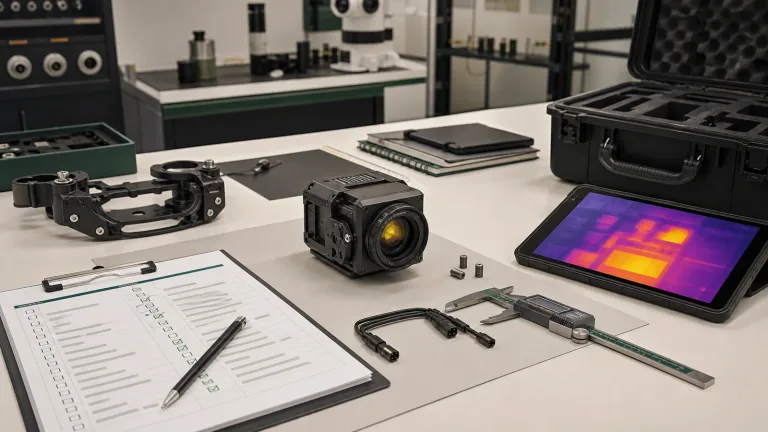
- Testing a sample without acceptance criteria. Define what counts as success: host capture, thermal pattern detection, enclosure view, temperature range, documentation, and repeat-order readiness.
- Forgetting procurement documents. Ask early for datasheets, drawings, interface references, compliance-related materials where applicable, and NDAA statement availability if the buyer requires it.
RFQ checklist for compact embedded thermal modules
| RFQ line | What to include |
|---|---|
| Product goal | HVAC, appliance, smart device, cabinet monitoring, compact security sensing, IoT, or edge-AI input |
| Scene geometry | Target size, distance, mounting height, enclosure window, and expected field of view |
| Host board | Processor, SPI support, connector direction, available PCB area, evaluation-board needs |
| Power and environment | 3.3 V rail plan, duty cycle, enclosure heat sources, operating temperature, humidity concern |
| Interface assumptions | SPI for TC160-NF; confirm any USB evaluation path or other interface needs during RFQ |
| Documents | Datasheet, mechanical drawing, interface reference, compliance-related material where applicable, NDAA statement available on request |
| Sample acceptance | What must be true before pilot order: host capture, thermal pattern usefulness, mechanical fit, and repeatable documentation |
Send a cleaner thermal module RFQ
If your team is choosing a thermal imaging camera core for an embedded product, start with the TC160-NF product page and send CAMCUDA the scene geometry, host board, FPC direction, power plan, and documentation requirements. That is more useful than asking for a generic “small thermal camera.”
View TC160-NF | Check support downloads | Request an engineering quote
FAQ
What is a thermal imaging camera core?
A thermal imaging camera core is a module-level thermal imaging component that an OEM or engineering team integrates into a larger device. It is different from a finished handheld, drone, or boxed camera.
When is 160 x 120 resolution enough?
It can be enough for close-range thermal awareness, presence sensing, heat distribution, cabinet monitoring, appliance sensing, and simple event detection. It is not the right default for detailed long-distance inspection.
What should we provide before asking for a quote?
Provide the application, target distance, target size, mounting position, host processor, connector constraints, power budget, operating environment, expected sample quantity, and documentation requirements.
Do we need a mechanical drawing before PCB layout?
Yes. The module envelope, FPC connector, cable direction, keep-out area, and enclosure window should be checked before layout is treated as final.
Can we request an NDAA statement?
Yes. CAMCUDA can provide an NDAA statement available on request for buyers who require procurement or compliance documentation. Confirm the document package during RFQ for the exact configuration and use case.