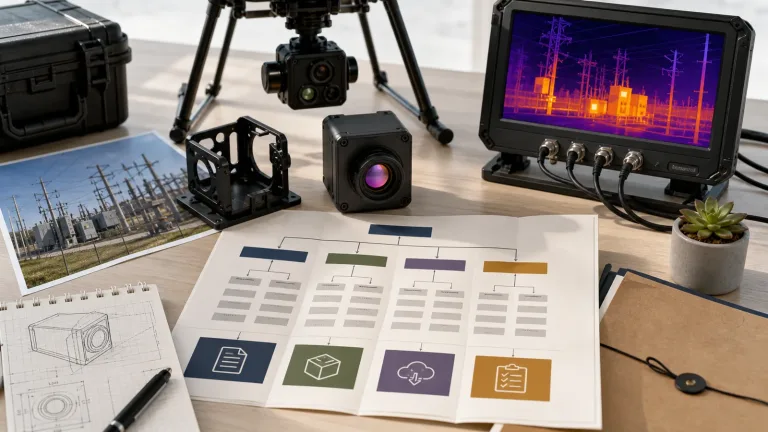
thermal camera that can measure core body temp: 4 risky RFQ assumptions
Procurement reality check
thermal camera that can measure core body temp: 4 risky RFQ assumptions
A facilities buyer asks for a thermal camera that can measure core body temp. The engineering team hears something different: surface thermal imaging, screening workflow, calibration, clinical confirmation, and a legal claim that may not belong in a module RFQ. That gap is exactly where bad specifications start.
Quick answer
A thermal camera that can measure core body temp should not be treated as a normal OEM module request unless the buyer has a validated medical screening system, an approved protocol, trained operators, and confirmatory measurement equipment. Standard LWIR modules read scene radiation and surface thermal patterns; they do not directly measure internal core temperature by themselves. Camcuda thermal modules can support embedded thermal sensing, OEM devices, outdoor monitoring, and UAV or industrial thermal visibility, but buyers should avoid clinical body-temperature claims unless the complete system and documentation support that use.
Why a thermal camera that can measure core body temp is a risky phrase
The phrase sounds simple because buyers have seen infrared thermometers, fever-screening kiosks, and thermal camera demos. In an RFQ, though, “core body temp” is not the same as “thermal image,” “skin temperature,” “forehead screening,” or “equipment temperature trend.” Core temperature refers to an internal physiological value. A module looking at a face, wrist, room, machine, or outdoor scene is measuring infrared radiation from surfaces in front of the optics.
The U.S. FDA guidance on thermal imaging systems is useful because it treats thermal imagers in health screening as part of a controlled process, not as a loose camera claim. The buyer needs the right environment, operating method, reference checks, and follow-up measurement. A module SKU alone cannot carry that burden.
The BIPM best-practice guide for human body temperature measurement with thermal imagers also emphasizes uncertainty and method. That matters for a Camcuda buyer because an OEM thermal module can be a capable LWIR component and still be the wrong answer if the RFQ is actually asking for validated clinical temperature screening.
So the better first question is not “which thermal camera that can measure core body temp is cheapest?” It is “what are we really measuring, what decision will be made from that value, and what validation does the buyer need before procurement approves the system?”
Selection chart: separate measurement intent before comparing modules
| Buyer wording | What it may really mean | RFQ risk | Safer Camcuda response |
|---|---|---|---|
| Core body temp | Internal clinical temperature | Unsupported medical claim if handled as a normal camera module. | Ask for system validation, intended use, confirmatory method, and regulatory responsibility. |
| Fever screening | Elevated body-temperature screening workflow | Requires controlled setup and clinical follow-up; environment affects readings. | Clarify whether Camcuda is supplying only an LWIR module or whether buyer owns the screening system. |
| Skin temperature trend | Surface temperature or relative thermal pattern | May be useful for R&D but not equal to core temperature. | Discuss detector, FOV, calibration output, host processing, and documentation limits. |
| Occupancy or safety sensing | Thermal presence, heat distribution, or room condition monitoring | Wrong product if buyer expects clinical readings. | Review TC160-NF or another embedded LWIR sensing path for non-medical OEM devices. |
| Outdoor monitoring | Field visibility, equipment heat, perimeter awareness, or industrial monitoring | Body-temperature language can distract from actual application needs. | Use application, optics, interface, enclosure, and documentation criteria instead. |
This chart protects both sides. The buyer gets a more accurate answer, and the supplier avoids implying that every thermal camera module can produce a medically meaningful core-body-temperature value.
Featured product fit for a thermal camera that can measure core body temp search
Camcuda’s current WooCommerce Featured products can be relevant when the real project is embedded thermal sensing, outdoor monitoring, UAV inspection, or OEM thermal visibility. They should not be described as stand-alone clinical core-temperature products. That distinction should be visible in the RFQ, quote notes, and public content.
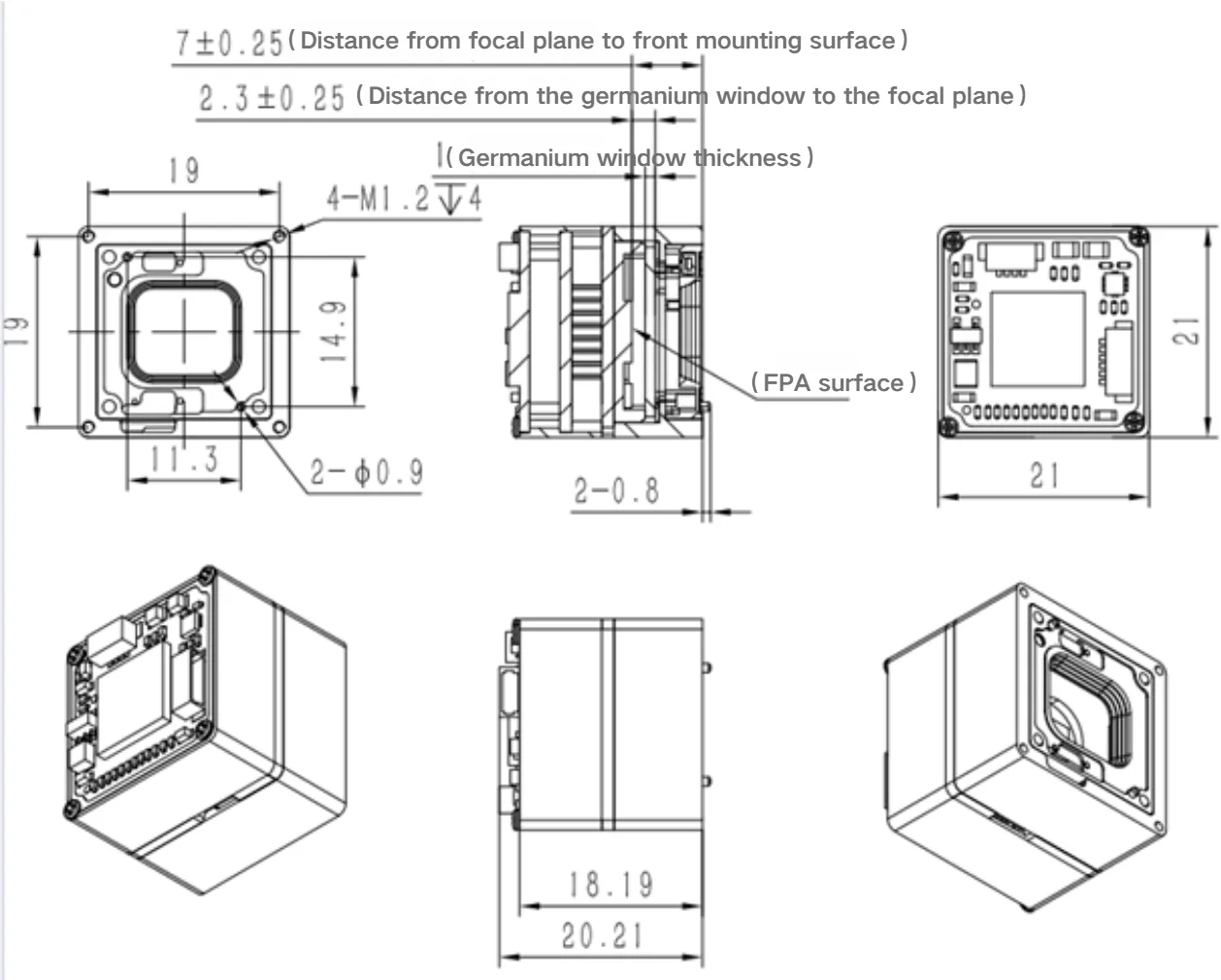
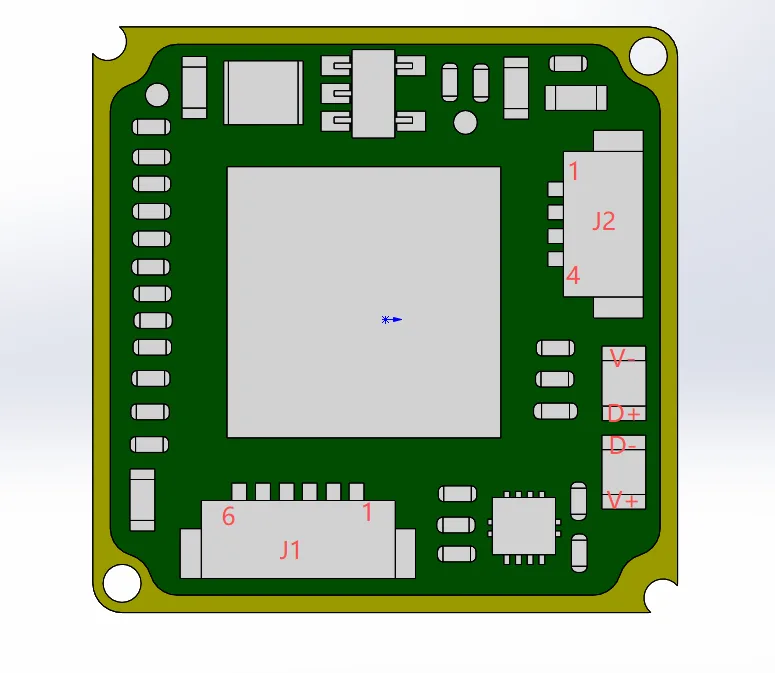
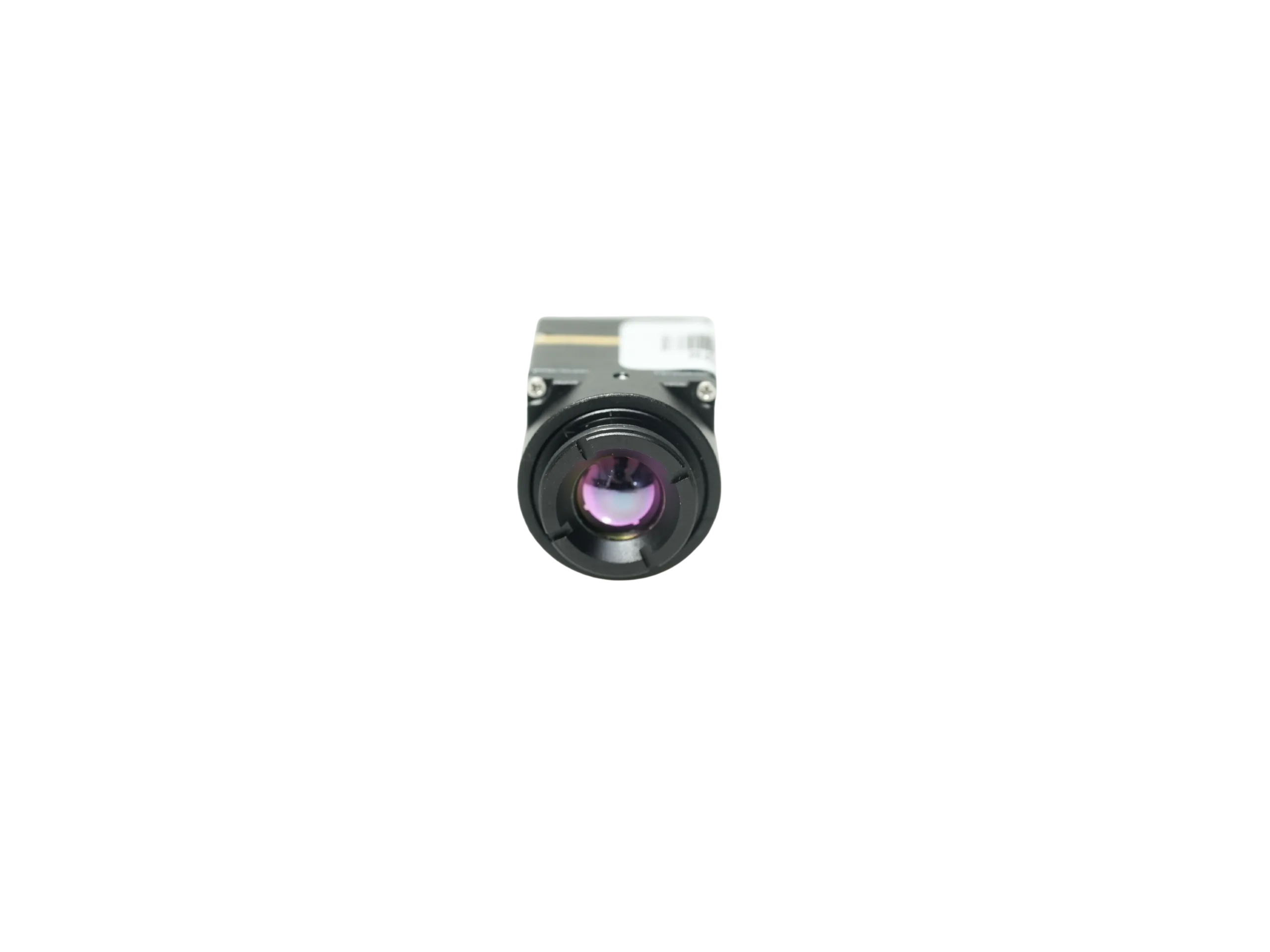
TC160-NF 160×120 Uncooled LWIR Thermal Imaging Module fits low-power embedded sensing projects where a host board needs a compact thermal input. HR21-L612-USB 640×512 Uncooled LWIR Thermal Imaging Module fits compact 640 x 512 LWIR OEM review, UAV payload work, and embedded video/control paths where USB, RS-422, and mechanical size need to be confirmed. If a buyer came in through the body-temperature keyword, the sales handoff should first ask whether the application is medical screening, industrial safety monitoring, smart-device sensing, or a non-medical thermal awareness project.
| Product model | TC160-NF |
|---|---|
| SKU reference | MI1602M5S |
| Detector class | Uncooled LWIR thermal imaging module |
| Resolution | 160 x 120 |
| Total pixels | 19,200 reference |
| Detector pitch | 35 um reference |
| Spectral range | 8-14 um |
| Frame rate | Up to 25 FPS |
| Field of view | 56 / 45 / 34 deg in D/H/V order |
| Supply voltage | 3.3 V |
| Power consumption | Low-power operation, around 76-78 mW reference |
| Host interface | SPI |
| Connector path | 10-pin FPC, 0.5 mm pitch reference; confirm host connector during RFQ |
| Operating temperature | -20 deg C to +85 deg C reference |
| Product model | HR21-L612-USB |
|---|---|
| Detector | Vanadium oxide uncooled infrared focal plane detector |
| Resolution | 640 x 512 |
| Pixel pitch | 12 um |
| Spectral range | 8-14 um |
| Detector frame rate | 50 Hz |
| NETD | Less than or equal to 40 mK at 25 deg C, F#1.0 |
| Digital video | USB |
| Communication interface | USB serial port, 1 x RS-422 |
| Analog video support | CVBS analog output on applicable configurations; confirm during RFQ |
| Weight | Less than 15 g |
| Dimensions | 21 mm x 21 mm x 20.2 mm |
| Operating temperature | -40 deg C to +85 deg C |
Application case: when the buyer means facility safety, not clinical diagnosis
A North America distributor sends an inquiry: “Need a thermal camera that can measure core body temp for warehouse entry and outdoor shift-change checks.” The buyer is not trying to build a hospital device, but the wording still creates a problem. If the supplier replies with a normal module quote, the record may imply clinical capability that the project does not have.
The practical handoff should slow down. First, define the decision. Is the system only looking for thermal presence, heat distribution, or rough elevated-temperature screening? Will any result be confirmed with a clinical thermometer? Who controls lighting, distance, ambient temperature, operator training, and privacy requirements? If the intended use is medical or health screening, the buyer needs qualified regulatory advice and a validated system, not just an LWIR module.
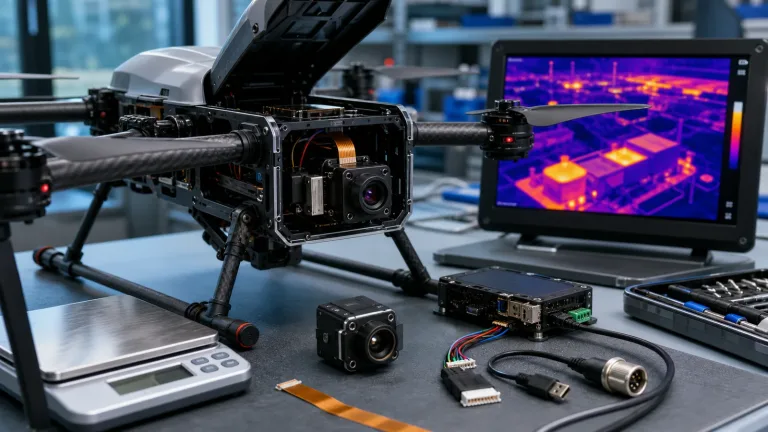
If the real requirement is non-medical outdoor monitoring, facility observation, or industrial thermal awareness, then Camcuda can help redirect the conversation toward application fit. The outdoor field thermal imaging application is the more relevant internal path because it covers deployment conditions, field visibility, enclosure thinking, and monitoring workflows. If the buyer’s team is also evaluating aerial patrol or inspection, the drone thermal camera application can help separate payload constraints from human-temperature wording.
This is where industry context helps. Micron’s computer vision overview frames visual systems as capture, processing, and interpretation workflows. In the same way, a thermal module becomes useful only when the host device, environment, validation method, and decision logic are defined. The module is one component, not the entire measurement claim.
Interface and integration notes before any quote is compared
Once the buyer confirms that the project is an OEM thermal sensing product rather than a medical thermometer, the normal engineering questions return. Which host processor will read the module? Is the project looking for SPI sensing, USB video, MIPI, DVP, RS-422 control, or CVBS analog output on applicable configurations? Does the device need a display, recorder, analog transmitter, embedded processor, or evaluation-board path?
For body-temperature-adjacent inquiries, interface wording should be especially precise. A USB video feed can make integration faster for prototypes, but it does not validate a screening algorithm. SPI can support compact embedded sensing, but it does not define the buyer’s measurement protocol. CVBS analog output can be useful for applicable low-latency or legacy display configurations, but it should be confirmed during RFQ and should not be interpreted as a health-screening feature.
Buyers comparing module families can start with thermal imaging cores, thermal modules, and uncooled thermal modules. For interface planning, Camcuda’s USB, MIPI, CVBS, and DVP interface guide is a better continuation than a generic body-temperature search result.
Clear navigation also matters for search quality. Google’s SEO starter guide encourages links that help users reach relevant supporting pages. Here, that means linking from a risky keyword to the product, application, support, and RFQ pages that clarify the buyer’s next step.
Common mistakes with a thermal camera that can measure core body temp RFQ
- Writing “core body temp” when the project only needs surface thermal sensing. This can create a claim the engineering team cannot support.
- Assuming a module equals a screening system. A complete elevated-temperature workflow needs environment control, protocol, operator training, and confirmatory methods.
- Comparing detector resolution before intended use. A 160 x 120 embedded sensor and a 640 x 512 video module serve different product paths.
- Leaving interface needs vague. USB, SPI, RS-422, MIPI, DVP, and CVBS analog output on applicable configurations should be specified directly.
- Skipping documentation review. For North America procurement, security monitoring, industrial monitoring, and government-adjacent projects, ask for available product documents and note that an NDAA statement is available on request. Confirm final documents during RFQ.
RFQ checklist: safer wording for body-temperature-adjacent thermal projects
| RFQ field | What to write before sending |
|---|---|
| Intended use | Clinical measurement, elevated-temperature screening, non-medical thermal sensing, facility monitoring, outdoor field observation, or OEM device input. |
| Measured target | Core body temperature, skin/surface temperature, relative thermal pattern, object temperature trend, presence/occupancy, or equipment heat. |
| Validation owner | Who owns protocol, calibration, reference measurement, environment control, regulatory review, and user instruction? |
| Preferred module path | TC160-NF for low-power SPI sensing, HR21-L612-USB for compact 640 x 512 USB/RS-422 integration, or another module family to be matched. |
| Interface | SPI, USB video, USB serial, RS-422, MIPI, DVP, CVBS analog output on applicable configurations, evaluation board, SDK, or host-board support. |
| Mechanical limits | Available volume, enclosure, lens window, connector route, cable bend, module weight, and operating environment. |
| Documents | Datasheet, mechanical drawing, interface reference, CE/RoHS/ISO-related documents where applicable, NDAA statement available on request, and destination-market notes. |
Use support downloads for available files, check the support FAQ for common process questions, and send unresolved application details through Camcuda contact/RFQ.
Clarify the measurement claim before choosing the module
If your inquiry uses the phrase “core body temp,” separate clinical measurement, elevated-temperature screening, and non-medical thermal sensing before comparing modules. Camcuda can help review Featured LWIR module paths, interface options, mechanical fit, and documentation needs for supported OEM, UAV, outdoor, and industrial thermal projects.
Review TC160-NF | Review HR21-L612-USB | Request engineering RFQ
FAQ: thermal camera that can measure core body temp buyer questions
Can a thermal camera directly measure core body temperature?
A normal thermal imager measures infrared radiation from surfaces in view. It does not directly measure internal core temperature by itself. Any health-screening or clinical use needs a validated system, appropriate protocol, and confirmatory method.
Can Camcuda sell a thermal camera that can measure core body temp?
Camcuda supplies compact LWIR thermal modules for OEM, UAV, outdoor, embedded, and industrial thermal imaging projects. Buyers asking for core body temperature measurement should clarify whether they need a regulated medical/screening system or a non-medical thermal sensing component before any quote is prepared.
Is skin temperature the same as core body temperature?
No. Skin or surface temperature can be affected by environment, distance, emissivity, sweat, airflow, and measurement setup. It should not be treated as core temperature without a validated method and appropriate clinical confirmation.
Which Camcuda Featured product fits embedded thermal sensing?
TC160-NF is the stronger compact embedded sensing path when the project needs 160 x 120 LWIR input, SPI host integration, 3.3 V supply, low power, and a narrow-FOV thermal sensing review. Confirm final lens and host-board details during RFQ.
When does HR21-L612-USB make sense instead?
HR21-L612-USB makes sense when the buyer needs compact 640 x 512 LWIR output, USB video, USB serial communication, RS-422 control, and a small module envelope for UAV payload, outdoor monitoring, or OEM integration. It should not be described as a clinical core-temperature camera.
Does CVBS help with body-temperature measurement?
CVBS is a video-output path, not a measurement validation method. Camcuda can support CVBS analog output on applicable configurations, but buyers should confirm it during RFQ and separately define any measurement or screening protocol.
What documentation should a procurement team request?
Ask for datasheets, mechanical drawings, interface references, configuration notes, compliance-related documents where applicable, and NDAA statement availability when relevant. For any health-screening claim, also ask who owns regulatory and clinical validation.
Can thermal modules be used for facility or outdoor monitoring?
Yes, thermal modules can support non-medical monitoring such as equipment heat awareness, outdoor field visibility, industrial observation, and embedded sensing when the module, lens, interface, enclosure, and documentation fit the project.
What is the safest first RFQ sentence?
Write the intended use plainly: for example, “We need a non-medical embedded thermal sensing module for facility monitoring,” or “We are evaluating an elevated-temperature screening system and need to understand whether your module is only a component.” That sentence prevents most later confusion.