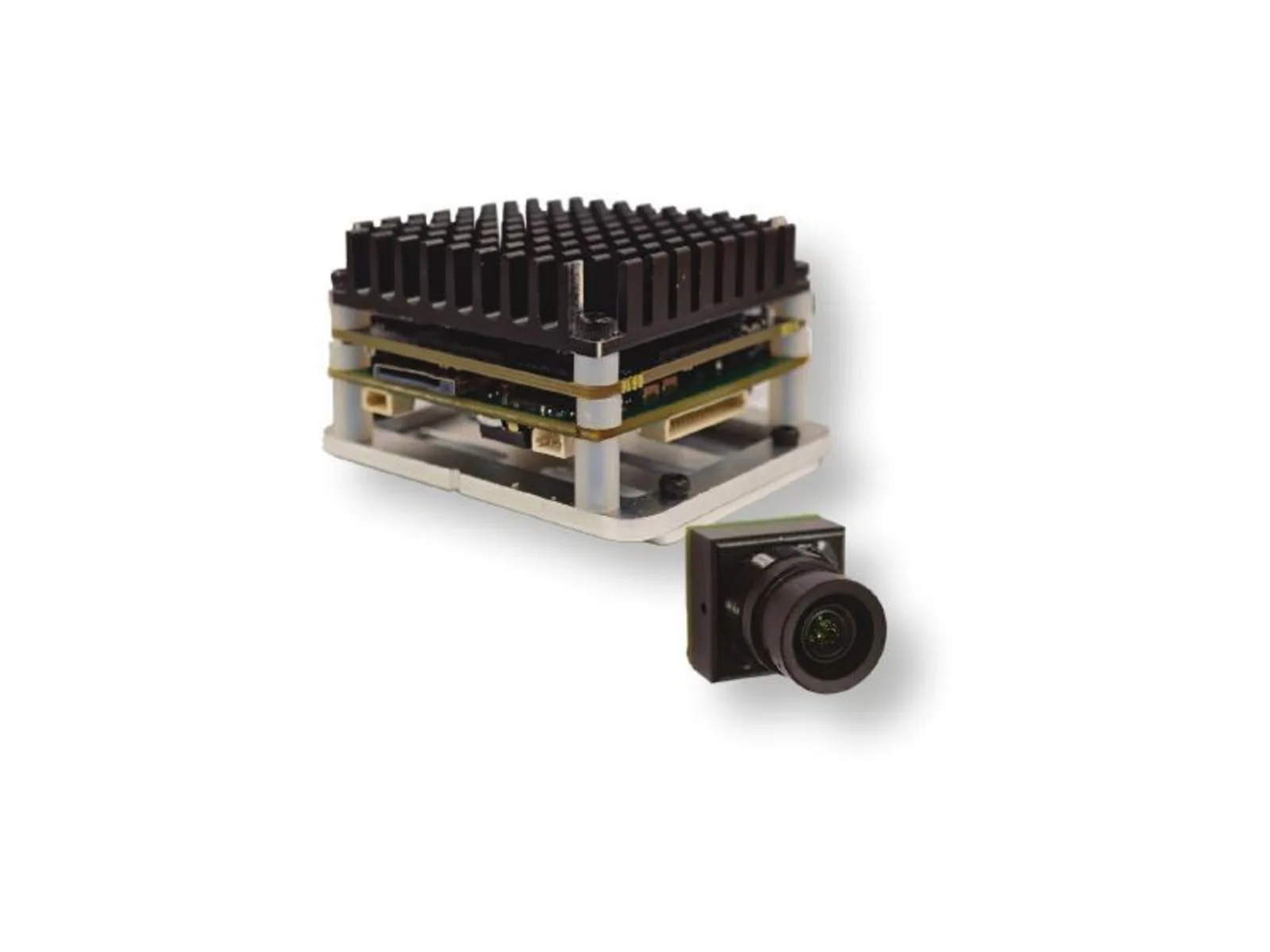
TM02-SOLO 6 TOPS UAV AI Tracking Module
6 TOPS UAV edge AI module with a 1/1.8-inch 1920 x 1080 at 120 Hz low-light EO camera, CRSF control, and BetaFlight or ArduPilot integration. Supplied as an integration module; request a quote.
Description
TM02-SOLO 6 TOPS UAV AI tracking module
High-speed onboard person and vehicle tracking with a 120 Hz low-light EO camera.
TM02-SOLO combines a 6 TOPS edge AI processing board with a narrow-field 1/1.8-inch EO camera for UAV OEMs and integrators that need onboard detection, multi-target tracking, CRSF control, and direct flight-controller integration without a separate ground-compute solution.
Buyer Summary
A compact EO tracking module for high-speed UAV integration
TM02-SOLO is the single-EO-camera member of the TM02 family. It is intended for engineering teams developing UAV, robotics, and mobile vision platforms that need person and vehicle tracking at the edge.
The supplied camera prioritizes low-light sensitivity and a 120 Hz output. Distance, latency, and maximum-target figures are supplier references rather than guaranteed mission performance; confirm the exact hardware and firmware revision during RFQ.
Key Specifications
Technical parameters for UAV integration
| AI and Tracking | |
|---|---|
| Product model | TM02-SOLO |
| Target types | Person and vehicle |
| Distance reference | Vehicle 400 m; person 170 m |
| Minimum target size | 10 x 10 pixels |
| Processing latency reference | 8 ms supplier table reference; confirm end-to-end test definition |
| Dynamic speed reference | Up to 450 km/h |
| Tracking modes | Reticle locking, close-to-lock, route pre-map, lost-target recall, and PIP |
| Maximum targets | Up to 120 tracks; output depends on firmware and AI model |
| Compute and Flight Control | |
| AI compute | 6 TOPS |
| CPU | Arm Cortex-A76 2.4 GHz plus Cortex-A55 1.8 GHz |
| Control protocol | CRSF |
| Flight-controller support | BetaFlight and ArduPilot |
| Recommended input | Regulated 9-16 V DC |
| Board size | 45 x 45 x 26 mm |
| Mounting pattern | 42.5 x 42.5 mm |
| Interface references | CVBS, UART, Ethernet, and USB; confirm connector revision |
| EO Camera | |
| Sensor | 1/1.8-inch |
| Focal length | 8.45 mm |
| Field of view | D 66.3 deg / H 57.1 deg / V 30.4 deg |
| Minimum illumination | 0.001 lux reference |
| Resolution and frame rate | 1920 x 1080 at 120 Hz |
| Camera size | 25.5 x 19.5 x 19.5 mm |
Application Fit
Where this module fits
Hardware Configuration
6 TOPS processing board with single EO camera
Integration Notes
Checks to complete before flight testing
- Use a regulated supply and validate inrush, ripple, grounding, and thermal conditions on the aircraft.
- Confirm the exact hardware revision, connector orientation, pinout, and cable set before designing the airframe harness.
- Validate BetaFlight or ArduPilot firmware compatibility and CRSF channel mapping on the intended flight controller.
- Treat range, latency, speed, and target-count figures as supplier test references; flight results depend on optics, target size, weather, vibration, firmware, and installation.
- Complete bench, vibration, thermal, EMI, failsafe, and controlled flight tests before operational deployment.
Supply Boundary
Module supply, not a complete UAV solution
Camcuda supplies the module configuration only. The UAV, airframe, flight controller, receiver, ESC, motors, radio, video transmitter, display, ground station, enclosure, integration service, and final application software are not included unless explicitly listed in the quotation.
RFQ Checklist
Information to provide for model and revision confirmation
- UAV platform, flight controller, firmware version, and CRSF wiring plan.
- Target type, expected working distance, scene conditions, and tracking workflow.
- Prototype quantity, forecast quantity, destination country, and required delivery schedule.
- Required cables, connector pinout, mechanical drawing, SDK, and integration documents.
- Compliance, export, procurement, and packaging documents required by your project.
Product FAQ
Questions for OEM and engineering buyers
Is TM02-SOLO a complete drone tracking solution?
No. It is an AI processing and EO camera module for OEM integration. The aircraft, flight-control stack, communication system, power design, tuning, and mission application remain the buyer or integrator responsibility.
Does it support BetaFlight and ArduPilot?
The supplier document lists CRSF control and support for BetaFlight and ArduPilot. Confirm your exact firmware version, wiring, and channel mapping before ordering.
Are the 400 m and 170 m distances guaranteed?
No. They are supplier reference distances for vehicle and person targets. Actual results vary with target size, contrast, weather, lighting, vibration, optics, installation, and model configuration.
What should be confirmed before ordering?
Confirm the hardware revision, camera selection, connectors, pinout, cable set, mechanical drawing, firmware, documentation package, quantities, and required compliance documents.
Next Steps


Reviews
There are no reviews yet.