Thermal Camera for Drones: OEM Payloads & Integration Guide | Camcuda
Thermal Camera for Drones: OEM Payloads & Integration Guide
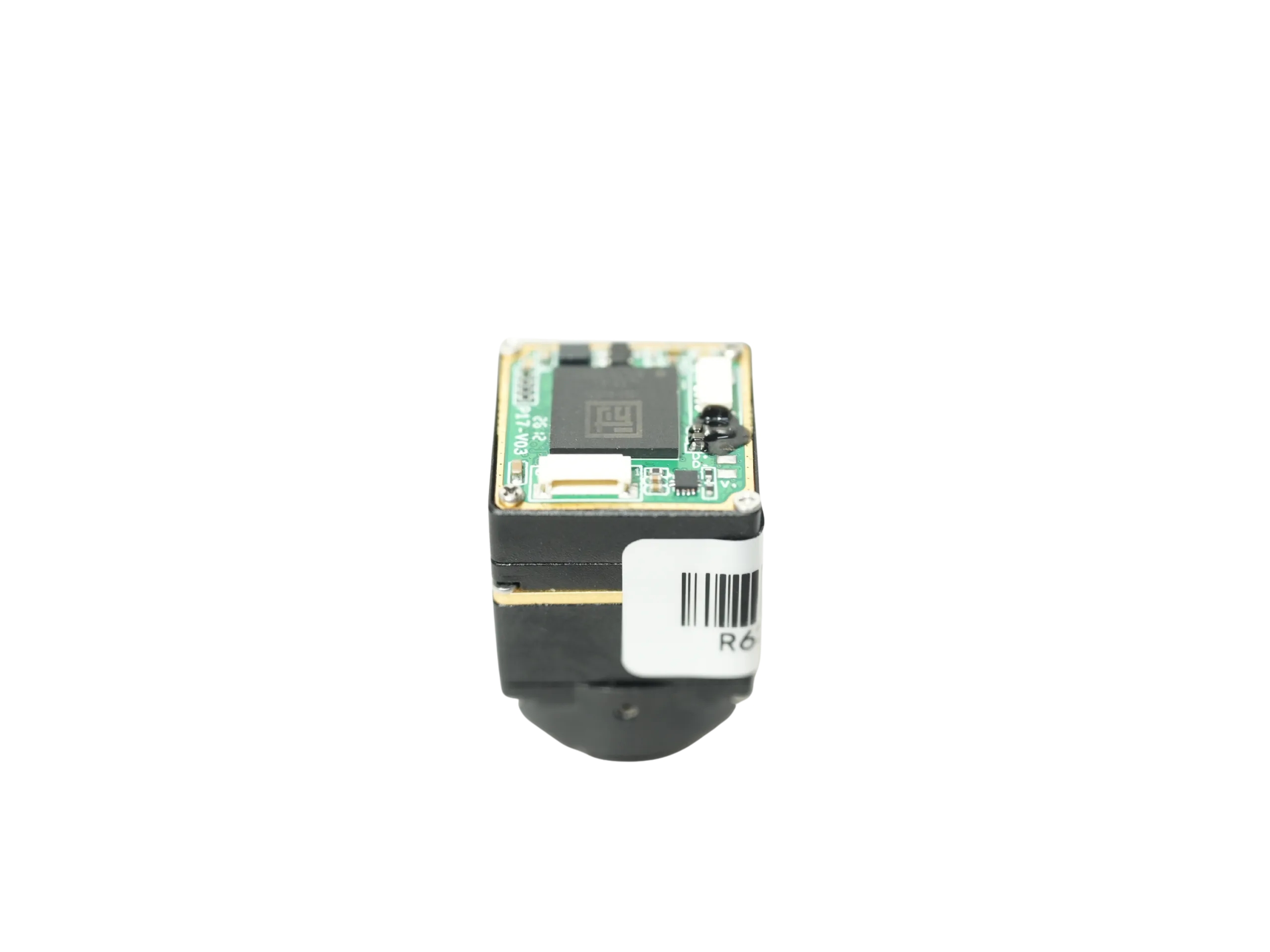
Integrating long-wave infrared (LWIR) sensing into unmanned aerial systems (UAS) is an unforgiving balancing act. You are constantly juggling thermal sensitivity, size, weight, power, and cost (SWaP-C), and raw optical performance. Whether you are running high-voltage transmission line audits, scanning commercial photovoltaic farms for cracked cells, or managing a search and rescue (SAR) grid at two in the morning, an aerial platform fights serious aerodynamic, thermal, and electrical constraints. Finding the right payload—often searched across international supply chains as a cámara térmica para drones or an uncooled OEM thermal core—means looking far beyond marketing resolution numbers. You have to get into the weeds of Noise Equivalent Temperature Difference (NETD), shutter calibration dynamics, pixel pitch geometry, lens transmission efficiencies, and gimbal stabilization interfaces.
Here’s the deal: modern drone system integrators are actively moving away from closed, black-box consumer payloads. The industry is standardizing on modular, open-architecture uncooled Vanadium Oxide (VOx) cores. That shift hands design engineers direct access to uncompressed 14-bit and 16-bit radiometric data streams, custom color-palette Look-Up Tables (LUTs), and hardware-synchronized multi-sensor arrays. By leveraging modular observation devices and precision uncooled microbolometers, drone OEMs can build airframes that hit commercial aviation standards while squeezing every possible minute out of the battery pack.
Table of Contents
- 👉 1. Aerial LWIR Sensing: Physics & Microbolometer Principles
- 👉 2. Sensor Resolution, Pixel Pitch, NETD & Aerial Optics Selection
- 👉 3. SWaP-C, Electrical Interfaces, Video Pipelines & Compliance
- 👉 4. Uncooled LWIR vs. Dual-Light Optical Fusion for Drone Ops
- 👉 5. Product Deep Dive: Handheld Infrared Thermal Observation Instrument
- 👉 6. Product Deep Dive: Ura-Z Series Dual-Light Fusion Observer
- 👉 7. Hardware Specifications Matrix & Aerial Benchmark
- 👉 8. NDAA Compliance, Export Controls & Drone OEM RFQ Engineering
- 👉 9. Deep-Dive Drone Thermal Payload FAQ
1. Aerial LWIR Sensing: Physics & Microbolometer Principles
Aerial thermal imaging lives in the Long-Wave Infrared (LWIR) band between 8 and 14 micrometers (μm). Standard daylight optical sensors rely strictly on reflected photons from the sun or artificial lighting. Microbolometers, on the other hand, measure the radiant electromagnetic energy emitted directly by target materials based on Planck’s Law of blackbody radiation and the Stefan-Boltzmann law. In drone payload design, this passive sensing lets your airframe navigate in pitch-black terrain, cut through atmospheric clutter like dust and light fog, and pull quantitative, per-pixel surface temperatures without shining a single photon back at the subject.
In modern UAS engineering, uncooled Vanadium Oxide (VOx) thin-film microbolometers layered over silicon read-out integrated circuits (ROIC) are the undisputed workhorse. Unlike cooled Mid-Wave Infrared (MWIR) systems that require heavy, power-hungry cryogenic Stirling-cycle pumps, uncooled VOx microbolometers stabilize at ambient temperatures. VOx material delivers a remarkably high Temperature Coefficient of Resistance (TCR), suppresses 1/f electronic noise, and provides rapid thermal time constants (usually between 8ms and 12ms). That speed matters: if your time constant is sluggish, fast yaw or aggressive forward flight turns into a blurry mess of thermal motion smear.
When an aircraft punches through microclimates—say, climbing off a hot asphalt runway into a freezing 400-foot crosswind, or hovering directly in turbulent rotor downwash—the focal plane array (FPA) experiences constant thermal drift. The optical barrel, camera chassis, and gimbal housing all radiate internal infrared energy back into the detector. That temperature fluctuation creates non-uniformity across your image plane. Precision OEM modules solve this using automated Non-Uniformity Correction (NUC) algorithms driven by quick-actuating mechanical shutters or scene-based calibration algorithms running in real time.
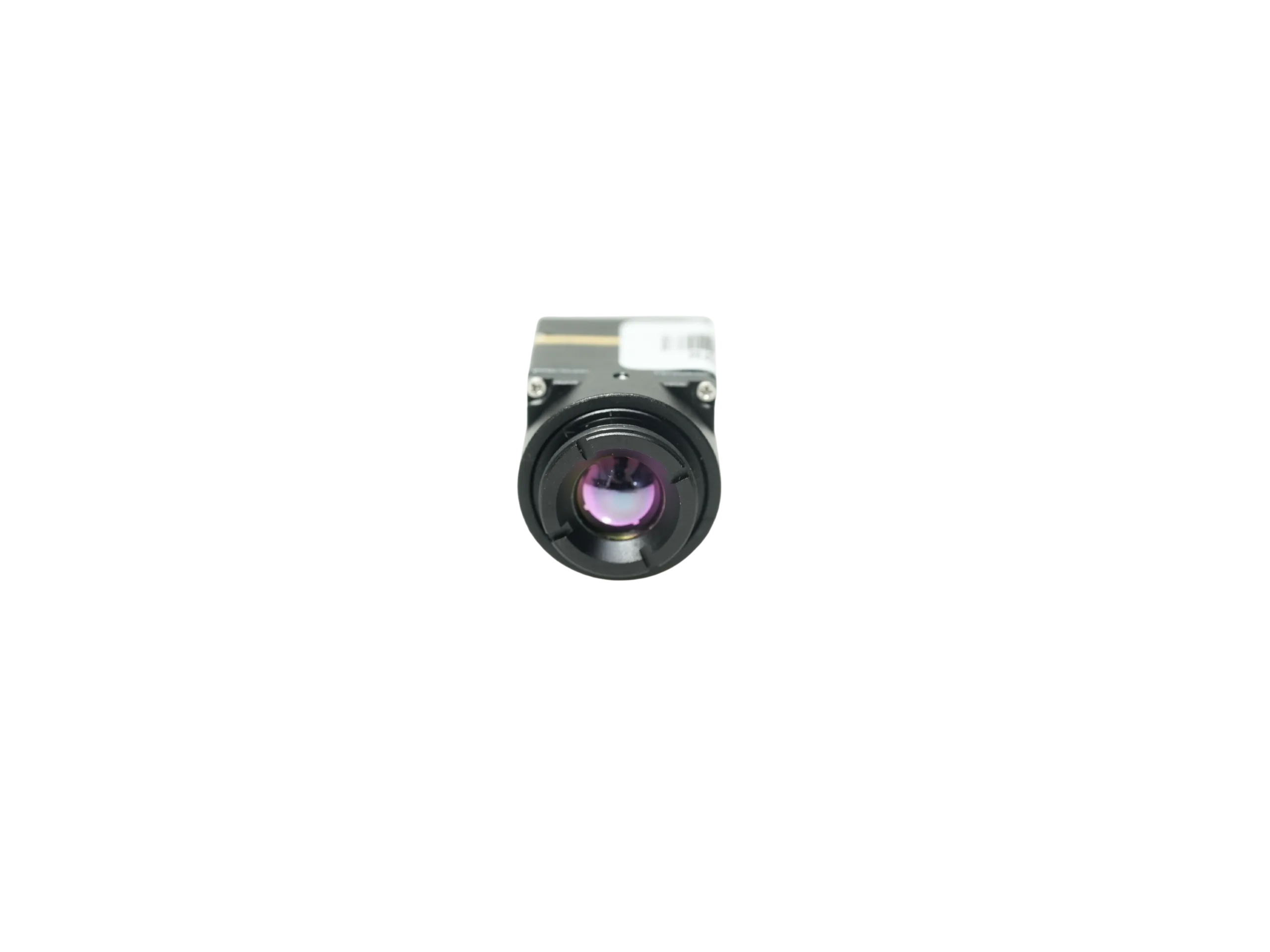
When benchmarking core architectures, engineers often reference baseline building blocks like the Teledyne FLIR Lepton OEM line. But for industrial-grade, large-format aerial diagnostics, you need tighter pixel pitches, higher native resolutions, dedicated Germanium glass, and ultra-sensitive NETD ratings (≤20mK). That level of sensitivity lets you spot structural delamination inside wind turbine blades or minor phase imbalances across high-voltage grid substations before equipment fails in the field.
2. Sensor Resolution, Pixel Pitch, NETD & Aerial Optics Selection
Target detection, optical resolution, and measurement accuracy come down to four interrelated hardware specs: detector resolution, pixel pitch geometry, thermal sensitivity (NETD), and the optical throughput of the Germanium lens assembly. If one of these is poorly matched to your mission altitude, your Ground Sample Distance (GSD) will fall apart.
Ground Sample Distance (GSD) Calculation
Ground Sample Distance is simply the physical area on the ground mapped to a single pixel on the thermal focal plane. For an aerial thermal camera, calculate your GSD with this formula:
GSD_thermal = (Pixel Pitch [μm] × Flight Altitude Above Ground Level [m]) / Focal Length [mm]
Let’s run a real flight calculation. If you fly a 12μm pixel pitch sensor at 50 meters Above Ground Level (AGL) with a 25mm lens, your GSD is (12 × 50) / 25 = 24 mm/pixel (2.4 cm per pixel). Swap that optic for a 50mm telephoto lens at the exact same 50-meter altitude, and your GSD drops to (12 × 50) / 50 = 12 mm/pixel (1.2 cm per pixel). You just doubled your spatial resolving power on tiny electrical components without risking the aircraft near high-voltage lines.
Sensor Resolution Dynamics: 384×288 vs. 640×512
A 384×288 array gives you 110,592 discrete radiometric measurement points per frame. It is lightweight, easier on onboard compute pipelines, and cost-effective for basic low-altitude agricultural mapping or situational perimeter patrol. But when you are inspecting complex industrial infrastructure, step up to a 640×512 matrix. That gives you 327,680 individual temperature points—nearly three times the spatial data density. That resolution allows UAS pilots to spot overheating busbars, localized cell dropouts, and roof moisture pockets from safe standoff distances without getting caught in magnetic interference zones.
Pixel Pitch Advantages: 12μm Architecture
Moving from legacy 17μm sensors down to modern 12μm architectures is a game changer for UAS design. A smaller pixel pitch allows a smaller optical lens to yield the exact same field of view and focal reach. That drastically cuts down the mass and diameter of expensive Germanium elements. Less front-heavy glass means smaller payload housings, less strain on brushless gimbal motors, lower counterbalancing weight, and direct savings in aircraft battery consumption.
Noise Equivalent Temperature Difference (NETD)
NETD represents the smallest temperature delta the sensor can resolve before electronic noise takes over, expressed in millikelvins (mK). A standard commercial baseline of ≤50mK is fine for tracking running engines or active structure fires. But for predictive maintenance and engineering diagnostics, an NETD of ≤20mK is critical. That micro-level sensitivity lets you identify subsurface delamination on composite blades, locate trapped moisture under industrial flat roofing membranes, catch early photovoltaic bypass diode breakdown, and spot heat signatures through dense wilderness foliage.
Germanium Optics and Aperture Dynamics
Standard optical glass blocks the LWIR band entirely. Thermal lenses must be machined from single-crystal Germanium (Ge), which delivers a high refractive index (n ≈ 4.0) and high transmission across 8 to 14 μm. When sizing your optics, consider these mission setups:
- ✅ Wide Field of View (e.g., 25mm F1.0): Maximizes area coverage per pass and provides broad situational context. Ideal for rapid SAR grid searches, broad-area wildfire tracking, and large-scale precision agriculture mapping.
- ✅ Telephoto Field of View (e.g., 50mm F1.0): Narrow Instantaneous Field of View (IFOV) that packs pixels tightly onto distant targets. Required for high-voltage substation transformer diagnostics, telecommunication tower inspections, and perimeter security where the drone must maintain standoff distance.
3. SWaP-C, Electrical Interfaces, Video Pipelines & Compliance
Dropping an uncooled thermal core into an aerial payload bay requires strict attention to size, weight, power, and cost (SWaP-C), robust electrical interfacing, stable video throughput, and full regulatory compliance.
Payload Mass and Battery Endurance Penalties
In multirotor flight dynamics, every 100 grams of dead payload mass shaves roughly 3% to 6% off your hover endurance, depending on motor efficiency, disc loading, and battery chemistry. Integrators need to shed every gram of excess bracketry, using CNC-machined 6061-T6 anodized aluminum or direct-molded carbon fiber composites to keep the airframe light and maximize mission loiter time.
Digital and Analog Video Interface Protocols
Selecting the right digital communication pipeline determines how your ground control and edge compute interact with the sensor:
- ⚙️ MIPI-CSI2 / Parallel CMOS: Direct sensor-level data streaming to companion single-board computers (NVIDIA Jetson, Raspberry Pi CM4). Ideal for onboard AI object detection, automated pipeline tracking, and low-latency computer vision.
- ⚙️ USB 3.0 / Type-C: Plug-and-play simplicity for bench testing, bench calibration, and quick integration with standard x86 and ARM development platforms.
- ⚙️ Ethernet / RTSP Video Pipelines: The standard for commercial enterprise payloads, feeding compressed H.264/H.265 video over IP alongside dedicated UDP channels carrying raw 14-bit radiometric per-pixel temperature telemetry.
- ⚙️ CVBS (Analog Composite): Zero-latency analog video stream feeding long-range 5.8GHz FPV transmitters. Provides a reliable pilot feed even when digital IP links drop frames or buffer.
Thermal Dissipation in Enclosed Airframes
Uncooled microbolometer ROICs produce parasitic internal heat that has to be conducted away from the focal plane. In a sealed IP67 or IP66 gimbal, trapped heat degrades dynamic range, raises the NETD noise floor, and triggers constant NUC shutter cycles. Design custom aluminum thermal conductive bridges and use high-performance thermal gap pads to conduct heat straight out of the core chassis into the gimbal’s external aluminum housing, turning the outer shell into an effective heatsink.
Aviation Regulations and Airframe Certification
Commercial flights carrying thermal payloads must operate under relevant civil aviation frameworks, such as the Federal Aviation Administration’s eCFR Part 107 Small Unmanned Aircraft Systems rules in the United States. Keep your complete takeoff mass safely below the 55-pound (25 kg) limit while mounting proper anti-collision strobes for night operations.
For custom electro-optical builds, integrators can explore specialized optronics modules via Camcuda’s Advanced Optronics Portfolio, or look at hybrid systems like the ERA-X Series Long-Range Observation System to see how multi-spectral optics and laser rangefinders package into rugged field enclosures.
4. Uncooled LWIR vs. Dual-Light Optical Fusion for Drone Ops
System integrators often face a core architecture question: should you fly a pure, standalone LWIR core or step up to a dual-light visible and thermal fusion payload? Both configurations have clear strengths depending on the job site.
Standalone LWIR modules deliver maximum SWaP-C efficiency. Running a single sensor core and optical path keeps power consumption tiny (typically 1.5W to 2.5W), saves weight, and keeps gimbal inertia low for ultra-smooth stabilization. Paired with a 640×512 array and an NETD of ≤20mK, a dedicated thermal imager provides crisp thermal contrast for nighttime search and rescue, perimeter monitoring, and open wildfire boundary mapping where visible illumination is completely absent.
Dual-light fusion payloads combine an uncooled LWIR sensor with a high-definition low-light visible CMOS sensor inside one synchronized unit. Real-time edge processors extract structural contours, text, and fine physical textures from the visible feed and overlay them on top of the radiometric thermal image. This solves thermal imaging’s biggest headache: the loss of physical edge detail in scenes where everything sits at the exact same temperature.
With dual-light fusion running on the drone feed, an inspector checking a utility substation can read breaker cabinet labels, follow thin guy-wires, and spot localized thermal overloads at the exact same time. For industrial roof scans and insurance documentation, multispectral blending provides visual proof that stakeholders can interpret without needing side-by-side manual post-processing.
5. Product Deep Dive: Handheld Infrared Thermal Observation Instrument
The Handheld Infrared Thermal Observation Instrument is a rugged, highly versatile thermal imaging unit built for tough field monitoring, mobile diagnostics, search operations, and industrial inspection tasks. Powered by an uncooled VOx microbolometer running across the 8 to 14 μm spectral band, this platform delivers razor-sharp thermal contrast across demanding field environments.
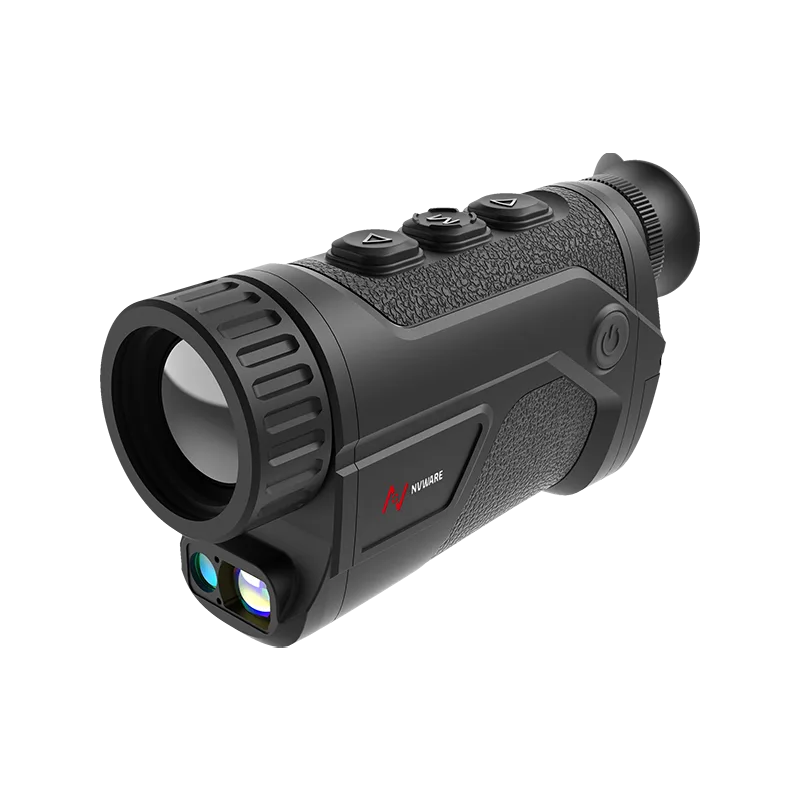
This platform offers two core resolution paths: a cost-efficient 384×288 @ 12μm setup or a high-density 640×512 @ 12μm matrix. Running at a smooth 50Hz refresh rate, it eliminates video lag during quick panning and aerial tracking passes. With thermal sensitivity rated at ≤20mK (@25°C, F#1.0, 25Hz), it catches micro-temperature variations that conventional commercial sensors miss completely.
Optical adaptability is another strong point, supporting interchangeable 25mm, 35mm, and 50mm F1.0 Germanium lenses. That lets field engineers tailor the Field of View and optical reach for wide-area site overviews or narrow standoff tracking. Weighing approximately 550 grams in its handheld configuration, the unit serves as an excellent ground-truth reference tool or mobile observation kit.
| Technical Parameter | Preserved Product Specification |
|---|---|
| Sensor Type | VOx Uncooled Sensor, 8–14μm |
| Resolution Options | 384×288 @ 12μm / 640×512 @ 12μm |
| Frame Rate | 50 Hz |
| Lens Options | 25 mm / 35 mm / 50 mm F1.0 |
| NETD (Thermal Sensitivity) | ≤ 20mK @ 25°C, F#1.0, 25Hz |
| Weight Class | Approx. 550 g class |
Field use cases span perimeter patrol, utility failure diagnosis, lawful emergency response, and post-flight ground verification. Procurement teams can confirm exact lens configurations, resolution options, and export paperwork during RFQ review.
6. Product Deep Dive: Ura-Z Series Dual-Light Fusion Observer
The Ura-Z Series Dual-Light Fusion Handheld Thermal Observer is a field-hardened, multispectral unit engineered for outdoor tactical search, industrial perimeter auditing, security reconnaissance, and critical asset surveys. Combining a 640×512 uncooled VOx thermal core with a high-sensitivity low-light optical sensor, the Ura-Z delivers real-time dual-band fusion across pitch darkness, dust storms, and heavy marine fog.
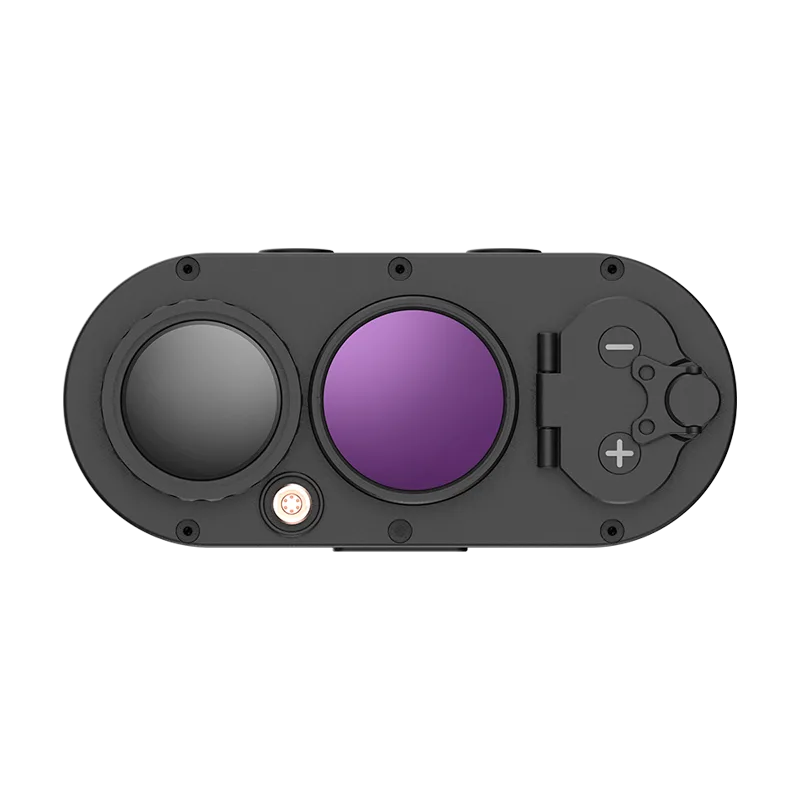
Built around a 12μm pixel pitch and a 35mm manual focus lens stack, the Ura-Z provides a balanced 12.6° × 10.1° field of view, giving operators both wide area coverage and tight target resolution. Operators can quickly toggle between pure thermal palettes, visible-only low-light mode, and combined multispectral fusion modes to pull structural details, cable routes, and equipment markings out of the background.
Built to handle harsh field use, the Ura-Z carries an IP66 ingress protection rating and is rated for operating temperatures from -40°C to +50°C. Even with dual optical channels, internal fusion compute hardware, and environmental seals, it maintains an ergonomic form factor (≤153 × 150 × 68 mm) and a total weight of ≤1.0 kg.
| Technical Parameter | Preserved Product Specification |
|---|---|
| Thermal Resolution | 640×512 |
| Pixel Pitch | 12μm |
| Lens Configuration | 35 mm Manual Focus |
| Field of View (FOV) | 12.6° × 10.1° |
| Operating Temperature | -40°C to +50°C |
| Ingress Protection Rating | IP66 |
| Dimensions | ≤ 153 mm × 150 mm × 68 mm |
| Weight | ≤ 1.0 kg |
The Ura-Z Series serves ground crews, public safety teams, and facility inspectors who require both high thermal sensitivity and sharp optical detail. Intended use profiles, mounting options, and export paperwork can be verified during engineering RFQ evaluation.
7. Hardware Specifications Matrix & Aerial Benchmark
The engineering comparison below breaks down the Handheld Infrared Thermal Observation Instrument against the Ura-Z Series Dual-Light Fusion Observer, detailing critical optical, electronic, and physical specs for procurement and payload planning:
| Technical Parameter | Handheld Infrared Thermal Observation Instrument | Ura-Z Series Dual-Light Fusion Observer |
|---|---|---|
| Direct Product Link | Product Details Page | Product Details Page |
| Sensor Modality | VOx Uncooled LWIR Microbolometer | Dual-Light: VOx LWIR + Low-Light Visible CMOS |
| Spectral Band | 8 to 14 μm (LWIR) | 8 to 14 μm (LWIR) + Visible/NIR Spectrum |
| Thermal Resolution | 384×288 or 640×512 Selectable Paths | 640×512 Native Resolution |
| Pixel Pitch | 12 μm | 12 μm |
| Frame Rate | 50 Hz Smooth Dynamic Output | 50 Hz Real-Time Output |
| Lens Options & Focus | 25 mm / 35 mm / 50 mm F1.0 Options | 35 mm Manual Focus Optical Stack |
| Field of View (FOV) | Configurable by Lens Selection | 12.6° × 10.1° |
| Thermal Sensitivity (NETD) | ≤ 20mK (@25°C, F#1.0, 25Hz) | High-Sensitivity Instrumentation Grade |
| Operating Temperature | Standard Field Deployment Class | -40°C to +50°C Industrial Ruggedized |
| Ingress Protection | Weather-Resistant Field Body | IP66 Rated Enclosure |
| Physical Dimensions | Compact Field Instrument Body | ≤ 153 mm × 150 mm × 68 mm |
| Total Weight / Mass | Approx. 550 g class | ≤ 1.0 kg |
8. NDAA Compliance, Export Controls & Drone OEM RFQ Engineering
Sourcing high-performance thermal imagers for commercial, utility, and municipal drone operations involves rigorous supply chain vetting and international export control compliance. Integrators must confirm that every part of the stack—from raw microbolometer substrate to image processing firmware—clears regulatory checks before locking in a hardware revision.
If you are bidding on defense-adjacent, municipal infrastructure, or federal utility projects across North America, supply chain transparency is a strict requirement. The National Defense Authorization Act (NDAA) limits and prohibits telecommunications and video surveillance parts sourced from specific covered entities. OEM drone builders and system integrators must secure verifiable NDAA compliance statements for their thermal cores and optronics packages.
To keep your supply chain running smoothly and avoid customs roadblocks, review Camcuda’s breakdown on NDAA Thermal Camera Modules & North American RFQ Documentation. The guide outlines vendor certification requirements, non-ITAR export classification declarations, dual-use commercial documentation, and End-User Certificate (EUC) processes for international markets.
Engineering RFQ Checklist for Drone Thermal Integration
- ⚙️ Target Sensor Matrix: Choose 384×288 for SWaP-limited or cost-sensitive platforms, or 640×512 for high-altitude diagnostic workflows.
- ⚙️ Optical Stack & IFOV: Pin down the Germanium focal length (25mm, 35mm, or 50mm) based on your required Ground Sample Distance (GSD) and safe operating stand-off distance.
- ⚙️ Thermal Sensitivity Threshold: Ensure your NETD rating (≤20mK vs. ≤50mK) provides enough dynamic range for low-contrast targets.
- ⚙️ Electrical Output Interface: Select your digital streaming standard (MIPI-CSI2, USB 3.0, Ethernet RTSP with raw radiometric output) or low-latency analog CVBS feeds.
- ⚙️ Environmental & Mechanical Limits: Verify operating temperature ranges (-40°C to +50°C), payload mass budgets on gimbal motors, and IP ingress ratings.
- ⚙️ Regulatory & Export Filings: Request formal NDAA declaration sheets, country-of-origin paperwork, and commercial dual-use Export Control Classification Numbers (ECCN).
9. Deep-Dive Drone Thermal Payload FAQ
Can I mount a detachable thermal camera core onto a DIY or commercial drone without sacrificing flight time?
Is a standalone thermal camera sufficient, or should I use a dual-light (thermal + visible) payload for drone inspections?
What engineering specs are most critical when selecting an OEM drone thermal module?
📚 References & Further Reading
- Industry Standard: Explore microbolometer architectures and compact core benchmarks at Teledyne FLIR Lepton OEM.
- Regulatory Framework: Review commercial UAS airspace and mass compliance rules via the FAA’s eCFR Part 107 Small Unmanned Aircraft Systems.
- Related Guide: Consult the technical overview on NDAA Thermal Camera Modules & North American RFQ Documentation.
- Optronics Platform: Discover multispectral observation hardware in the ERA-X Series Long-Range Visible Light Rangefinder System.
- Advanced Systems: Explore precision thermal cores and electro-optical assemblies across the Camcuda Advanced Optronics Catalog.