thermal camera for drone: 5 Practical RFQ Decisions Before the Payload Becomes the Bottleneck
Drone payload RFQ note
thermal camera for drone: 5 Practical RFQ Decisions Before the Payload Becomes the Bottleneck
A thermal camera for drone looks like a simple payload purchase until the pilot asks where the live view will appear, the engineer asks what the host board can power, and procurement asks whether the next reorder will include the same documentation package. That is the buyer moment this article is written for: not a finished drone catalog shopper, but a UAV integrator trying to keep a thermal module sample from becoming the schedule bottleneck.
Quick answer
If you are sourcing a thermal camera for drone, decide five things before you order the sample: the thermal job, payload fit, video/control path, field evidence plan, and RFQ documentation. For Camcuda’s featured HR21-L612-USB module, start with its 640 x 512 uncooled LWIR detector, less-than-15 g module weight, USB video, USB serial communication, RS-422, and CVBS analog output on applicable configurations. Confirm CVBS, lens/FOV, firmware, procurement documents, and NDAA statement availability during RFQ.
Why a thermal camera for drone becomes the payload bottleneck
Drone thermal imaging is now discussed in system terms, not just camera terms. Industrial edge articles from NVIDIA keep coming back to the same idea: inspection value depends on the full edge workflow, from sensing to inference to response. UAV buyers feel the same pressure in a smaller package. The thermal image is only useful if it reaches the right screen, recorder, processor, or field report at the right moment.
The realistic mistake is ordering the module because the resolution and price look right, then discovering two weeks later that the aircraft has no clean mounting envelope, the analog video path was assumed but not confirmed, or the field team needs procurement paperwork that was never requested. None of those failures means the detector was bad. They mean the RFQ was too thin.
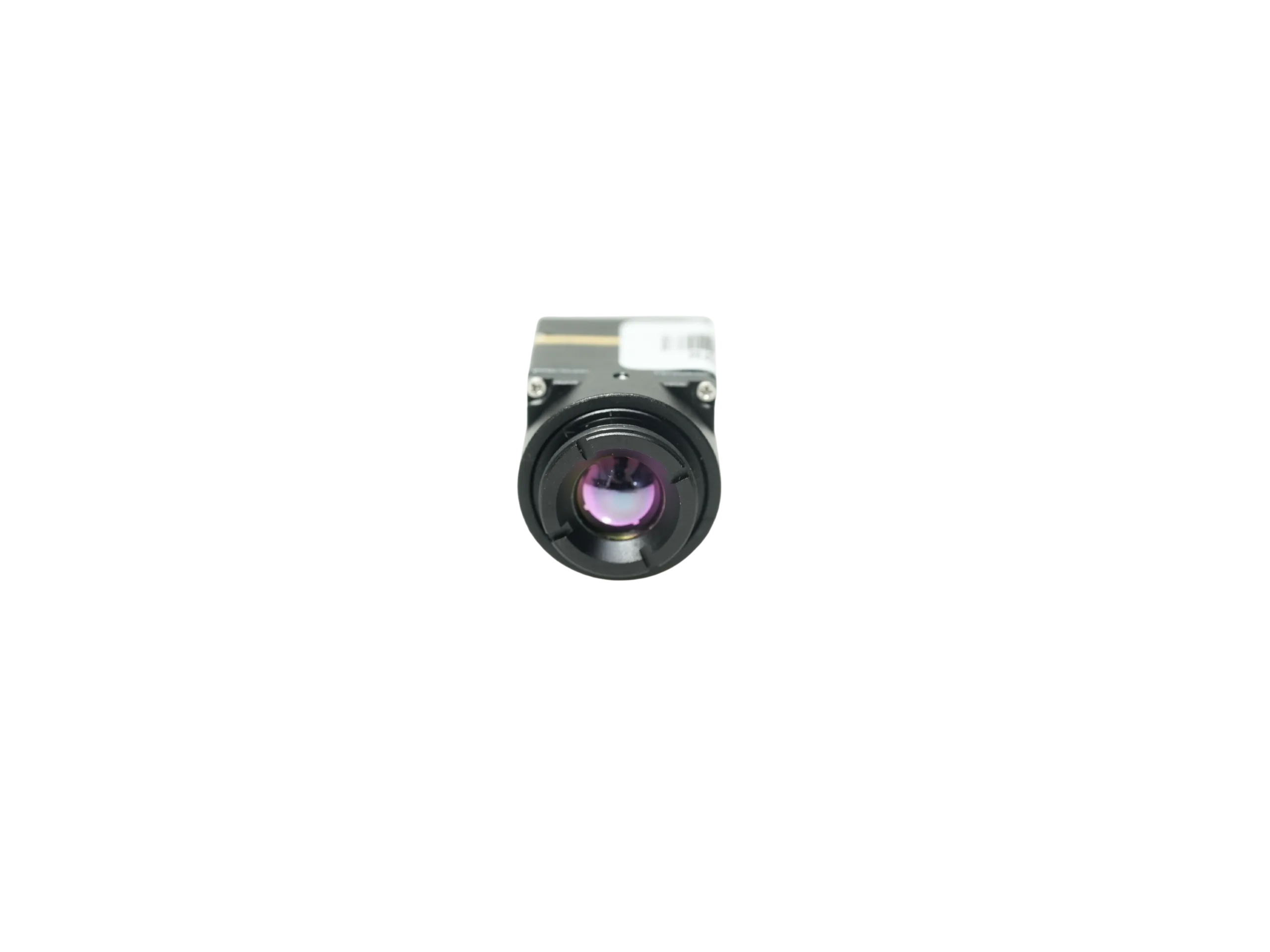
For Camcuda, the current featured product to evaluate is the HR21-L612-USB 640×512 Uncooled LWIR Thermal Imaging Module. It is a module-level component for UAV payloads and OEM devices, not a complete finished aircraft payload. That distinction matters because integration success depends on the host board, lens/FOV, enclosure, video path, power budget, and buyer documentation.
thermal camera for drone: 5 RFQ decisions that should come before the sample
| RFQ decision | What to define | Practical trade-off | Camcuda note |
|---|---|---|---|
| Thermal job | Inspection target, working distance, field window, and whether the pilot needs live viewing or evidence capture. | Broader field of view helps finding targets; tighter optics help detail but make search and pointing harder. | Share lens/FOV and mission context during RFQ. |
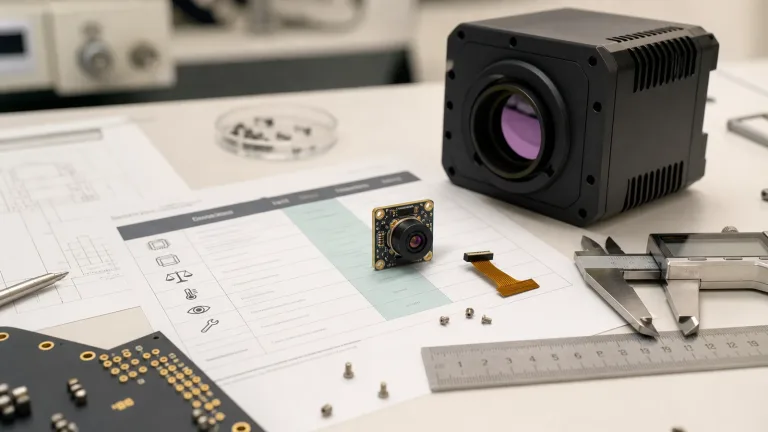
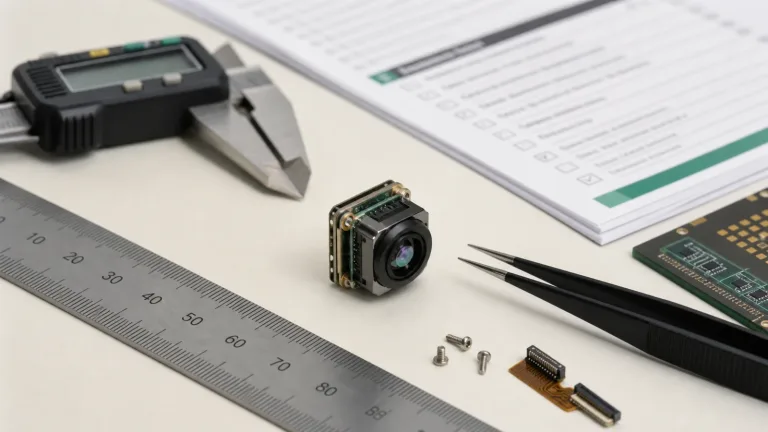
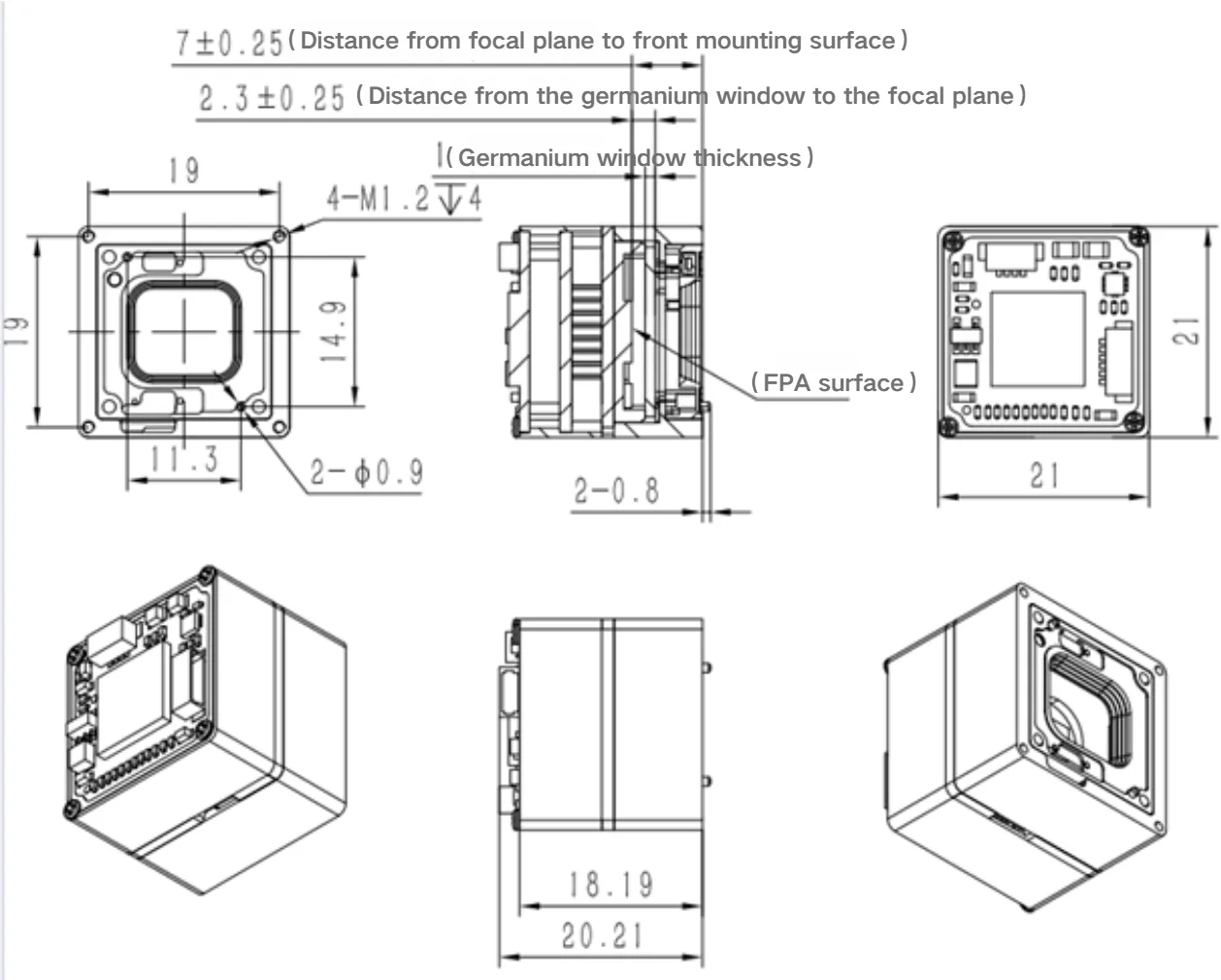
| Payload fit | Available module envelope, bracket route, vibration/shock exposure, and airflow or enclosure limits. | A small module still needs mechanical clearance, cable strain relief, and service access. | HR21-L612-USB is listed at less than 15 g with 21 mm x 21 mm x 20.2 mm dimensions. |
| Video path | USB, CVBS analog output on applicable configurations, recorder/display needs, and expected latency. | USB fits development and digital capture; CVBS can fit legacy transmitters or low-latency analog screens when confirmed. | Confirm CVBS analog output during RFQ for the exact configuration. |
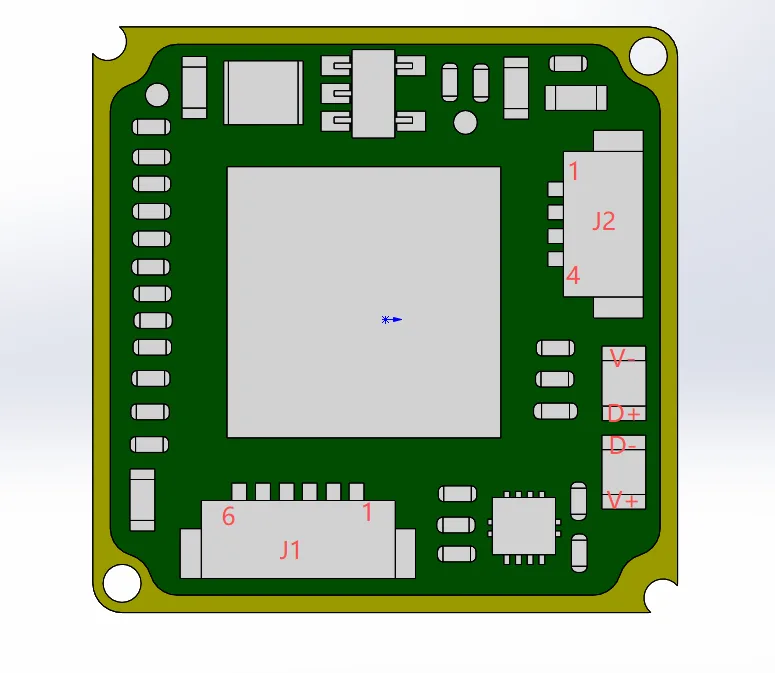
| Control path | USB serial, RS-422, palette/NUC control, host-board integration, and firmware expectations. | Control and video can be separate concerns; treating them as one cable decision causes late integration work. | HR21 lists USB serial communication and 1 x RS-422. |
| Documentation | Datasheet, interface reference, mechanical drawing, CE/RoHS review, NDAA statement availability, and order records. | Waiting until procurement review to ask for documents slows reorders and North America project review. | NDAA statement available on request; confirm documents for destination and use case. |
The goal is not to make the first RFQ long for its own sake. It is to stop the sample from being judged against requirements that were never shared. That is also why OEM thermal imaging integration writing tends to focus on module selection, optics, and system fit rather than detector resolution alone.
Featured product fit: HR21-L612-USB as a thermal camera for drone candidate
Use the table below as a buyer-side starting point, then confirm the exact configuration during RFQ. Do not treat a product page as a substitute for host-board review, payload drawings, lens selection, or destination-market documentation.
| Product | HR21-L612-USB 640×512 Uncooled LWIR Thermal Imaging Module |
|---|---|
| SKU | HR21-L612-USB |
| Detector type | Vanadium oxide uncooled infrared focal plane detector |
| Resolution | 640 x 512 |
| Pixel pitch | 12 um |
| Spectral range | 8-14 um |
| Detector frame rate | 50 Hz |
| NETD | <=40 mK @ 25°C, F#1.0 |
| Supply voltage | 5 V +/-0.5 V |
| Typical power consumption | <1.2 W including expansion board @ 25°C |
| Digital video | USB |
| Analog video support | CVBS analog output on applicable configurations; confirm during RFQ |
| Communication interface | USB serial port, 1 x RS-422 |
| Weight | <15 g |
| Dimensions | 21 mm x 21 mm x 20.2 mm |
| Operating temperature | -40°C to +85°C |
| Storage temperature | -50°C to +90°C |
| Humidity | 5%-95%, non-condensing |
| Vibration | 6.06 g random vibration, all axes |
| Shock | 80 g @ 4 ms, post-peak sawtooth waveform, 3 axes / 6 directions |
| Current listed sale price | USD 499 |
Short example: the utility patrol sample that passed the bench but failed the handoff
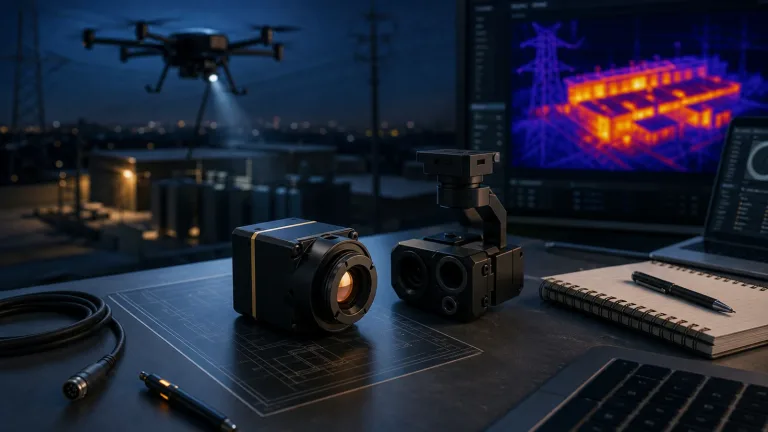
A UAV integrator is building a light utility patrol payload. The aircraft can carry the sample, but the team has three constraints: the module compartment is narrow, the pilot wants a low-latency live view on an existing analog downlink, and the operations manager wants stills or clips that can be attached to an inspection report after landing.
The first mistake would be to ask only for “a 640 thermal camera for drone” and wait for a quote. A better RFQ states the working distance range, expected FOV, available 5 V power budget, bracket envelope, preferred USB capture route, and whether CVBS analog output on applicable configurations must be confirmed for the pilot display. It also asks for mechanical and electrical references before the bracket is machined.
This is where Camcuda’s sitemap-backed application pages help the buyer choose the next step. If the aircraft mission is inspection or patrol, review the drone thermal camera application page. If the same module may later be used in a fixed yard, perimeter, or field-service installation, compare it with the outdoor and field thermal imaging application page before splitting the RFQ into two unrelated samples.
Professional drone examples from Teledyne FLIR show why payloads are often framed around field missions such as utilities, roofing, firefighting, and industrial inspection. Camcuda should not copy those product claims. The useful takeaway for this buyer is narrower: define the mission evidence and operator screen before the module becomes a mechanical-only purchase.
Interface and document choices that change the reorder
A thermal camera for drone RFQ usually has two conversations happening at once. Engineering is asking how video and control move through the aircraft. Procurement is asking whether the sample can be reordered with the same configuration, documentation, and commercial terms. If those conversations happen in separate emails, the second order often exposes the missing details.
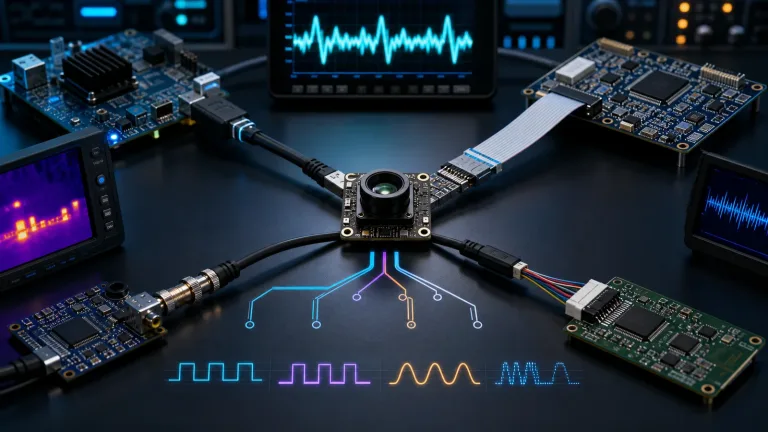
For interface planning, use standards sources as context, not as a promise that one connector solves everything. The USB-IF document library is useful background when teams discuss USB behavior and host-side expectations. In Camcuda’s product language, HR21-L612-USB lists USB video, USB serial communication, and RS-422, while CVBS analog output is available on applicable configurations and must be confirmed during RFQ. That careful wording matters for drone video transmission, legacy displays, recorders, low-latency monitoring, and OEM retrofits.
For documentation, North America buyers should ask early for available procurement materials. Camcuda can support buyer review with product specifications, mechanical drawings, interface references, CE/RoHS-related documentation where applicable, and NDAA statement available on request. Do not write the RFQ as if documentation is a checkout accessory. Treat it as part of the sample definition.
Common mistakes that make the thermal camera for drone decision feel harder than it is
- Choosing by resolution alone. A 640 x 512 module is useful, but the payload still needs the right lens/FOV, mounting envelope, host path, and field evidence workflow.
- Assuming analog video is included by default. CVBS analog output can be supported on applicable configurations, but it must be confirmed for the exact model, firmware, destination, and host system.
- Mixing live view and evidence capture. The pilot screen, recorder, and post-flight report may need different outputs or handling.
- Waiting too long to ask for drawings. Mechanical and electrical references should arrive before bracket machining and host-board layout decisions.
- Leaving compliance language vague. If the project involves North America procurement, security monitoring, industrial inspection, or government-adjacent review, ask for NDAA statement availability during RFQ.
RFQ checklist for a useful thermal camera for drone quote
Send a shorter but sharper RFQ. Include the facts below, then link the buyer path clearly: thermal imaging cores, thermal modules, support downloads, and Camcuda contact / RFQ.
| RFQ item | What to send |
|---|---|
| Mission | Inspection target, distance range, flight duration expectation, and whether the use case is drone, outdoor field, industrial, security, or OEM device integration. |
| Mechanical limits | Available module space, bracket concept, weight target, cable route, enclosure notes, vibration/shock concerns, and service access. |
| Optics | Target FOV, lens preference if known, scene size, working distance, and whether fast search or detail confirmation matters more. |
| Power and host | Available voltage, power budget, host board or processor, recorder/display path, and operating temperature expectations. |
| Interfaces | USB video, USB serial, RS-422 needs, and whether CVBS analog output on applicable configurations must be confirmed. |
| Documents | Datasheet, mechanical drawing, electrical interface reference, CE/RoHS review where applicable, NDAA statement available on request, and destination market. |
Turn the drone thermal RFQ into an integration review
Start with the HR21-L612-USB 640×512 Uncooled LWIR Thermal Imaging Module if your project needs a compact LWIR module for UAV payload or embedded thermal vision review. Then send Camcuda the payload envelope, video/control path, lens/FOV target, and documentation needs so the quote can address the actual integration problem.
FAQ: thermal camera for drone RFQ questions
Is HR21-L612-USB a finished drone payload?
No. It is a compact uncooled LWIR thermal imaging module for UAV payload and OEM integration. The aircraft mount, enclosure, host board, lens/FOV, and video workflow still need project review.
Why not choose a thermal camera for drone by resolution only?
Resolution matters, but it does not answer payload fit, live-view path, power budget, control interface, lens/FOV, field evidence, or procurement documentation. Those are the details that usually delay integration.
When does CVBS matter in a drone thermal RFQ?
CVBS matters when the payload must feed an analog transmitter, legacy display, recorder, or low-latency pilot monitor. Camcuda can support CVBS analog output on applicable configurations; confirm during RFQ.
Can one project use both USB and analog video?
Some projects evaluate digital capture and analog viewing separately, but exact output combinations depend on the module configuration and firmware. Ask Camcuda to confirm the video path before ordering.
What should a buyer send before asking for price?
Send mission type, working distance, target FOV, payload envelope, power budget, host board, preferred interfaces, environmental limits, destination market, and documentation needs. This makes the price conversation more useful.
Does Camcuda provide NDAA documentation?
Camcuda can provide an NDAA statement available on request for buyers who require procurement or compliance documentation. Confirm the exact document package during RFQ for the product, configuration, destination, and intended use.
What is the practical trade-off between USB and CVBS?
USB is often useful for digital development, host capture, and embedded processing. CVBS can be useful for legacy analog video transmission or low-latency viewing, but it has different image-path expectations and should be confirmed for the project.
Should outdoor fixed monitoring be a separate RFQ?
If the same module may move from a drone sample to a fixed outdoor installation, mention both applications early. Outdoor monitoring can change enclosure, service-view, cable, documentation, and environmental requirements.
Where should buyers compare Camcuda application fit?
Start with the drone thermal camera application page for UAV payload work and the outdoor field thermal imaging page for fixed monitoring, field service, perimeter, or rugged outdoor deployment planning.